
Ich fragte mich, warum Nutzer Kapital in TermMax-Tresoren parkten, statt aktivere Positionen einzunehmen.
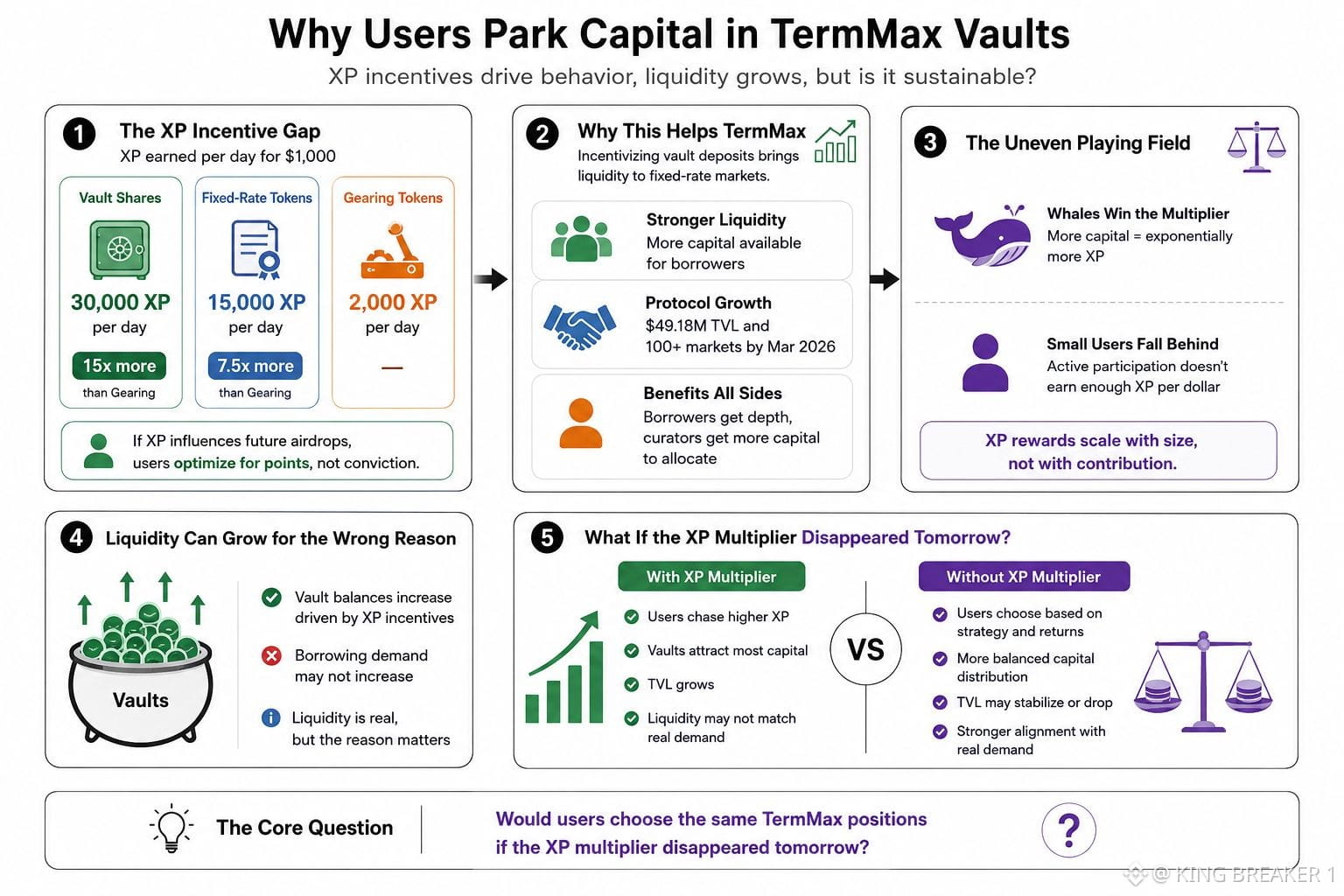
Die Antwort wurde klarer, als ich mir das XP-System ansah. Unter der veröffentlichten Struktur konnten $1.000 in Tresoranteilen 30.000 XP pro Tag einbringen. Der gleiche Wert in Fixed-Rate Tokens ergab 15.000 XP, während eine Position in einem Gearing Token nur 2.000 XP erhielt. Wenn XP einen Einfluss auf einen zukünftigen Airdrop-Anteil hat, geht die Wahl des Tresors weniger auf Überzeugung als auf reine Optimierung zurück.
Dieses Verhalten ist für TermMax nützlich. Fixed-Rate-Märkte brauchen genügend verfügbare Liquidität, um Kreditnehmer zu bedienen, und das Belohnen von Tresoreinlagen hilft, diese anzuziehen. Das Protokoll meldete $49,18 Millionen TVL und mehr als 100 Märkte bis März 2026, was darauf hindeutet, dass der Liquiditäts-Schub Wirkung zeigte. Kreditnehmer profitieren möglicherweise von tieferen Märkten, während Kuratoren mehr Kapital erhalten, um es zuzuweisen.
Aber dieselbe Struktur begünstigt natürlicherweise große Inhaber. Ein Whale kann seine XP allein dadurch vervielfachen, dass er mehr Mittel hinzufügt, während ein kleinerer Nutzer, der aktiv Kredite aufnimmt oder handelt, zwar mehr zur Marktaktivität beitragen kann, aber pro Dollar deutlich weniger Punkte bekommt.
Wenn genug Menschen dem Multiplikator folgen, können sich die Tresorguthaben vergrößern, selbst wenn die tatsächliche Kreditnachfrage nicht steigt. Diese Liquidität ist zwar real, aber entscheidend ist, warum sie dort ist.
Würden Nutzer die gleichen TermMax-Positionen wählen, wenn der XP-Multiplikator morgen verschwinden würde?
@TermMax
#TermMax
Die Antwort wurde klarer, als ich mir das XP-System ansah. Unter der veröffentlichten Struktur konnten $1.000 in Tresoranteilen 30.000 XP pro Tag einbringen. Der gleiche Wert in Fixed-Rate Tokens ergab 15.000 XP, während eine Position in einem Gearing Token nur 2.000 XP erhielt. Wenn XP einen Einfluss auf einen zukünftigen Airdrop-Anteil hat, geht die Wahl des Tresors weniger auf Überzeugung als auf reine Optimierung zurück.
Dieses Verhalten ist für TermMax nützlich. Fixed-Rate-Märkte brauchen genügend verfügbare Liquidität, um Kreditnehmer zu bedienen, und das Belohnen von Tresoreinlagen hilft, diese anzuziehen. Das Protokoll meldete $49,18 Millionen TVL und mehr als 100 Märkte bis März 2026, was darauf hindeutet, dass der Liquiditäts-Schub Wirkung zeigte. Kreditnehmer profitieren möglicherweise von tieferen Märkten, während Kuratoren mehr Kapital erhalten, um es zuzuweisen.
Aber dieselbe Struktur begünstigt natürlicherweise große Inhaber. Ein Whale kann seine XP allein dadurch vervielfachen, dass er mehr Mittel hinzufügt, während ein kleinerer Nutzer, der aktiv Kredite aufnimmt oder handelt, zwar mehr zur Marktaktivität beitragen kann, aber pro Dollar deutlich weniger Punkte bekommt.
Wenn genug Menschen dem Multiplikator folgen, können sich die Tresorguthaben vergrößern, selbst wenn die tatsächliche Kreditnachfrage nicht steigt. Diese Liquidität ist zwar real, aber entscheidend ist, warum sie dort ist.
Würden Nutzer die gleichen TermMax-Positionen wählen, wenn der XP-Multiplikator morgen verschwinden würde?
@TermMax
#TermMax