Dusk hat zwei separate Datenschutz-Engines gebaut, statt eine zu reparieren
Eigentlich sollte Dusk ein einziges Kern-Privatsystem haben, durch das alles läuft. Es sind zwei, und sie verwenden nicht dieselben technischen Bausteine.
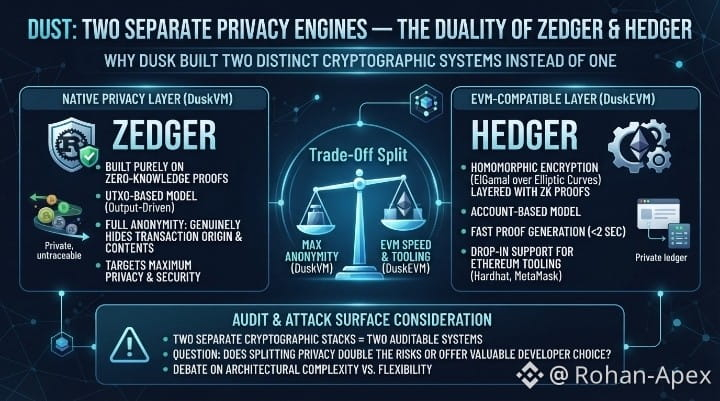
Zedger läuft auf DuskVM — der nativen Rust/WASM-Schicht — und nutzt ein UTXO-basiertes, ausgabeorientiertes Datenschutzmodell, das rein auf Zero-Knowledge-Beweisen beruht. Hedger läuft auf DuskEVM — der Solidity-kompatiblen Schicht — und verwendet eine völlig andere Kombination: homomorphe Verschlüsselung (ElGamal über elliptischen Kurven) geschichtet mit ZK-Beweisen, in einem konto-basierten Modell statt auf UTXOs.
Gleiche Firma, gleiches Ziel bei vertraulichen Transaktionen: zwei strukturell unterschiedliche kryptografische Systeme nebeneinander statt einer gemeinsamen Engine, die beide Schichten abdeckt.
Der Grund ist keine Redundanz um der Redundanz willen. Das UTXO-Modell von Zedger kann vollständige Anonymität bieten — es versteckt wirklich den Ursprung einer Transaktion, nicht nur deren Inhalte. Hedger kann das auf einer konto-basierten EVM-Chain nicht vollständig nachbilden, weil Konten von Natur aus nachvollziehbar sind, was bei UTXOs nicht der Fall ist. Was Hedger dafür gewinnt, ist Geschwindigkeit und Kompatibilität: Proof-Generierung im Browser in unter zwei Sekunden sowie „Drop-in“-Unterstützung für gängige Ethereum-Tools wie Hardhat und MetaMask, sodass Entwickler nichts völlig neu lernen müssen, um private Apps zu bauen.
So wurde der Zielkonflikt auf zwei Systeme aufgeteilt, statt in einem gelöst zu werden. Maximale Anonymität — nutze DuskVM. Schnelles, EVM-natives Tooling mit starkem, aber nicht absolutem Datenschutz — nutze Hedger auf DuskEVM. Keines ist streng genommen besser; sie beantworten unterschiedliche Fragen dazu, was „privat“ für eine bestimmte Anwendung bedeuten muss.
Zwei getrennte kryptografische Stacks bedeuten außerdem zwei getrennte Angriffsflächen, die man prüfen muss — nicht nur eine. Ist das ein fairer Preis dafür, Entwicklern eine echte Auswahl zu geben, oder führt das Aufsplitten des Datenschutzes in zwei Systeme einfach dazu, dass sich doppelt so viele Dinge schiefgehen können?
#dusk $DUSK @Dusk $AVEE.ETF
Eigentlich sollte Dusk ein einziges Kern-Privatsystem haben, durch das alles läuft. Es sind zwei, und sie verwenden nicht dieselben technischen Bausteine.
Zedger läuft auf DuskVM — der nativen Rust/WASM-Schicht — und nutzt ein UTXO-basiertes, ausgabeorientiertes Datenschutzmodell, das rein auf Zero-Knowledge-Beweisen beruht. Hedger läuft auf DuskEVM — der Solidity-kompatiblen Schicht — und verwendet eine völlig andere Kombination: homomorphe Verschlüsselung (ElGamal über elliptischen Kurven) geschichtet mit ZK-Beweisen, in einem konto-basierten Modell statt auf UTXOs.
Gleiche Firma, gleiches Ziel bei vertraulichen Transaktionen: zwei strukturell unterschiedliche kryptografische Systeme nebeneinander statt einer gemeinsamen Engine, die beide Schichten abdeckt.
Der Grund ist keine Redundanz um der Redundanz willen. Das UTXO-Modell von Zedger kann vollständige Anonymität bieten — es versteckt wirklich den Ursprung einer Transaktion, nicht nur deren Inhalte. Hedger kann das auf einer konto-basierten EVM-Chain nicht vollständig nachbilden, weil Konten von Natur aus nachvollziehbar sind, was bei UTXOs nicht der Fall ist. Was Hedger dafür gewinnt, ist Geschwindigkeit und Kompatibilität: Proof-Generierung im Browser in unter zwei Sekunden sowie „Drop-in“-Unterstützung für gängige Ethereum-Tools wie Hardhat und MetaMask, sodass Entwickler nichts völlig neu lernen müssen, um private Apps zu bauen.
So wurde der Zielkonflikt auf zwei Systeme aufgeteilt, statt in einem gelöst zu werden. Maximale Anonymität — nutze DuskVM. Schnelles, EVM-natives Tooling mit starkem, aber nicht absolutem Datenschutz — nutze Hedger auf DuskEVM. Keines ist streng genommen besser; sie beantworten unterschiedliche Fragen dazu, was „privat“ für eine bestimmte Anwendung bedeuten muss.
Zwei getrennte kryptografische Stacks bedeuten außerdem zwei getrennte Angriffsflächen, die man prüfen muss — nicht nur eine. Ist das ein fairer Preis dafür, Entwicklern eine echte Auswahl zu geben, oder führt das Aufsplitten des Datenschutzes in zwei Systeme einfach dazu, dass sich doppelt so viele Dinge schiefgehen können?
#dusk $DUSK @Dusk $AVEE.ETF