@Dusk
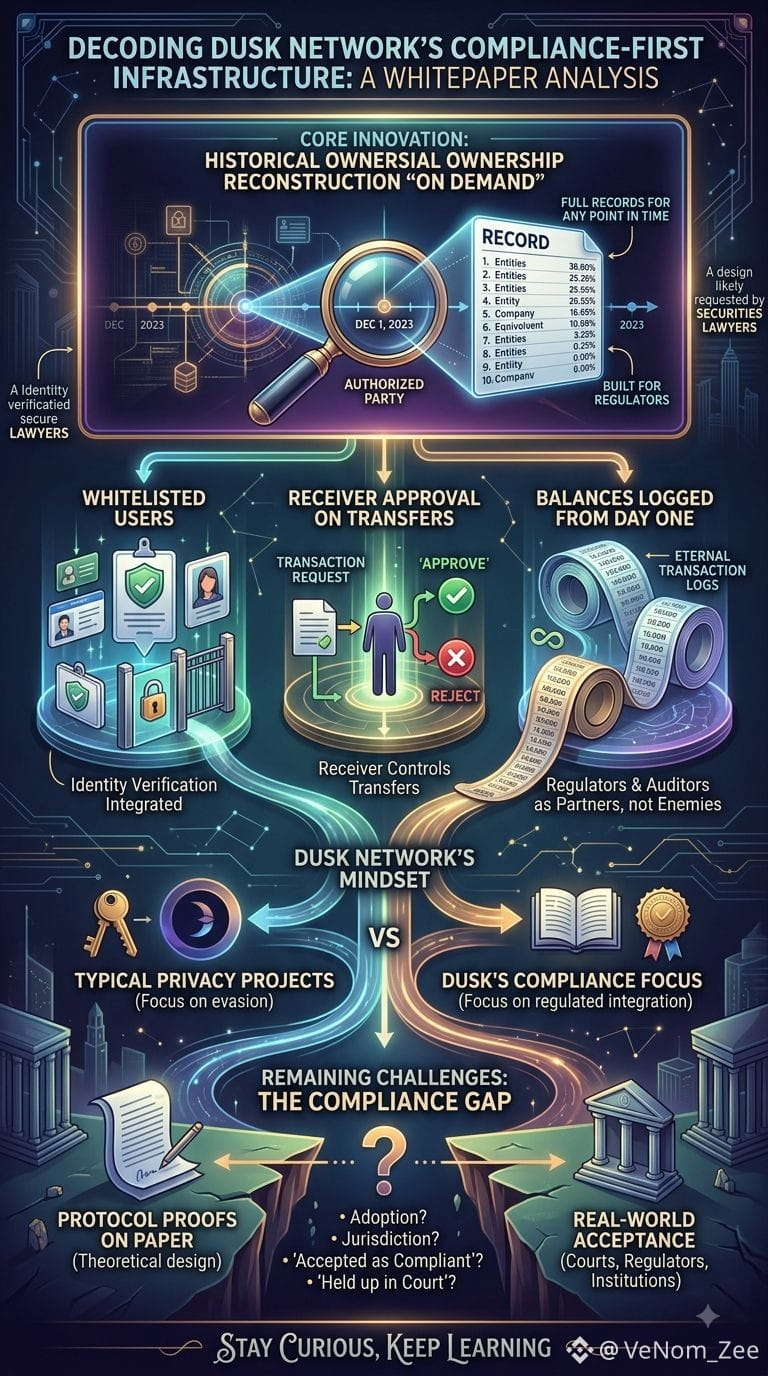
Ich habe neulich nachts das Whitepaper von Dusk Network durchgelesen, und eine Einzelheit hat mich mitten im Scrollen innehalten lassen. Versteckt in einem Abschnitt über ihr Transaktionsmodell steht die Anforderung, dass eine befugte Stelle in der Lage sein muss, zu jedem beliebigen Zeitpunkt den vollständigen Eigentumsnachweis eines Unternehmens auf Abruf rekonstruieren zu können. Das ist nicht die Art von Dingen, die man von einem Krypto-Projekt erwartet, das nach Tempo oder Schlagzeilen jagt.
Das klingt eher nach etwas, das ein Wertpapier-Anwalt verlangt hat, als nach etwas, das sich ein Ingenieur ausgedacht hat. Und genau das hat es für mich greifbarer wirken lassen. Das gesamte Design geht von Whitelist-Nutzern aus, von Empfängerbestätigungen bei Übertragungen und davon, dass die Kontostände ab dem ersten Tag protokolliert werden – aufgebaut auf der Idee, dass Aufsichtsbehörden und Wirtschaftsprüfer Teil des Systems sind, nicht seine Gegner. Das ist eine andere Denkweise als bei den meisten datenschutzorientierten Projekten, und dadurch wirkte das Paper weniger wie ein Pitch und mehr wie echte Infrastrukturarbeit.
Trotzdem versuche ich, mich nicht zu sehr mitreißen zu lassen. Ein Whitepaper kann Compliance sehr detailliert beschreiben und uns trotzdem nichts darüber sagen, ob irgendeine Regulierungsbehörde irgendwo das tatsächlich anerkannt hat. Recht ist nicht in jedem Land gleich, Durchsetzung ist nicht automatisch, und „so konzipiert, dass es compliant ist“ ist nicht dasselbe wie „als compliant akzeptiert“. Oft gibt es eine echte Lücke zwischen dem, was ein Protokoll auf dem Papier beweist, und dem, was sich in der Praxis bewährt, sobald es auf Gerichte, Regulierer und echte Institutionen trifft.
So bleiben mir mehr Fragen als Schlussfolgerungen – zu Akzeptanz, zu Zuständigkeiten (Jurisdiktion) und dazu, ob irgendetwas davon außerhalb des Dokuments Bestand hatte. Das fühlt sich ehrlich gesagt nach einer angemessenen Reaktion an. Lies genau, hinterfrage die Behauptungen und gib kein Vertrauen ab nur weil etwas gut durchdacht klingt.
Bleib neugierig, bleib am Lernen — das reicht für heute.
@Dusk #dusk $DUSK
Ich habe neulich nachts das Whitepaper von Dusk Network durchgelesen, und eine Einzelheit hat mich mitten im Scrollen innehalten lassen. Versteckt in einem Abschnitt über ihr Transaktionsmodell steht die Anforderung, dass eine befugte Stelle in der Lage sein muss, zu jedem beliebigen Zeitpunkt den vollständigen Eigentumsnachweis eines Unternehmens auf Abruf rekonstruieren zu können. Das ist nicht die Art von Dingen, die man von einem Krypto-Projekt erwartet, das nach Tempo oder Schlagzeilen jagt.
Das klingt eher nach etwas, das ein Wertpapier-Anwalt verlangt hat, als nach etwas, das sich ein Ingenieur ausgedacht hat. Und genau das hat es für mich greifbarer wirken lassen. Das gesamte Design geht von Whitelist-Nutzern aus, von Empfängerbestätigungen bei Übertragungen und davon, dass die Kontostände ab dem ersten Tag protokolliert werden – aufgebaut auf der Idee, dass Aufsichtsbehörden und Wirtschaftsprüfer Teil des Systems sind, nicht seine Gegner. Das ist eine andere Denkweise als bei den meisten datenschutzorientierten Projekten, und dadurch wirkte das Paper weniger wie ein Pitch und mehr wie echte Infrastrukturarbeit.
Trotzdem versuche ich, mich nicht zu sehr mitreißen zu lassen. Ein Whitepaper kann Compliance sehr detailliert beschreiben und uns trotzdem nichts darüber sagen, ob irgendeine Regulierungsbehörde irgendwo das tatsächlich anerkannt hat. Recht ist nicht in jedem Land gleich, Durchsetzung ist nicht automatisch, und „so konzipiert, dass es compliant ist“ ist nicht dasselbe wie „als compliant akzeptiert“. Oft gibt es eine echte Lücke zwischen dem, was ein Protokoll auf dem Papier beweist, und dem, was sich in der Praxis bewährt, sobald es auf Gerichte, Regulierer und echte Institutionen trifft.
So bleiben mir mehr Fragen als Schlussfolgerungen – zu Akzeptanz, zu Zuständigkeiten (Jurisdiktion) und dazu, ob irgendetwas davon außerhalb des Dokuments Bestand hatte. Das fühlt sich ehrlich gesagt nach einer angemessenen Reaktion an. Lies genau, hinterfrage die Behauptungen und gib kein Vertrauen ab nur weil etwas gut durchdacht klingt.
Bleib neugierig, bleib am Lernen — das reicht für heute.
@Dusk #dusk $DUSK