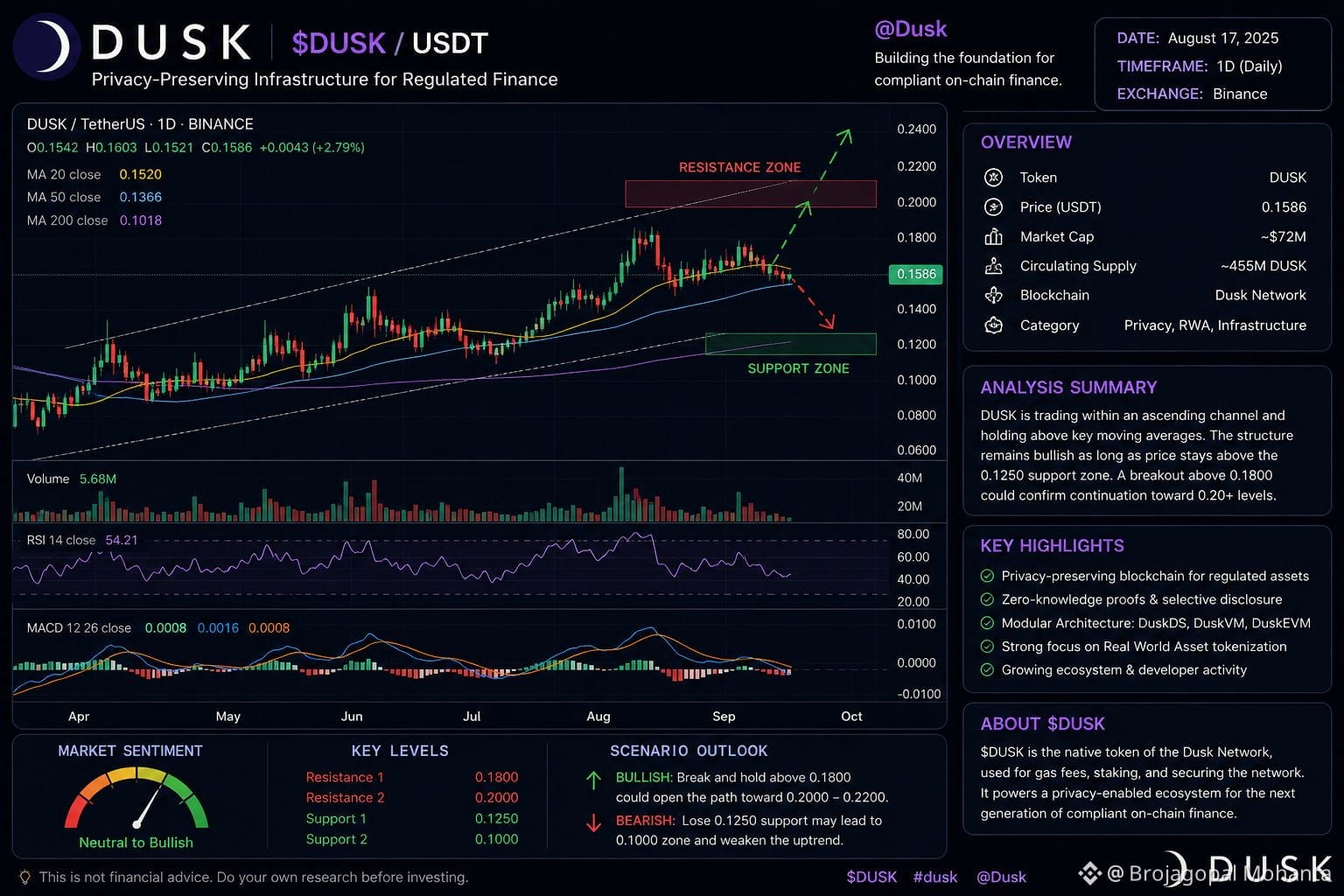
#dusk $DUSK @Dusk
🧠 Dusk: Die tiefere Idee hinter datenschutzfreundlichem, reguliertem Finanzwesen
@Dusk ist interessant, weil sein Ziel über das bloße Platzieren von Tokens auf einer Blockchain hinausgeht. Die schwierigere Aufgabe besteht darin, finanzielle Infrastruktur aufzubauen, in der Datenschutz, Regulierung, Identität, Vermögensinhaberschaft und Abwicklung zusammen funktionieren können, ohne alles in ein einziges Extrem zu pressen: völlig öffentlich oder völlig privat.
Denke an ein reguliertes Wertpapier. Ein Anleger muss möglicherweise seine Berechtigung nachweisen, ein Emittent muss möglicherweise Übertragungsbeschränkungen durchsetzen, und ein Prüfer oder Regulator muss möglicherweise Zugang zu bestimmten Informationen haben. Gleichzeitig ist es für Finanzmärkte nicht unbedingt praktikabel, jede Bilanz, jeden Transaktionsbetrag und jede Gegenpartei öffentlich offenzulegen.
Dusk begegnet diesem Problem durch Datenschutz mit selektiver Offenlegung. Die Architektur unterstützt öffentliche Transaktionen über Moonlight, während Phoenix verifizierte Übertragungen mit Zero-Knowledge-Technologie ermöglicht. Das schafft eine wichtige konzeptionelle Unterscheidung: Datenschutz muss nicht das Fehlen von Verantwortlichkeit bedeuten. Informationen können geschützt bleiben, während bestimmte Tatsachen offengelegt werden können, wenn sie für autorisierte Teilnehmer erforderlich sind.
Die Architektur geht noch tiefer. DuskDS stellt Konsens, Abrechnung und Datenverfügbarkeit bereit, während DuskVM die Ausführung von Rust/WASM-Smart-Contracts direkt auf der L1 unterstützt. DuskEVM bietet eine EVM-kompatible Umgebung für Solidity-Anwendungen. Citadel ergänzt Identität und Primitiven für selektive Offenlegung.
$DUSK ist das native Asset, das für Netzwerk-Gas und Staking verwendet wird und so die wirtschaftliche Ebene mit der Infrastruktur verbindet, die das Netzwerk absichert.
Die größere These hinter @Dusk ist daher nicht einfach Tokenisierung. Es geht darum, ob Blockchain-Infrastruktur mit den realen Rahmenbedingungen der Finanzmärkte kompatibel werden kann und dabei die Privatsphäre der Nutzer erhält.
Das ist der Teil von #dusk , dem ich denke, dass er tiefere Aufmerksamkeit verdient.
🧠 Dusk: Die tiefere Idee hinter datenschutzfreundlichem, reguliertem Finanzwesen
@Dusk ist interessant, weil sein Ziel über das bloße Platzieren von Tokens auf einer Blockchain hinausgeht. Die schwierigere Aufgabe besteht darin, finanzielle Infrastruktur aufzubauen, in der Datenschutz, Regulierung, Identität, Vermögensinhaberschaft und Abwicklung zusammen funktionieren können, ohne alles in ein einziges Extrem zu pressen: völlig öffentlich oder völlig privat.
Denke an ein reguliertes Wertpapier. Ein Anleger muss möglicherweise seine Berechtigung nachweisen, ein Emittent muss möglicherweise Übertragungsbeschränkungen durchsetzen, und ein Prüfer oder Regulator muss möglicherweise Zugang zu bestimmten Informationen haben. Gleichzeitig ist es für Finanzmärkte nicht unbedingt praktikabel, jede Bilanz, jeden Transaktionsbetrag und jede Gegenpartei öffentlich offenzulegen.
Dusk begegnet diesem Problem durch Datenschutz mit selektiver Offenlegung. Die Architektur unterstützt öffentliche Transaktionen über Moonlight, während Phoenix verifizierte Übertragungen mit Zero-Knowledge-Technologie ermöglicht. Das schafft eine wichtige konzeptionelle Unterscheidung: Datenschutz muss nicht das Fehlen von Verantwortlichkeit bedeuten. Informationen können geschützt bleiben, während bestimmte Tatsachen offengelegt werden können, wenn sie für autorisierte Teilnehmer erforderlich sind.
Die Architektur geht noch tiefer. DuskDS stellt Konsens, Abrechnung und Datenverfügbarkeit bereit, während DuskVM die Ausführung von Rust/WASM-Smart-Contracts direkt auf der L1 unterstützt. DuskEVM bietet eine EVM-kompatible Umgebung für Solidity-Anwendungen. Citadel ergänzt Identität und Primitiven für selektive Offenlegung.
$DUSK ist das native Asset, das für Netzwerk-Gas und Staking verwendet wird und so die wirtschaftliche Ebene mit der Infrastruktur verbindet, die das Netzwerk absichert.
Die größere These hinter @Dusk ist daher nicht einfach Tokenisierung. Es geht darum, ob Blockchain-Infrastruktur mit den realen Rahmenbedingungen der Finanzmärkte kompatibel werden kann und dabei die Privatsphäre der Nutzer erhält.
Das ist der Teil von #dusk , dem ich denke, dass er tiefere Aufmerksamkeit verdient.