
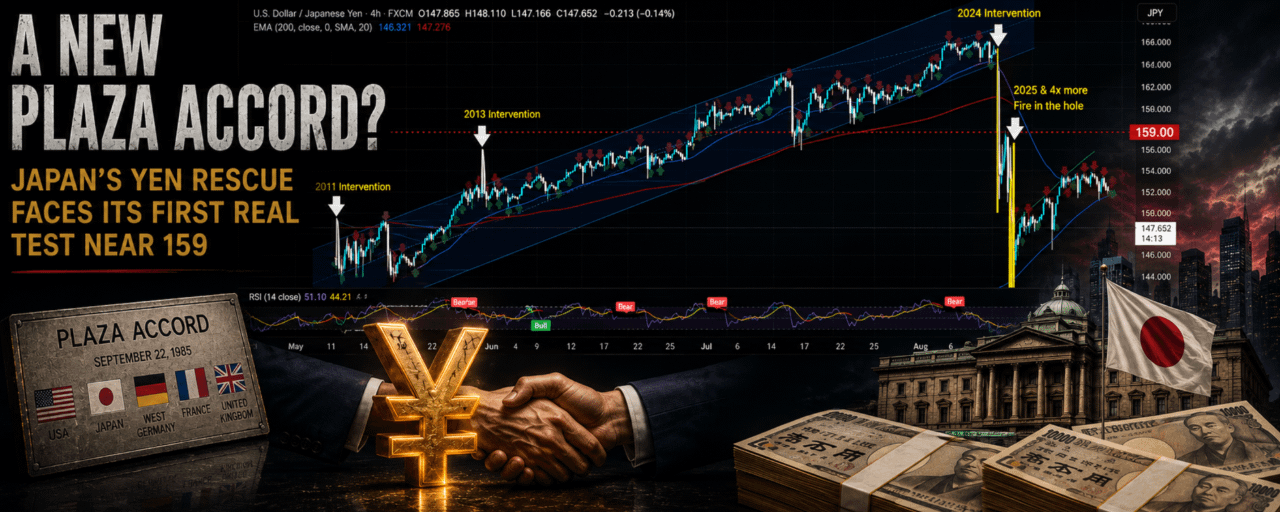
The dollar is losing its grip. Japan's currency climbed to around 159 per dollar Monday, its second straight day of gains, as a string of soft US data pushed traders to all but rule out a Federal Reserve rate hike next month. The Bloomberg dollar index sank to roughly 99.5, its softest level in weeks and a sharp reversal from the one-year high it hit barely two months ago under new Chair Kevin Warsh.
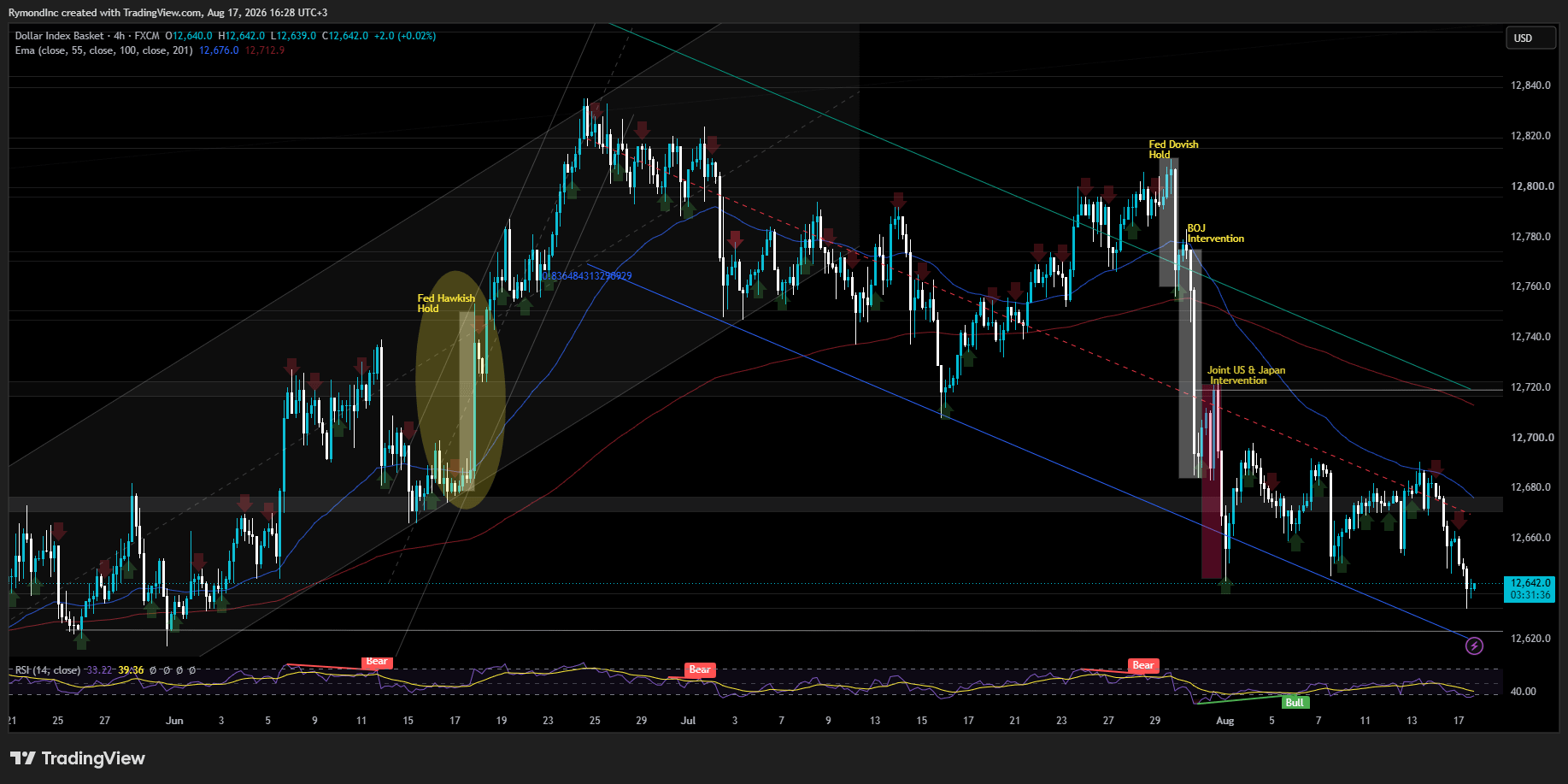
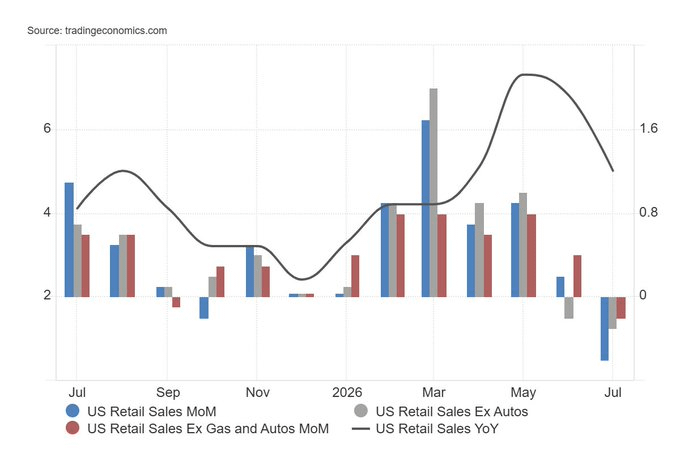
Three straight sessions of decline tell the story. Retail sales unexpectedly fell in July, consumer sentiment slumped to its weakest reading since June, and both producer and consumer inflation came in tamer than forecast.
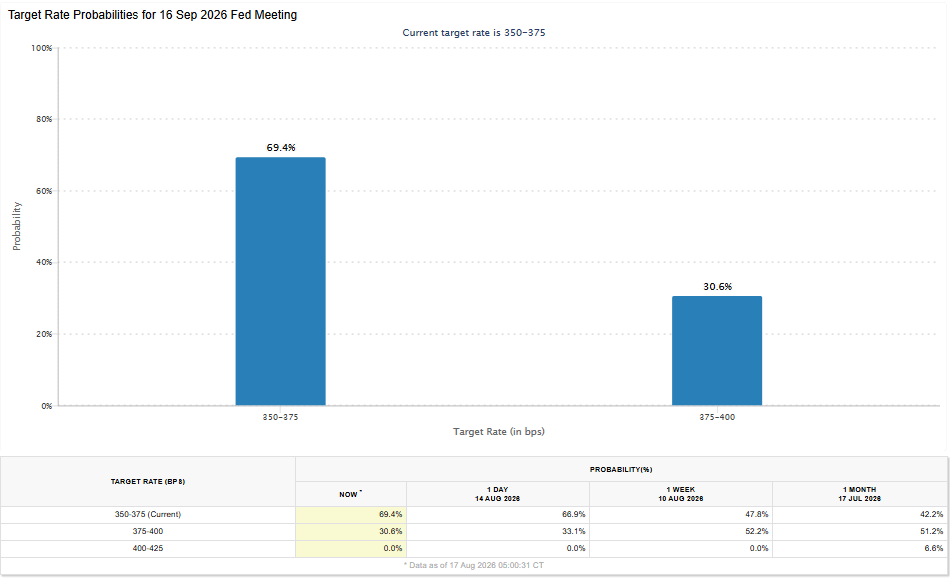
Fed funds futures now price roughly a 69% chance of a hold at the September meeting, up from below 50% a month ago. Traders are left waiting on the FOMC's minutes and Warsh's first Jackson Hole speech as chair for anything resembling a signal.
Tokyo's Own Data Didn't Help the Case for Yen Strength
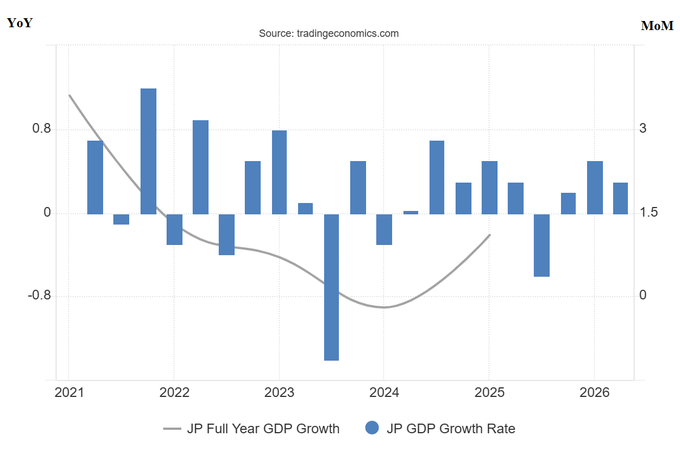
Japan's economy grew at an annualized 1.1% in the second quarter, badly missing forecasts of 2% as soft domestic demand offset otherwise robust exports. Ordinarily that kind of miss would argue against the Bank of Japan doing anything hawkish. It hasn't worked out that way.
The BOJ Is Quietly Preparing to Move Anyway
Three sources close to the central bank told Reuters this month that a rate hike has come into view for the September 17-18 meeting, and that the BOJ is weighing whether to break from its usual pace of roughly two hikes a year and move faster.
Markets are pricing close to an 80% chance of a September move. Some economists think a hike then would clear the way for a follow-up in December, pushing the BOJ toward something closer to a hike every quarter. Bank of America's house call is more aggressive still: four hikes between September and next July, taking the policy rate to 2%.
What's pushing the BOJ toward urgency isn't the weak GDP print. It's price pressure from the Middle East conflict, surging global demand for AI-related hardware, and a yen that keeps sliding even after last month's rare joint intervention.
The central bank lifted its policy rate to 1% in June, a 31-year high, then held in July while warning that inflation risk was building. At least three of the nine board members have since argued publicly for a faster pace, and Governor Kazuo Ueda has signaled he's listening.
An Intervention That's Already Half Undone
The scale of the problem shows in how quickly Tokyo's big move faded. On July 31, Japan and the US carried out a coordinated yen-buying operation — the first time the two countries had jointly defended the currency since 1998, twenty-eight years ago. It worked immediately, pulling the yen back from a 40-year low near 163 to around 157. Within two weeks, roughly half of that gain was gone, with the yen back above 159.
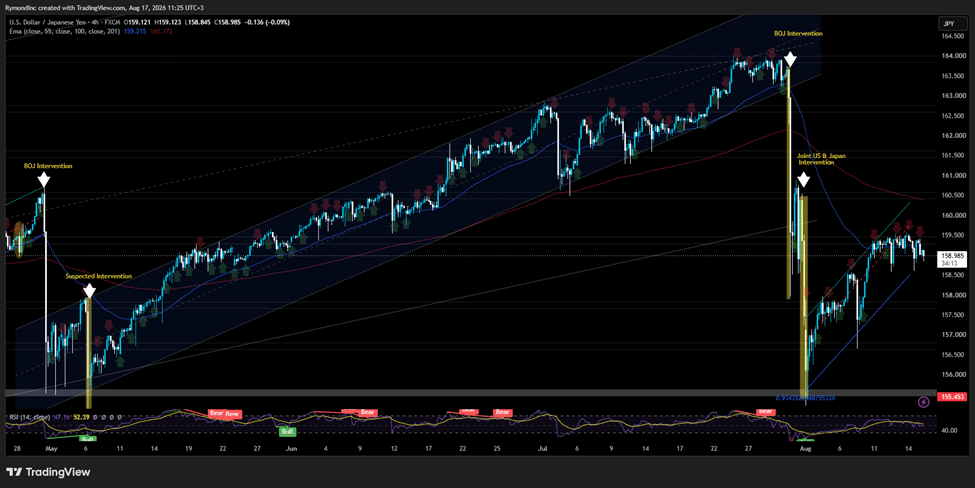
Japanese officials insist they're not finished. Authorities have signaled they're prepared to step in again well before the yen revisits the 163-164 zone that triggered the July action, and they now have a new tool to lean on: a reactivated, COVID-era Fed lending facility that lets the Bank of Japan borrow dollars against more than $1 trillion in Treasury holdings rather than selling them outright.
Treasury Secretary Scott Bessent unveiled the arrangement on August 3, framing it as a way for Japan to defend the yen without dumping Treasuries and rattling US bond markets. Some Japanese analysts have compared the move to the 1985 Plaza Accord. Japan's top currency official, Atsushi Mimura, went further, calling the coordinated action the culmination of the US-Japan currency alliance.
The facility isn't unlimited. It caps borrowing at $60 billion per counterparty per day, funded for stretches of up to seven days at a time and rollable from there — useful for masking the timing of intervention, but not a bottomless well. Tomoyuki Fukumoto, a former Bank of Japan official now teaching at Osaka University of Economics, has noted the dollars borrowed under the facility eventually have to be repaid, which will require Japan to sell at least some of its Treasury stockpile regardless. A stable currency, in his view, ultimately still needs interest rates that are competitive with the rest of the world.
The Speculators Are Retreating, For Now
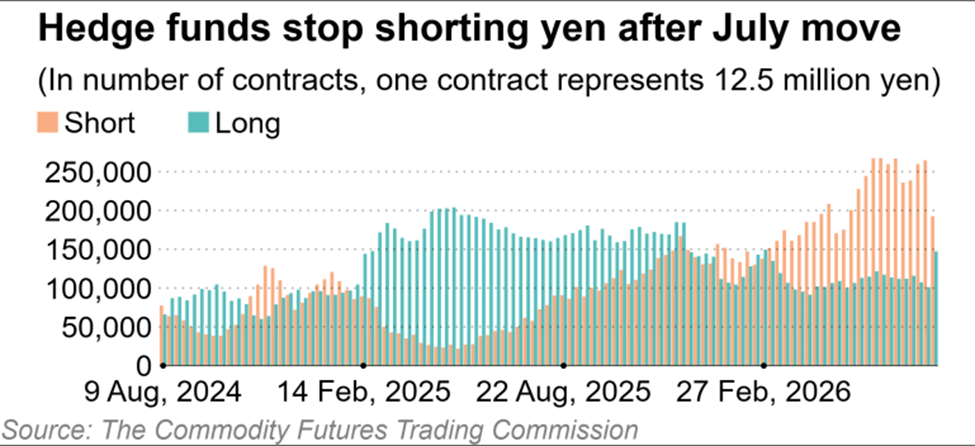
Positioning data backs up the sense that the pressure has eased, at least temporarily. Leveraged funds slashed their net short bets against the yen by more than 70% in the week following the intervention, according to CFTC data, unwinding a chunk of what had been the most bearish positioning against the currency since 2007.
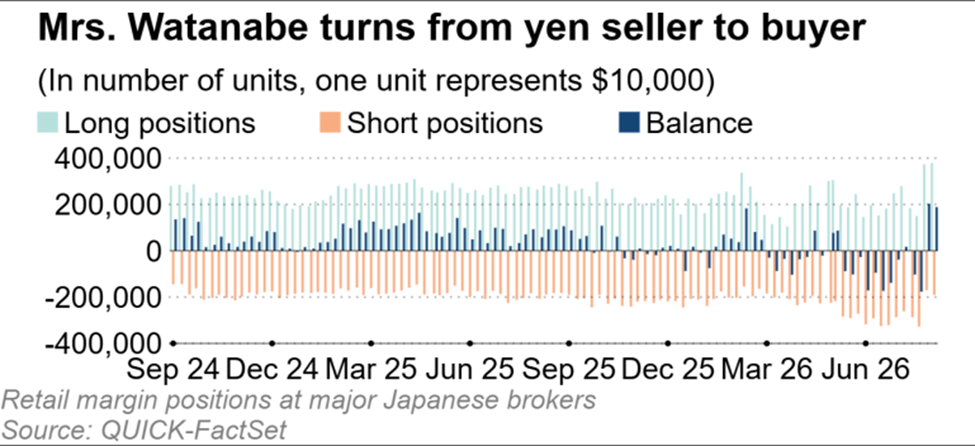
The chart shows Japanese retail traders’ net yen positioning shifting from predominantly short toward long in 2026. By the latest reading, the balance is around +200,000 units, equivalent to roughly +$2 billion, while long positions are close to 400,000 units ($4 billion) and short positions around -200,000 units (-$2 billion).
Takaichi's Balancing Act
Prime Minister Sanae Takaichi's government is caught between two competing instincts. Her pledge to cut Japan's food sales tax to 1% from 8% for two years starting in April 2027 is meant to soften the inflation bite for households. But economists warn that her administration's apparent reluctance to fully back further BOJ tightening or return to fiscal discipline sends the opposite signal to currency markets — the kind of ambiguity that gives yen bears an opening even as the central bank leans hawkish.
According to Japans Nikkei news article, Shigeto Nagai of Oxford Economics has flagged the yen and Japanese government bonds as favored targets for global hedge funds, even if few expect anything resembling a full-blown speculative assault on Takaichi's government.
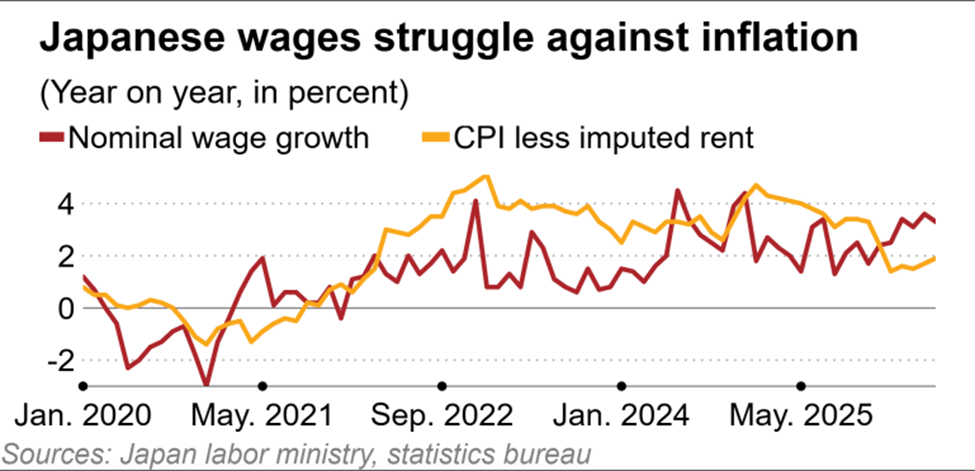
Real wages remain the deeper problem. Nominal pay rose more than 2% in both 2024 and 2025 — a stronger run than Japan has seen in decades — yet inflation running near 3% has eaten most of the gain, while a weak yen has padded corporate profits faster than paychecks. Nagai doesn't expect the BOJ to rush in September, arguing that tightening may be the wrong medicine for an economy still short on real growth.
Takaichi's answer lies further out: a pledged 370 trillion yen, or roughly $2.3 trillion, in public-private investment over the next fourteen years, aimed at sectors where Japan still holds a competitive edge. Fukumoto isn't convinced that spending alone solves anything. "There is no magic bullet," he said. "The only lasting solution is to create more value."
Whether that value shows up before the next round of speculators decides to test Tokyo's resolve is the question hanging over every yen trade this week.