Eines der größten Probleme auf privaten Märkten ist die Fragmentierung.
Ein Emittent, Anleger, Administrator, Berater, Bank, Verwahrer und Handelsplatz können alle auf unterschiedliche Aufzeichnungen und Prozesse für dasselbe Wertpapier zurückgreifen.
Je mehr Übergaben zwischen den Marktteilnehmern stattfinden, desto mehr Abgleichprozesse werden erzeugt und damit wächst das Reibungspotenzial.
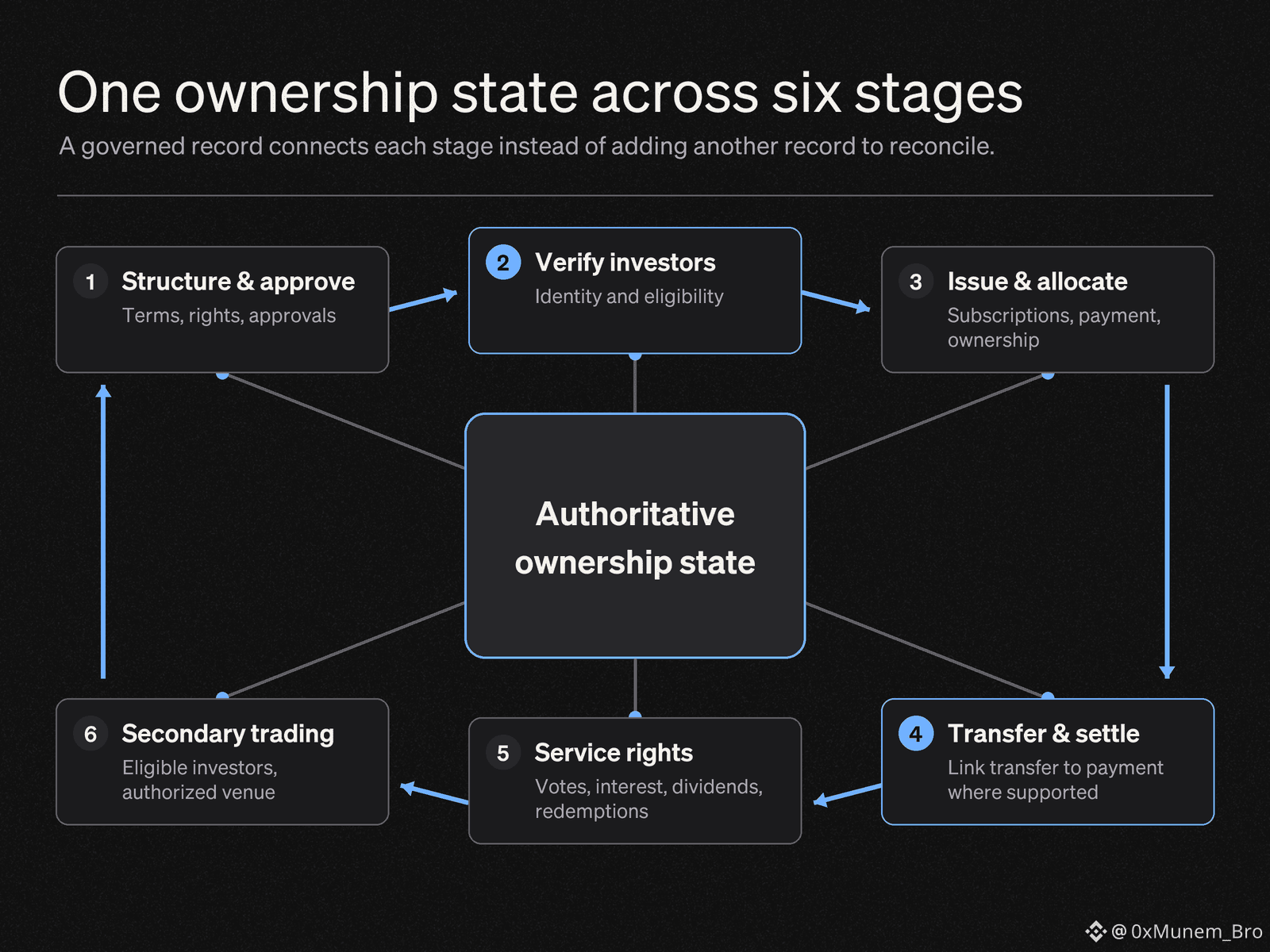
Tokenisierung kann eine Reihe von Problemen sowohl für Emittenten als auch für Anleger lösen, wenn sie für den gesamten Besitzlebenszyklus umgesetzt wird.
Die Berechtigung von Anlegern zur Teilnahme an einer Transaktion kann überprüft werden, bevor die Transaktion abgeschlossen wird. Anschließende Aktualisierungen des Eigentumsinteresses an einem Wertpapier können dann auf der kontrollierten digitalen Eigentumsaufzeichnung für ein solches Wertpapier erfasst werden. Die Regeln für Transfer und Abwicklung können anschließend auf denselben Workflow angewendet werden wie die Aktualisierungen der Eigentumsaufzeichnung.
Doch regulierte Finanzmärkte benötigen auch Privatsphäre.
@Dusk kombiniert vertrauliche Transaktionen mit selektiver Offenlegung. Alle autorisierten Parteien können relevante Informationen verifizieren, während die vollständige Anlegerakte (kann) vor den Augen der Öffentlichkeit verborgen bleibt.
Dieses Gleichgewicht ist für regulierte Vermögenswerte wichtig.
Das Ziel ist nicht, jede finanzielle Transaktion für jeden transparent zu machen.
Das Ziel jeder Finanzaktivität ist es, das Eigentum, die Compliance und die Abwicklung jedes finanziellen Vermögenswerts effizienter zu gestalten und dabei sensible Informationen privat zu halten.
Darum finde ich Dusk’s Ansatz für regulierte On-Chain-Finanzierung interessant.
#dusk $DUSK
Ein Emittent, Anleger, Administrator, Berater, Bank, Verwahrer und Handelsplatz können alle auf unterschiedliche Aufzeichnungen und Prozesse für dasselbe Wertpapier zurückgreifen.
Je mehr Übergaben zwischen den Marktteilnehmern stattfinden, desto mehr Abgleichprozesse werden erzeugt und damit wächst das Reibungspotenzial.
Tokenisierung kann eine Reihe von Problemen sowohl für Emittenten als auch für Anleger lösen, wenn sie für den gesamten Besitzlebenszyklus umgesetzt wird.
Die Berechtigung von Anlegern zur Teilnahme an einer Transaktion kann überprüft werden, bevor die Transaktion abgeschlossen wird. Anschließende Aktualisierungen des Eigentumsinteresses an einem Wertpapier können dann auf der kontrollierten digitalen Eigentumsaufzeichnung für ein solches Wertpapier erfasst werden. Die Regeln für Transfer und Abwicklung können anschließend auf denselben Workflow angewendet werden wie die Aktualisierungen der Eigentumsaufzeichnung.
Doch regulierte Finanzmärkte benötigen auch Privatsphäre.
@Dusk kombiniert vertrauliche Transaktionen mit selektiver Offenlegung. Alle autorisierten Parteien können relevante Informationen verifizieren, während die vollständige Anlegerakte (kann) vor den Augen der Öffentlichkeit verborgen bleibt.
Dieses Gleichgewicht ist für regulierte Vermögenswerte wichtig.
Das Ziel ist nicht, jede finanzielle Transaktion für jeden transparent zu machen.
Das Ziel jeder Finanzaktivität ist es, das Eigentum, die Compliance und die Abwicklung jedes finanziellen Vermögenswerts effizienter zu gestalten und dabei sensible Informationen privat zu halten.
Darum finde ich Dusk’s Ansatz für regulierte On-Chain-Finanzierung interessant.
#dusk $DUSK