Ich habe die Dokumentation von TermMax durchgelesen, um herauszufinden, was „Fixed-Rate Token“ eigentlich bedeutet. Dabei nahm ich an, dass die Rate selbst vom Protokoll festverankert ist und mit dem Öffnen eines Marktes einmalig festgelegt wird. Diese Annahme hielt nicht einmal die erste Seite der Tokenisierung durch.
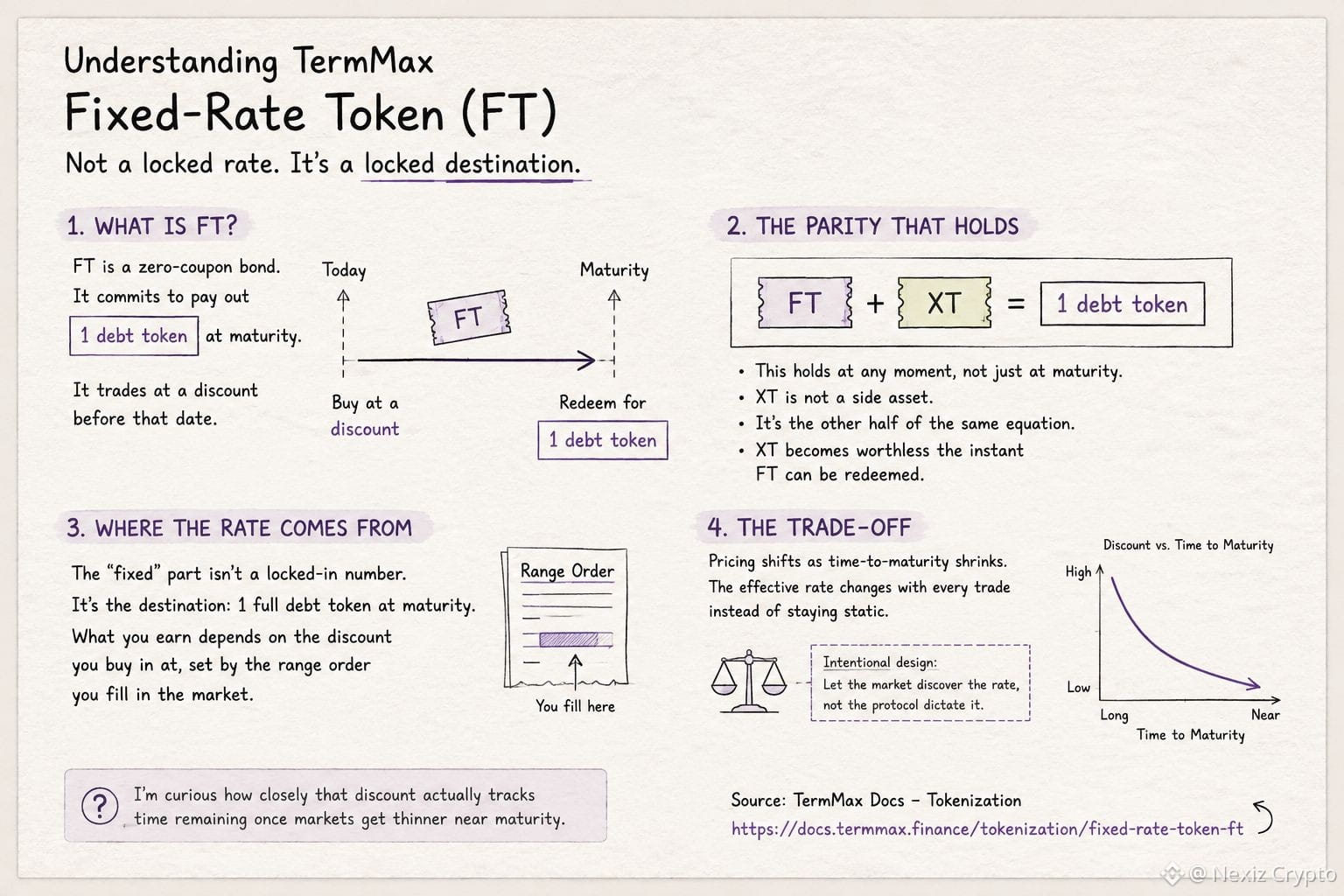
Die Doku beschreibt FT als eine Zero-Coupon-Anleihe: Sie verpflichtet sich dazu, zum Fälligkeitstermin 1 Debt-Token auszuzahlen, wird aber noch vor diesem Datum mit einem Abschlag gehandelt. Der „fixed“-Teil ist also keine fest eingeschlossene Zahl, sondern das Ziel: ein voller Debt-Token, der bei Fälligkeit garantiert ist. Was ein Kreditgeber tatsächlich verdient, hängt davon ab, welchen Abschlag er beim Kauf zugrunde legt—und der wird durch die Range-Order festgelegt, die er am Ende ausfüllt. Genau dann klickte es.
Was mich überrascht hat, war die darunterliegende Paritätsbedingung: 1 FT plus 1 XT ergibt 1 Debt-Token—und zwar zu jedem Zeitpunkt, nicht nur bei der Abwicklung. XT ist kein „Nebenasset“, das abseits liegt. Es ist die andere Hälfte derselben Gleichung, und es wird sofort wertlos, sobald FT bei Fälligkeit eingelöst werden kann.
Der Preisnachteil ist, dass sich die Preisbildung verschiebt, während die Zeit bis zur Fälligkeit schrumpft. Dadurch ändert sich die effektive Rate mit jedem Trade, anstatt statisch zu bleiben. Das scheint beabsichtigt zu sein: Der Markt soll die Rate entdecken können, statt dass das Protokoll sie im Voraus vorgibt.
Mich interessiert, wie eng dieser Abschlag die verbleibende Zeit tatsächlich abbildet, sobald die Märkte nahe der Fälligkeit dünner werden. #termmax @TermMax
Die Doku beschreibt FT als eine Zero-Coupon-Anleihe: Sie verpflichtet sich dazu, zum Fälligkeitstermin 1 Debt-Token auszuzahlen, wird aber noch vor diesem Datum mit einem Abschlag gehandelt. Der „fixed“-Teil ist also keine fest eingeschlossene Zahl, sondern das Ziel: ein voller Debt-Token, der bei Fälligkeit garantiert ist. Was ein Kreditgeber tatsächlich verdient, hängt davon ab, welchen Abschlag er beim Kauf zugrunde legt—und der wird durch die Range-Order festgelegt, die er am Ende ausfüllt. Genau dann klickte es.
Was mich überrascht hat, war die darunterliegende Paritätsbedingung: 1 FT plus 1 XT ergibt 1 Debt-Token—und zwar zu jedem Zeitpunkt, nicht nur bei der Abwicklung. XT ist kein „Nebenasset“, das abseits liegt. Es ist die andere Hälfte derselben Gleichung, und es wird sofort wertlos, sobald FT bei Fälligkeit eingelöst werden kann.
Der Preisnachteil ist, dass sich die Preisbildung verschiebt, während die Zeit bis zur Fälligkeit schrumpft. Dadurch ändert sich die effektive Rate mit jedem Trade, anstatt statisch zu bleiben. Das scheint beabsichtigt zu sein: Der Markt soll die Rate entdecken können, statt dass das Protokoll sie im Voraus vorgibt.
Mich interessiert, wie eng dieser Abschlag die verbleibende Zeit tatsächlich abbildet, sobald die Märkte nahe der Fälligkeit dünner werden. #termmax @TermMax