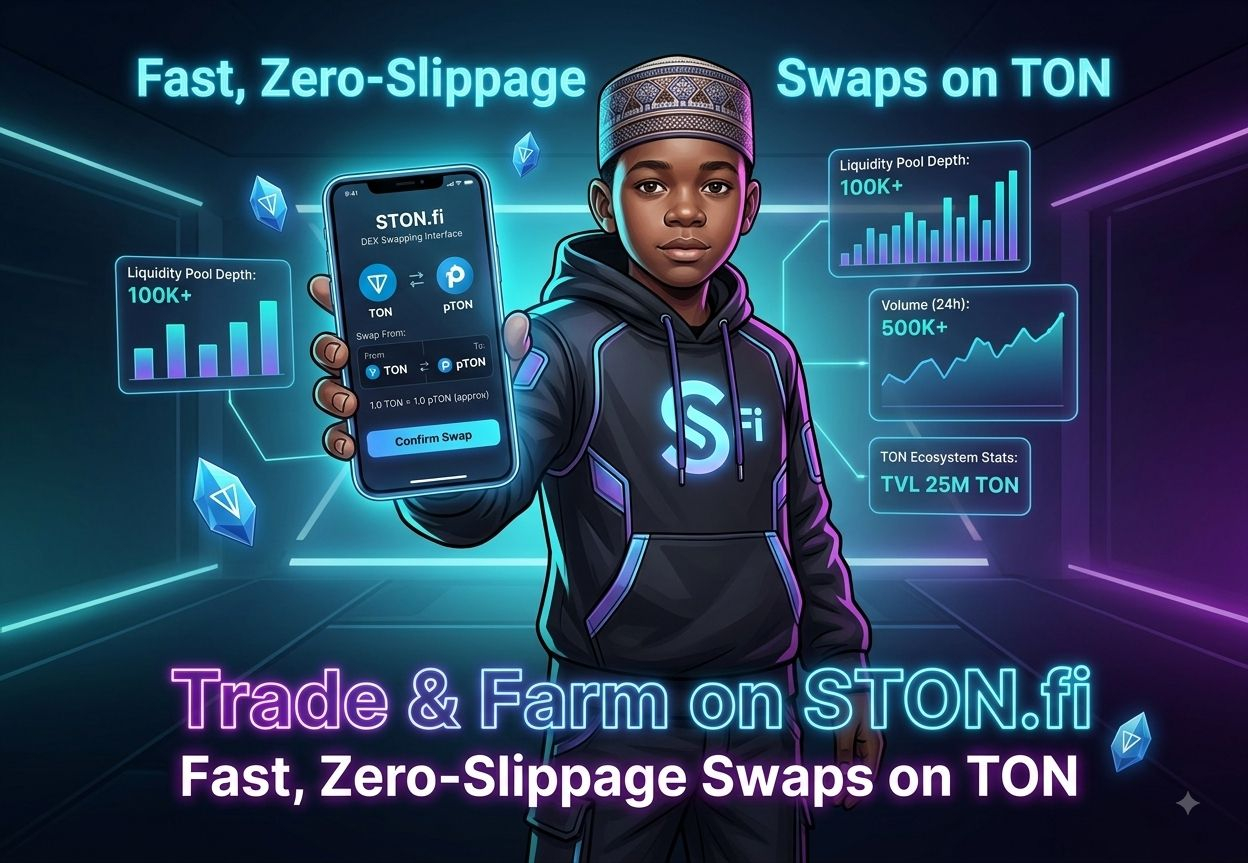
A token swap may look like a simple button press, but there is interesting technology working behind that experience.
On STON.fi, users can connect a compatible TON wallet, select the assets they want to exchange, review the transaction details, and confirm the swap through their wallet. TON is also required to cover network transaction fees. �
STON
The important part is that users maintain control of their wallet rather than handing their assets to a centralized exchange for custody. STON.fi describes its system as non-custodial, meaning the platform facilitates transactions while users retain control of their funds. �
STON
But self-custody comes with responsibility.
Before confirming a transaction, users should carefully check the tokens involved, amounts, estimated output, fees, and wallet notification. They should also verify that they are using the legitimate STON.fi website or application rather than a phishing link.
This is something I think more Web3 users should talk about. The easiest transaction is not necessarily the safest transaction if the user does not understand what they are approving.
STON.fi's current ecosystem also goes beyond basic swaps. Its platform includes features such as liquidity provision, farming, and staking, while its broader infrastructure includes Omniston, a liquidity aggregation protocol designed to connect applications with multiple liquidity sources. �
STON +1
For beginners, however, the best approach is simple: learn one feature at a time.
Start by understanding wallets. Then learn how swaps work. After that, explore liquidity and other DeFi opportunities.
DeFi becomes less intimidating when we stop treating it like magic and start understanding the process behind every transaction.
Learn first. Click second.