
Ich habe weiter in Dusk’ Staking-Modell gegraben, und plötzlich wurde eine weitere Ebene wichtiger als der Emissionsplan selbst.
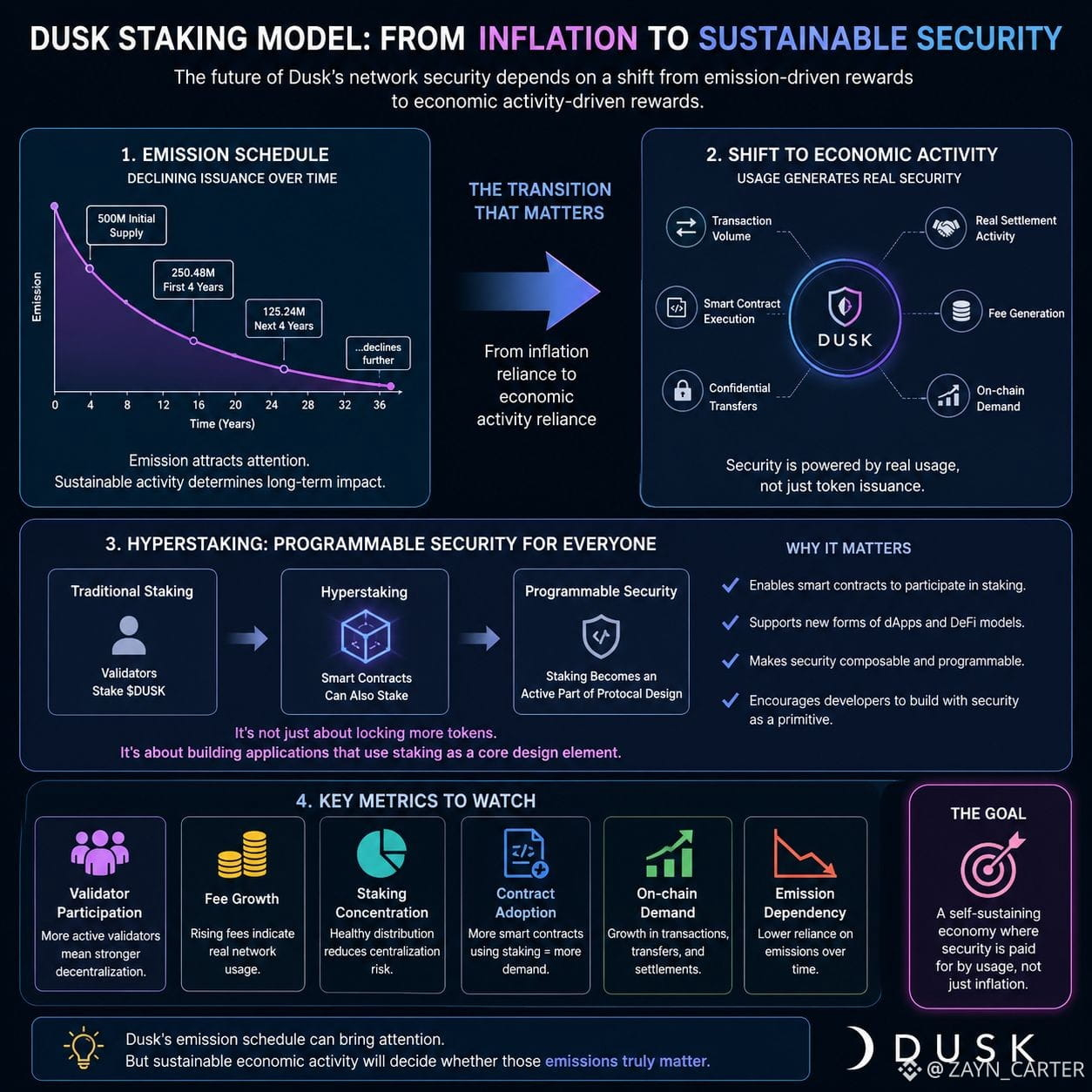
Eine abnehmende Emissionskurve erzählt nur einen Teil der Geschichte. Die eigentliche Frage ist, was passiert, wenn sich die Netzwerkinzentive nach und nach von Inflation hin zu wirtschaftlicher Aktivität verschieben. Genau an dieser Stelle werden viele Proof-of-Stake-Netzwerke letztlich auf die Probe gestellt.
Wenn die Belohnungen für Validatoren weiterhin größtenteils von neu geschaffenen $DUSK abhängen, bleibt die langfristige Nachhaltigkeit eng mit den Emissionen verbunden. Aber wenn Transaktionsvolumen, die Ausführung von Smart Contracts, vertrauliche Übertragungen und reale Abwicklungsaktivitäten einen größeren Anteil an den Belohnungen übernehmen, beginnt das Netzwerk Sicherheit aus der tatsächlichen Nutzung zu erzeugen – statt sie vor allem aus der Token-Ausgabe zu ziehen.
Das macht Hyperstaking interessanter, als es auf den ersten Blick wirkt. Indem man Smart Contracts am Staking teilnehmen lässt, entsteht die Möglichkeit programmierbarer Sicherheit – statt eines Staking-Modells, das auf traditionelle Validatoren beschränkt ist. Der langfristige Wert liegt nicht einfach darin, mehr Token zu sperren. Es geht darum, ob Entwickler Anwendungen bauen können, die Staking zu einem aktiven Bestandteil des Protokolldesigns machen.
Die größere Kennzahl, die ich im Blick behalten möchte, ist nicht nur die APR. Entscheidend sind Validator-Beteiligung, Gebührenwachstum, Staking-Konzentration, Contract-Adoption und ob die On-Chain-Nachfrage wächst, während die Emissionen weiter zurückgehen.
Emissionspläne können Aufmerksamkeit erzeugen. Nachhaltige wirtschaftliche Aktivität ist das, was letztlich bestimmt, ob diese Pläne überhaupt irgendwann relevant werden.
Das ist der Teil von Dusk’ Design, den ich am genauesten beobachte.
@Dusk $DUSK #dusk
Eine abnehmende Emissionskurve erzählt nur einen Teil der Geschichte. Die eigentliche Frage ist, was passiert, wenn sich die Netzwerkinzentive nach und nach von Inflation hin zu wirtschaftlicher Aktivität verschieben. Genau an dieser Stelle werden viele Proof-of-Stake-Netzwerke letztlich auf die Probe gestellt.
Wenn die Belohnungen für Validatoren weiterhin größtenteils von neu geschaffenen $DUSK abhängen, bleibt die langfristige Nachhaltigkeit eng mit den Emissionen verbunden. Aber wenn Transaktionsvolumen, die Ausführung von Smart Contracts, vertrauliche Übertragungen und reale Abwicklungsaktivitäten einen größeren Anteil an den Belohnungen übernehmen, beginnt das Netzwerk Sicherheit aus der tatsächlichen Nutzung zu erzeugen – statt sie vor allem aus der Token-Ausgabe zu ziehen.
Das macht Hyperstaking interessanter, als es auf den ersten Blick wirkt. Indem man Smart Contracts am Staking teilnehmen lässt, entsteht die Möglichkeit programmierbarer Sicherheit – statt eines Staking-Modells, das auf traditionelle Validatoren beschränkt ist. Der langfristige Wert liegt nicht einfach darin, mehr Token zu sperren. Es geht darum, ob Entwickler Anwendungen bauen können, die Staking zu einem aktiven Bestandteil des Protokolldesigns machen.
Die größere Kennzahl, die ich im Blick behalten möchte, ist nicht nur die APR. Entscheidend sind Validator-Beteiligung, Gebührenwachstum, Staking-Konzentration, Contract-Adoption und ob die On-Chain-Nachfrage wächst, während die Emissionen weiter zurückgehen.
Emissionspläne können Aufmerksamkeit erzeugen. Nachhaltige wirtschaftliche Aktivität ist das, was letztlich bestimmt, ob diese Pläne überhaupt irgendwann relevant werden.
Das ist der Teil von Dusk’ Design, den ich am genauesten beobachte.
@Dusk $DUSK #dusk