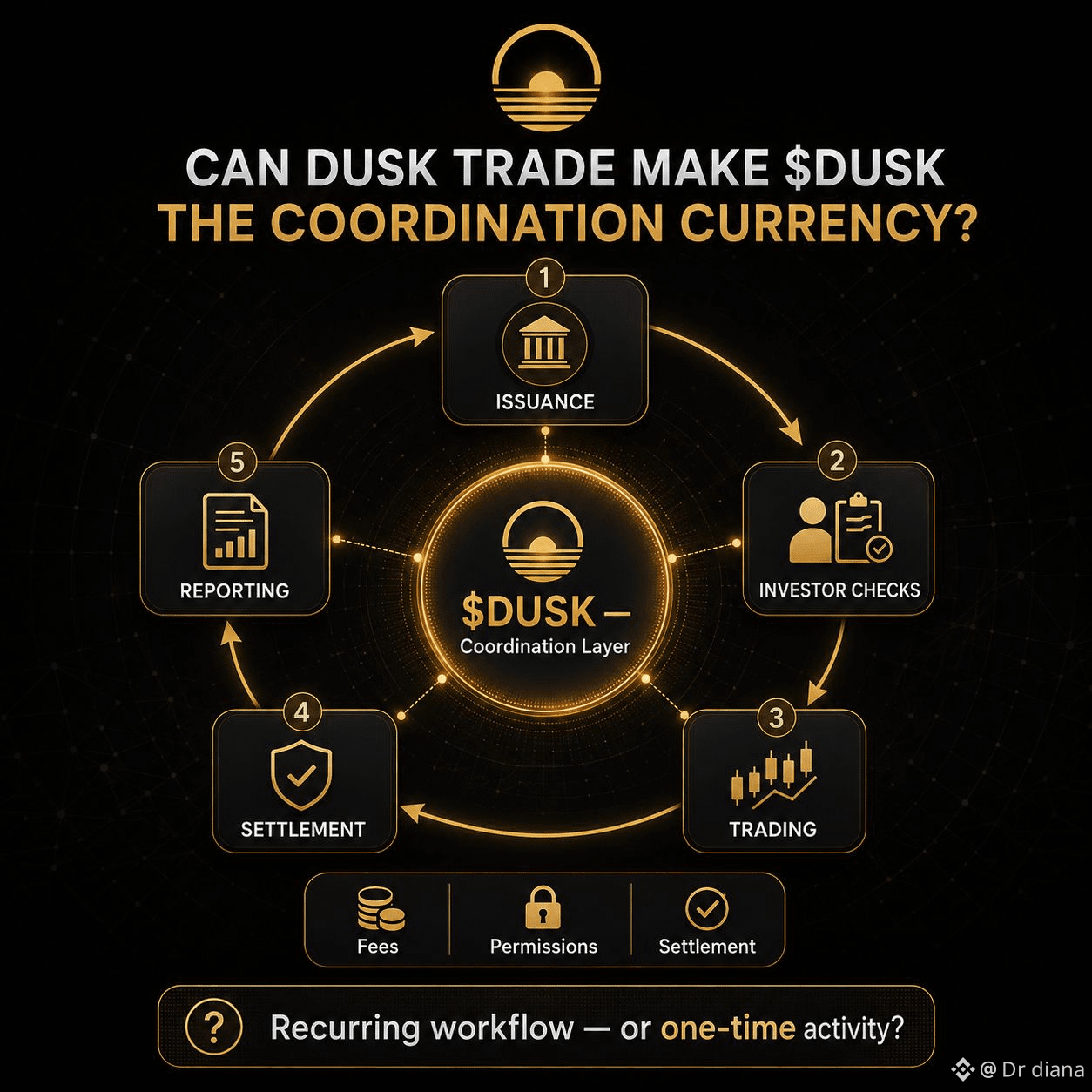
Ich denke immer wieder darüber nach, was „Koordinationswährung“ hier eigentlich bedeutet, denn DUSK als Gas-Token für Dusk Trade zu bezeichnen wirkt zu eng. Ein Wertpapier-Workflow ist keine einzelne Aktion. Es geht um Emission, Anlegerprüfungen, Handel, Abwicklung, Reporting und manchmal auch um Beschränkungen, wer welche Werte halten darf. In der Regel liegen diese Schritte über verschiedene Unternehmen, Datenbanken und Genehmigungsprozesse verteilt, die kaum miteinander kommunizieren.
Dusk Trade scheint jedoch zu sagen, dass diese einzelnen Bewegungen innerhalb eines gemeinsamen Systems ablaufen können. Wenn das funktioniert, zahlt DUSK vielleicht nicht nur Transaktionen. Dann könnte es zur gemeinsamen wirtschaftlichen Schicht werden, die jeden Teilnehmer verbindet, der darauf angewiesen ist, dass der Workflow weiterläuft.
Aber Koordination schafft nur dann eine dauerhafte Nachfrage nach Token, wenn die Aktivität sich wiederholt. Eine tokenisierte Emission mag beeindruckend aussehen – doch die wichtigere Frage ist, ob Anleger weiter handeln, Emittenten weiter berichten und Institutionen weiterhin über dasselbe Netzwerk abwickeln, nachdem das anfängliche Launch-Interesse verschwunden ist. Andernfalls riskiert DUSK, eher Ankündigungen zu koordinieren als echte Wertpapieraktivität.
Was mich außerdem stört: Regulierte Märkte können menschliche Entscheidungen nicht vollständig abschaffen. Jemand legt weiterhin die Berechtigung fest, genehmigt Offenlegungen, reagiert auf Streitfälle und aktualisiert die Regeln. Das in Code zu verlagern kann Reibung reduzieren, aber es konzentriert auch die Bedeutung rund um die Person oder Stelle, die die Berechtigungen steuert und die Daten in das System einspeist.
Vielleicht ist also der eigentliche Test für Dusk Trade nicht, wie viele Assets es auflistet. Entscheidend ist, ob ein einzelnes Asset eine fortlaufende Kette von Gebühren, Prüfungen, Trades und Abwicklungen erzeugt, die wiederholt zu DUSK zurückführt. Der Workflow klingt auf dem Papier einheitlich. Ob sich sein wirtschaftlicher Wert tatsächlich im Token anreichert, fühlt sich bis jetzt jedoch noch ungelöst an.
#dusk $DUSK @Dusk $GPS $PORTAL
Dusk Trade scheint jedoch zu sagen, dass diese einzelnen Bewegungen innerhalb eines gemeinsamen Systems ablaufen können. Wenn das funktioniert, zahlt DUSK vielleicht nicht nur Transaktionen. Dann könnte es zur gemeinsamen wirtschaftlichen Schicht werden, die jeden Teilnehmer verbindet, der darauf angewiesen ist, dass der Workflow weiterläuft.
Aber Koordination schafft nur dann eine dauerhafte Nachfrage nach Token, wenn die Aktivität sich wiederholt. Eine tokenisierte Emission mag beeindruckend aussehen – doch die wichtigere Frage ist, ob Anleger weiter handeln, Emittenten weiter berichten und Institutionen weiterhin über dasselbe Netzwerk abwickeln, nachdem das anfängliche Launch-Interesse verschwunden ist. Andernfalls riskiert DUSK, eher Ankündigungen zu koordinieren als echte Wertpapieraktivität.
Was mich außerdem stört: Regulierte Märkte können menschliche Entscheidungen nicht vollständig abschaffen. Jemand legt weiterhin die Berechtigung fest, genehmigt Offenlegungen, reagiert auf Streitfälle und aktualisiert die Regeln. Das in Code zu verlagern kann Reibung reduzieren, aber es konzentriert auch die Bedeutung rund um die Person oder Stelle, die die Berechtigungen steuert und die Daten in das System einspeist.
Vielleicht ist also der eigentliche Test für Dusk Trade nicht, wie viele Assets es auflistet. Entscheidend ist, ob ein einzelnes Asset eine fortlaufende Kette von Gebühren, Prüfungen, Trades und Abwicklungen erzeugt, die wiederholt zu DUSK zurückführt. Der Workflow klingt auf dem Papier einheitlich. Ob sich sein wirtschaftlicher Wert tatsächlich im Token anreichert, fühlt sich bis jetzt jedoch noch ungelöst an.
#dusk $DUSK @Dusk $GPS $PORTAL