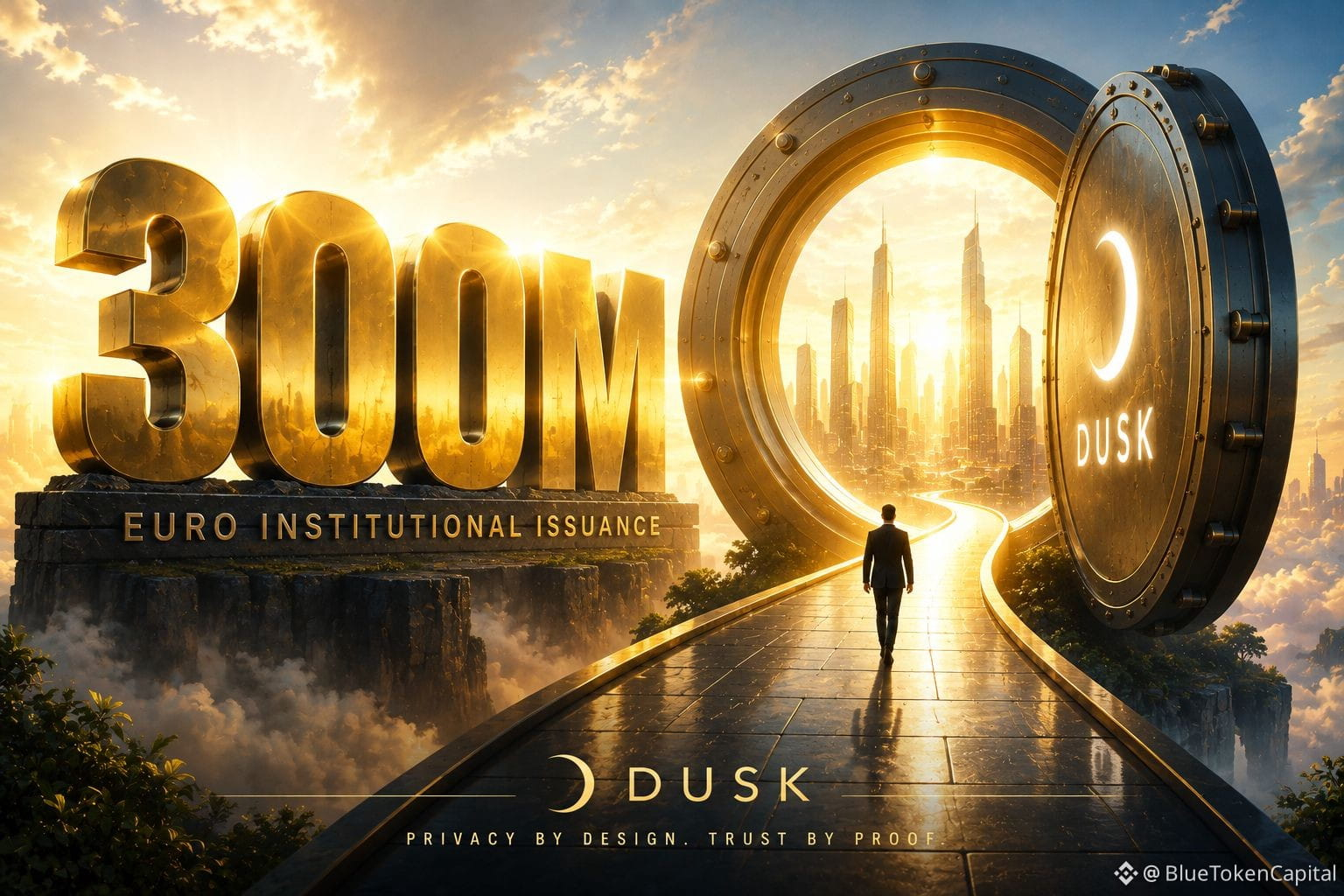
300 Mio. €. 210 Mio. ~10 SEKUNDEN.
Ich bin tiefer in @Dusk eingestiegen, und je mehr ich mir die Zahlen anschaue, desto besser verstehe ich, warum dieses Projekt für mich so interessant ist.
Das ist nicht einfach nur ein weiteres L1, das über TPS spricht.
Dusk baut Infrastruktur für regulierte Finanzmärkte — dort, wo Datenschutz, Compliance, Ausführung und Abrechnung gemeinsam funktionieren müssen.
Und die Zahlen haben meine Aufmerksamkeit geweckt:
300 Mio. €+ bestätigte Emissionen mit Institutionen.
50K+ Erreichbarkeit von Investoren.
210 Mio. €+ $DUSK staked, um das Netzwerk abzusichern.
~10s deterministische Abrechnung.
Aber Zahlen allein machen kein Protokoll.
Der Skill-Stack darunter ist das, was Dusk interessant macht.
🔐 Phoenix → verschlüsselte Transaktionen und ZK-basierter Datenschutz.
👁️ Citadel → selektive Offenlegung, sodass die richtigen Informationen der richtigen Partei offengelegt werden können.
⚙️ DuskEVM → ein vertrauter Solidity/EVM-Pfad für Builder.
🧠 Hedger → Homomorphe Verschlüsselung + Zero-Knowledge-Proofs für vertrauliche EVM-Workflows.
Und das ist der Teil, der mich besonders interessiert:
Unkenntlich gemachte Orderbücher.
Die Idee ist, Handelsabsicht und Exposure zu schützen, während Transaktionen dennoch prüfbar bleiben — etwas, das wichtig ist, wenn institutionelles Kapital anfängt, onchain zu wandern. Dusk sagt, dass leichte Circuits Client-seitige Beweise in unter 2 Sekunden erzeugen können.
Dann gibt es die Sicherheitsarbeit.
Dusk sagt, dass sein Stack durch 10 Audits mit 200+ Seiten Reporting gegangen ist, einschließlich Arbeit, die das Piecrust-VM und das PLONK Zero-Knowledge-Proving-System abdeckt.
Ich lese „10 Audits“ nicht als „es kann nichts schiefgehen“.
Ich lese es als Signal, dass Dusk das als Finanzinfrastruktur behandelt, bei der Sicherheit Teil der Architektur sein muss — nicht als nachträglicher Gedanke.
Und wenn ich die Bausteine verbinde:
Datenschutz → selektive Offenlegung → regulierte Assets → EVM → vertrauliche Ausführung → deterministische Abrechnung.
Die These wird viel größer als nur „RWA onchain“.
Privates Kapital.
Nachprüfbare Ausführung.
Regulierte Märkte.
Eine programmierbare Umgebung.
Das ist die Dusk-These, auf die ich meine Aufmerksamkeit setze. 🔐
$DUSK #dusk
Ich bin tiefer in @Dusk eingestiegen, und je mehr ich mir die Zahlen anschaue, desto besser verstehe ich, warum dieses Projekt für mich so interessant ist.
Das ist nicht einfach nur ein weiteres L1, das über TPS spricht.
Dusk baut Infrastruktur für regulierte Finanzmärkte — dort, wo Datenschutz, Compliance, Ausführung und Abrechnung gemeinsam funktionieren müssen.
Und die Zahlen haben meine Aufmerksamkeit geweckt:
300 Mio. €+ bestätigte Emissionen mit Institutionen.
50K+ Erreichbarkeit von Investoren.
210 Mio. €+ $DUSK staked, um das Netzwerk abzusichern.
~10s deterministische Abrechnung.
Aber Zahlen allein machen kein Protokoll.
Der Skill-Stack darunter ist das, was Dusk interessant macht.
🔐 Phoenix → verschlüsselte Transaktionen und ZK-basierter Datenschutz.
👁️ Citadel → selektive Offenlegung, sodass die richtigen Informationen der richtigen Partei offengelegt werden können.
⚙️ DuskEVM → ein vertrauter Solidity/EVM-Pfad für Builder.
🧠 Hedger → Homomorphe Verschlüsselung + Zero-Knowledge-Proofs für vertrauliche EVM-Workflows.
Und das ist der Teil, der mich besonders interessiert:
Unkenntlich gemachte Orderbücher.
Die Idee ist, Handelsabsicht und Exposure zu schützen, während Transaktionen dennoch prüfbar bleiben — etwas, das wichtig ist, wenn institutionelles Kapital anfängt, onchain zu wandern. Dusk sagt, dass leichte Circuits Client-seitige Beweise in unter 2 Sekunden erzeugen können.
Dann gibt es die Sicherheitsarbeit.
Dusk sagt, dass sein Stack durch 10 Audits mit 200+ Seiten Reporting gegangen ist, einschließlich Arbeit, die das Piecrust-VM und das PLONK Zero-Knowledge-Proving-System abdeckt.
Ich lese „10 Audits“ nicht als „es kann nichts schiefgehen“.
Ich lese es als Signal, dass Dusk das als Finanzinfrastruktur behandelt, bei der Sicherheit Teil der Architektur sein muss — nicht als nachträglicher Gedanke.
Und wenn ich die Bausteine verbinde:
Datenschutz → selektive Offenlegung → regulierte Assets → EVM → vertrauliche Ausführung → deterministische Abrechnung.
Die These wird viel größer als nur „RWA onchain“.
Privates Kapital.
Nachprüfbare Ausführung.
Regulierte Märkte.
Eine programmierbare Umgebung.
Das ist die Dusk-These, auf die ich meine Aufmerksamkeit setze. 🔐
$DUSK #dusk