#dusk $DUSK @Dusk Ich habe DUSK in letzter Zeit etwas genauer beobachtet, und ich muss zugeben, dass ich anfangs unterschätzt habe, was Dusk eigentlich interessant macht.
Mein erster Gedanke an Blockchain war immer simpel: Wenn alles öffentlich ist, kann jeder es überprüfen. Aber wenn ich Dusk durch die Linse echter Finanz-Use-Cases betrachte, fühlt sich diese Logik unvollständig an.
Ich rede nicht davon, alles zu verstecken.
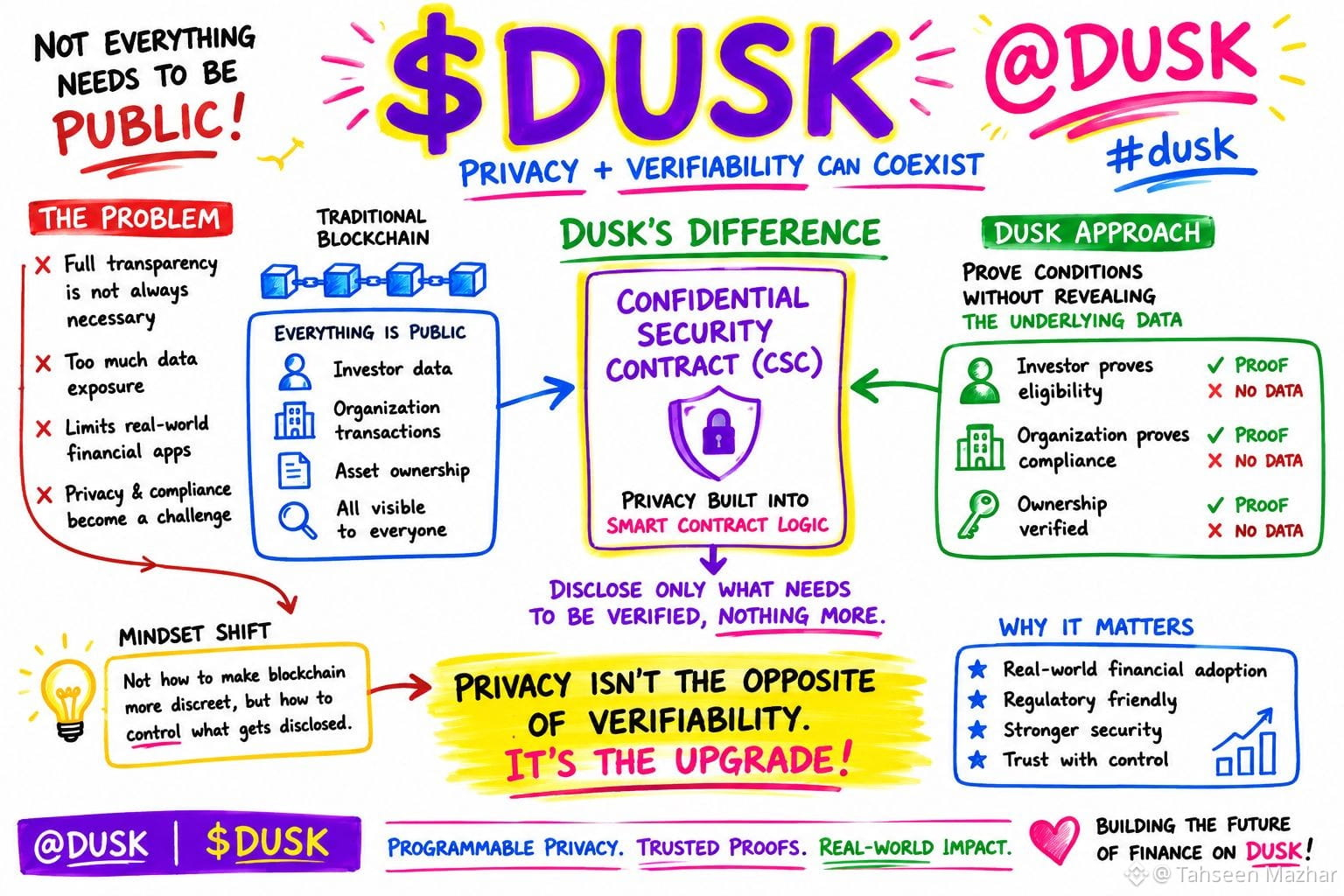
Ein Investor muss möglicherweise nachweisen, dass er berechtigt ist, ohne seine gesamte Finanzhistorie offenzulegen. Ein Unternehmen muss möglicherweise regulatorische Konformität nachweisen, ohne jede interne Transaktion zu veröffentlichen. Eigentum muss möglicherweise verifiziert werden, ohne alles rund um dieses Eigentum preiszugeben.
Genau da hat Dusk meine Aufmerksamkeit geweckt.
Ich mag die Idee, dass Privatsphäre Teil der Smart-Contract-Logik ist und nicht erst nachträglich „drangehängt“ wird. Der Ansatz mit dem Confidential Security Contract lässt mich weniger an „private Blockchain“ denken, sondern mehr an programmierbare Offenlegung.
Dieser Unterschied ist wichtig.
Wenn eine Transaktion nur den Nachweis braucht, dass eine Bedingung erfüllt ist, warum sollte dann die zugrunde liegende Daten automatisch öffentlich werden?
Ich habe meine DUSK-Exponierung tatsächlich klein gehalten, während ich darüber nachgedacht habe. Ich möchte lieber eine These testen, als mich von Tag eins selbst zu überzeugen, dass ich recht habe. Was mich jetzt interessiert, ist nicht einfach, ob Dusk Informationen privat halten kann, sondern ob Entwickler genau definieren können, was bewiesen werden muss und was verborgen bleiben kann.
Das ist ein viel nützlicheres Modell für Finanzanwendungen.
Für mich ist die interessante Frage rund um Dusk nicht „Wie privat ist es?“
Sondern: Können Privatsphäre und Verifizierbarkeit gleichzeitig programmierbar werden?
Wenn ja, wäre das eine bedeutungsvollere Veränderung als nur, die Blockchain für andere schwerer sichtbar zu machen.
@Dusk
#dusk $DUSK
$CYS
$APR
Mein erster Gedanke an Blockchain war immer simpel: Wenn alles öffentlich ist, kann jeder es überprüfen. Aber wenn ich Dusk durch die Linse echter Finanz-Use-Cases betrachte, fühlt sich diese Logik unvollständig an.
Ich rede nicht davon, alles zu verstecken.
Ein Investor muss möglicherweise nachweisen, dass er berechtigt ist, ohne seine gesamte Finanzhistorie offenzulegen. Ein Unternehmen muss möglicherweise regulatorische Konformität nachweisen, ohne jede interne Transaktion zu veröffentlichen. Eigentum muss möglicherweise verifiziert werden, ohne alles rund um dieses Eigentum preiszugeben.
Genau da hat Dusk meine Aufmerksamkeit geweckt.
Ich mag die Idee, dass Privatsphäre Teil der Smart-Contract-Logik ist und nicht erst nachträglich „drangehängt“ wird. Der Ansatz mit dem Confidential Security Contract lässt mich weniger an „private Blockchain“ denken, sondern mehr an programmierbare Offenlegung.
Dieser Unterschied ist wichtig.
Wenn eine Transaktion nur den Nachweis braucht, dass eine Bedingung erfüllt ist, warum sollte dann die zugrunde liegende Daten automatisch öffentlich werden?
Ich habe meine DUSK-Exponierung tatsächlich klein gehalten, während ich darüber nachgedacht habe. Ich möchte lieber eine These testen, als mich von Tag eins selbst zu überzeugen, dass ich recht habe. Was mich jetzt interessiert, ist nicht einfach, ob Dusk Informationen privat halten kann, sondern ob Entwickler genau definieren können, was bewiesen werden muss und was verborgen bleiben kann.
Das ist ein viel nützlicheres Modell für Finanzanwendungen.
Für mich ist die interessante Frage rund um Dusk nicht „Wie privat ist es?“
Sondern: Können Privatsphäre und Verifizierbarkeit gleichzeitig programmierbar werden?
Wenn ja, wäre das eine bedeutungsvollere Veränderung als nur, die Blockchain für andere schwerer sichtbar zu machen.
@Dusk
#dusk $DUSK
$CYS
$APR