#dusk $DUSK @Dusk
Ich habe Dusk anfangs als zwei getrennte Probleme betrachtet: wie sich Blöcke über das Netzwerk bewegen, und wie reale Vermögenswerte durch die Finanzinfrastruktur fließen. Als ich mich in Kadcast und das SME-Tokenisierungsmodell von Dusk vertiefte, sahen die beiden plötzlich nach derselben Idee aus, die zweimal angewendet wurde.
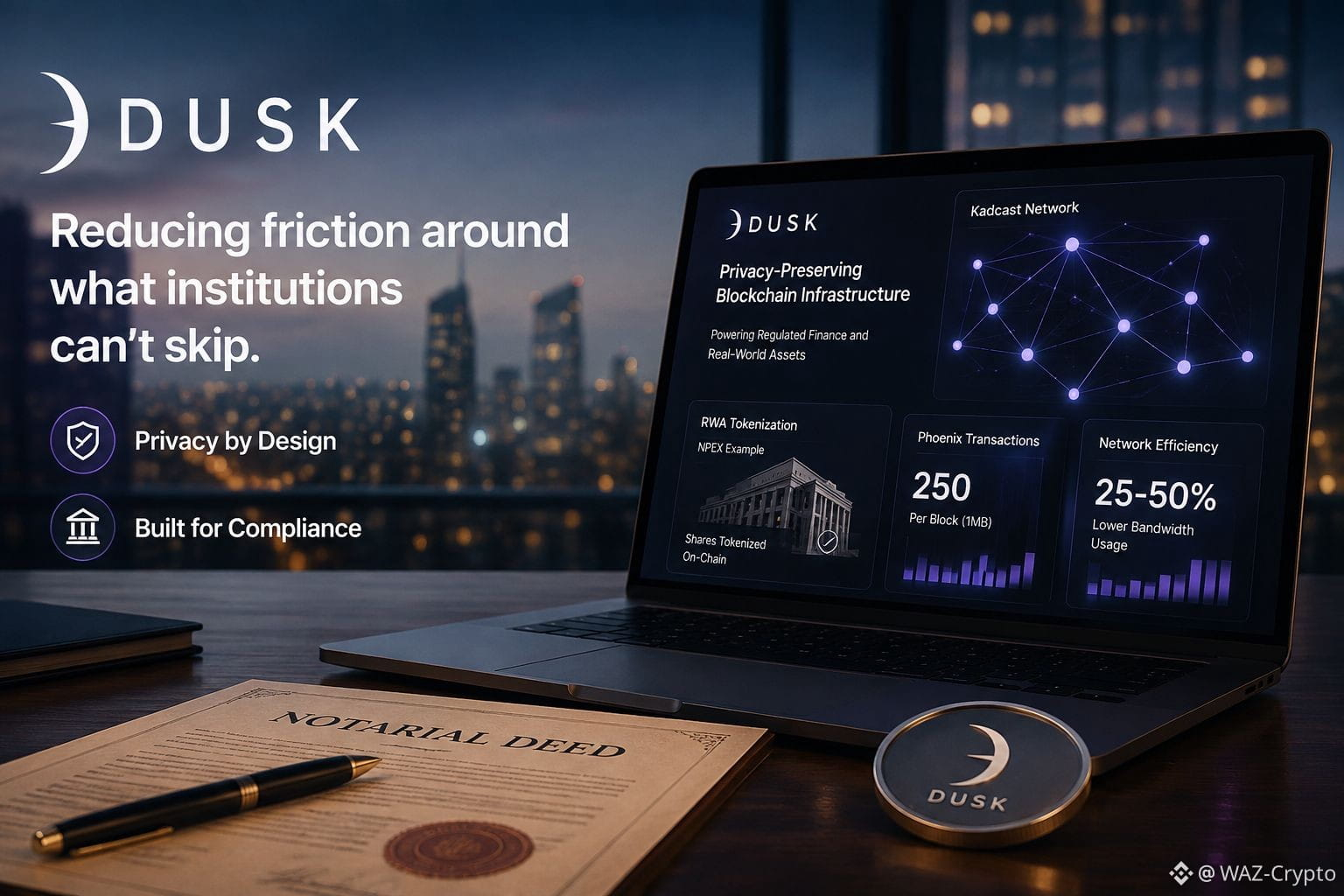
Kadcast vertraut keinen einzelnen Pfad. Block-Chunks verbreiten sich über mehrere Delegates, wobei β = 3 in der Implementierung verankert ist, und FEC fängt Paketverluste ab, statt von sauberer Zustellung auszugehen. Da Blöcke auf 1 MB begrenzt sind, also ungefähr 250 Phoenix-Transaktionen, sorgt diese Redundanz dafür, dass der Bandbreitenverbrauch mit zunehmender Aktivität 25–50 % niedriger bleibt als bei typischen Gossip-Ansätzen.
Die RWA-Seite spiegelt das wider. Durch die Tokenisierung mit Dusk werden bestehende rechtliche Prozesse nicht „ausradiert“. Genehmigungen von Unternehmen, Notare und Steuerentscheidungen können weiterhin bestehen bleiben. Das NPEX-Beispiel macht das explizit: Wenn Anteile on-chain gestellt werden, entfällt nicht der Bedarf an einer notariellen Urkunde.
Also geht es bei dem Muster nicht um Austausch, sondern um Redundanz, die über Systeme gelegt wird, die darunter trotzdem noch funktionieren müssen.
Ist Dusk's eigentliche These weniger auf Disruption ausgerichtet und eher darauf, Reibung zu reduzieren – bei Dingen, die Institutionen tatsächlich nicht überspringen können?
$PORTAL
$TUT
Ich habe Dusk anfangs als zwei getrennte Probleme betrachtet: wie sich Blöcke über das Netzwerk bewegen, und wie reale Vermögenswerte durch die Finanzinfrastruktur fließen. Als ich mich in Kadcast und das SME-Tokenisierungsmodell von Dusk vertiefte, sahen die beiden plötzlich nach derselben Idee aus, die zweimal angewendet wurde.
Kadcast vertraut keinen einzelnen Pfad. Block-Chunks verbreiten sich über mehrere Delegates, wobei β = 3 in der Implementierung verankert ist, und FEC fängt Paketverluste ab, statt von sauberer Zustellung auszugehen. Da Blöcke auf 1 MB begrenzt sind, also ungefähr 250 Phoenix-Transaktionen, sorgt diese Redundanz dafür, dass der Bandbreitenverbrauch mit zunehmender Aktivität 25–50 % niedriger bleibt als bei typischen Gossip-Ansätzen.
Die RWA-Seite spiegelt das wider. Durch die Tokenisierung mit Dusk werden bestehende rechtliche Prozesse nicht „ausradiert“. Genehmigungen von Unternehmen, Notare und Steuerentscheidungen können weiterhin bestehen bleiben. Das NPEX-Beispiel macht das explizit: Wenn Anteile on-chain gestellt werden, entfällt nicht der Bedarf an einer notariellen Urkunde.
Also geht es bei dem Muster nicht um Austausch, sondern um Redundanz, die über Systeme gelegt wird, die darunter trotzdem noch funktionieren müssen.
Ist Dusk's eigentliche These weniger auf Disruption ausgerichtet und eher darauf, Reibung zu reduzieren – bei Dingen, die Institutionen tatsächlich nicht überspringen können?
$PORTAL
$TUT