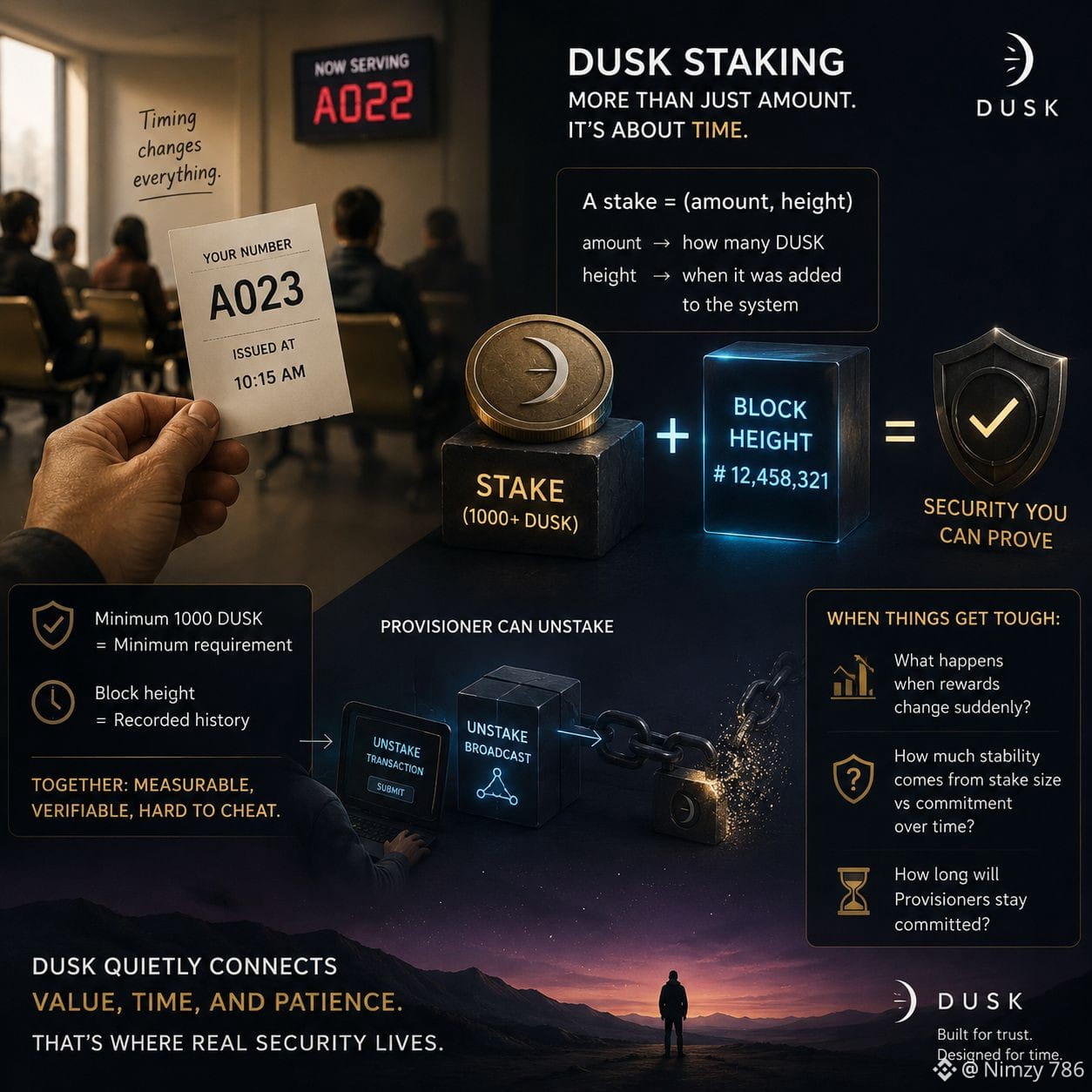
Ich habe an dem Tag auf ein Wartesaal-Ticket geschaut. Was den meisten Leuten auffällt, ist die Nummer darauf.. Kaum jemand denkt darüber nach, wann diese Nummer ihnen gegeben wurde. Die Sache ist: Der Zeitpunkt, zu dem man eine Nummer bekommt, kann beeinflussen, wer zuerst geholfen wird.
Das hat mich darüber nachdenken lassen, wie Dusk mit Stakes arbeitet. Ein Stake ist nicht nur dafür da, wie viele DUSK du hast. Es besteht aus zwei Dingen: wie viele DUSK du hast und zu welchem Zeitpunkt du sie dem System hinzugefügt hast. Zuerst scheint es so, als wäre die Menge an DUSK das Wichtige. Wann du sie hinzugefügt hast, wirkt wie eine Nebensache.. Ich glaube nicht, dass das stimmt.@Dusk
Das, was nicht sofort klar ist, ist, dass Security nicht darum geht, sich verpflichtet zu haben. Es geht darum, nachweisen zu können, dass du verpflichtet bist. Dusk interessiert sich nicht nur dafür, wie viele DUSK für einen Stake verwendet werden. Es interessiert sich dafür, wann diese DUSK dem Netzwerk hinzugefügt wurden. Die Regel, dass du mindestens 1000 DUSK brauchst, schafft eine Mindestanforderung.. Wann diese DUSK hinzugefügt wurden, schafft eine Historie. Zusammen machen diese beiden Dinge Staking besser messbar und schwerer zu betrügen.
Die meisten werden wahrscheinlich an die Belohnungen denken, die sie bekommen können, oder daran, wie sie teilnehmen können oder wie sie Flexibilität bekommen.. Ich frage mich immer wieder, was passiert, wenn es schwierig wird. Wenn Provisioner ihren Stake entfernen können, indem sie eine Transaktion senden – was passiert dann, wenn sich die Belohnungen plötzlich ändern? Wie viel dafür, dass das Netzwerk stabil bleibt, hängt davon ab, wie groß die Stakes sind, und wie viel davon, wie lange Menschen bereit sind, ihre Stakes beizubehalten?
Vielleicht ist das Spannende an Dusk nicht die Stakes selbst. Vielleicht ist es die Art, wie das Protokoll still und leise Wert, Zeit und Geduld miteinander verbindet. #Dusk @Dusk $DUSK
$SNDK
Das hat mich darüber nachdenken lassen, wie Dusk mit Stakes arbeitet. Ein Stake ist nicht nur dafür da, wie viele DUSK du hast. Es besteht aus zwei Dingen: wie viele DUSK du hast und zu welchem Zeitpunkt du sie dem System hinzugefügt hast. Zuerst scheint es so, als wäre die Menge an DUSK das Wichtige. Wann du sie hinzugefügt hast, wirkt wie eine Nebensache.. Ich glaube nicht, dass das stimmt.@Dusk
Das, was nicht sofort klar ist, ist, dass Security nicht darum geht, sich verpflichtet zu haben. Es geht darum, nachweisen zu können, dass du verpflichtet bist. Dusk interessiert sich nicht nur dafür, wie viele DUSK für einen Stake verwendet werden. Es interessiert sich dafür, wann diese DUSK dem Netzwerk hinzugefügt wurden. Die Regel, dass du mindestens 1000 DUSK brauchst, schafft eine Mindestanforderung.. Wann diese DUSK hinzugefügt wurden, schafft eine Historie. Zusammen machen diese beiden Dinge Staking besser messbar und schwerer zu betrügen.
Die meisten werden wahrscheinlich an die Belohnungen denken, die sie bekommen können, oder daran, wie sie teilnehmen können oder wie sie Flexibilität bekommen.. Ich frage mich immer wieder, was passiert, wenn es schwierig wird. Wenn Provisioner ihren Stake entfernen können, indem sie eine Transaktion senden – was passiert dann, wenn sich die Belohnungen plötzlich ändern? Wie viel dafür, dass das Netzwerk stabil bleibt, hängt davon ab, wie groß die Stakes sind, und wie viel davon, wie lange Menschen bereit sind, ihre Stakes beizubehalten?
Vielleicht ist das Spannende an Dusk nicht die Stakes selbst. Vielleicht ist es die Art, wie das Protokoll still und leise Wert, Zeit und Geduld miteinander verbindet. #Dusk @Dusk $DUSK
$SNDK