#dusk $DUSK @Dusk
Was mir beim Dusk-Staking aufgefallen ist: Wie leicht es ist, sich den Staking-Betrag anzusehen und dabei zu übersehen, was darunter tatsächlich passiert.
Deine DUSK liegt nicht einfach nur da und erzeugt eine ordentliche, vorhersehbare Rendite.
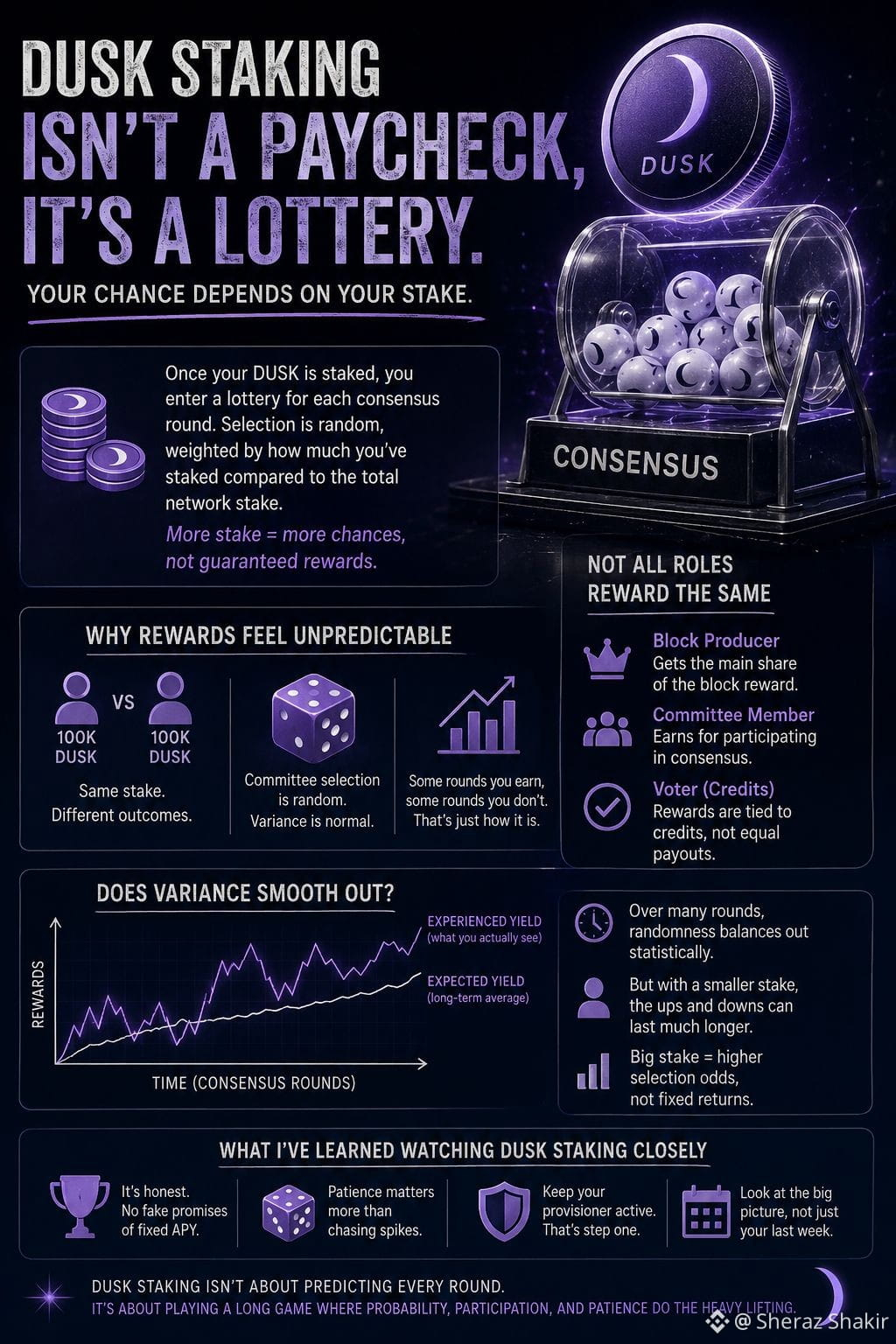
Für die Konsensaufgaben muss ein aktiver Provisioner ausgewählt werden, und die Auswahl hängt vom Stake ab. In Dusk-eigenen Dokumentationen werden die Belohnungen als probabilistisch beschrieben – basierend auf der Konsensbeteiligung und dem aktiven Stake. Daher können zwei Staker mit demselben Betrag dennoch über ein kurzes Zeitfenster unterschiedliche Belohnungs-Profile haben.
Es gibt noch einen weiteren Punkt, den ich glaube, den viele übersehen: Nicht jede Konsensrolle wird auf die gleiche Weise vergütet.
Der Blockgenerator erhält den größten Anteil der Blockbelohnung, während die Beteiligung im Komitee auch ihre eigene Belohnungsstruktur hat. Die Belohnungen der Wähler sind an Credits gekoppelt, statt dass einfach jedem eine identische Auszahlung gegeben wird.
Das verändert, wie ich hier über „APY“ nachdenken würde.
Eine ruhige Woche bedeutet nicht zwangsläufig, dass der Stake unterdurchschnittlich performt. Es kann einfach sein, dass die Varianz sich gerade ausspielt.
Und ein größerer Stake verbessert die Auswahlwahrscheinlichkeit, aber er macht den Prozess nicht zu einem festen Gehalt.
Über genügend viele Runden würdest du erwarten, dass die Zufälligkeit statistisch weniger auffällt. Aber deine reale Erfahrung kann weiterhin „unruhig“ sein – besonders, wenn der Stake im Verhältnis zum Netzwerk klein ist.
Der Teil, den ich beobachten würde, ist nicht eine gute Woche oder eine schlechte Woche.
Sondern wie sich die Verteilung der Belohnungen über Hunderte oder Tausende von Konsensmöglichkeiten verhält.
Dort wird der Unterschied zwischen erwarteter Rendite und erfahrener Rendite wirklich spannend.
$P $PORTAL
Was mir beim Dusk-Staking aufgefallen ist: Wie leicht es ist, sich den Staking-Betrag anzusehen und dabei zu übersehen, was darunter tatsächlich passiert.
Deine DUSK liegt nicht einfach nur da und erzeugt eine ordentliche, vorhersehbare Rendite.
Für die Konsensaufgaben muss ein aktiver Provisioner ausgewählt werden, und die Auswahl hängt vom Stake ab. In Dusk-eigenen Dokumentationen werden die Belohnungen als probabilistisch beschrieben – basierend auf der Konsensbeteiligung und dem aktiven Stake. Daher können zwei Staker mit demselben Betrag dennoch über ein kurzes Zeitfenster unterschiedliche Belohnungs-Profile haben.
Es gibt noch einen weiteren Punkt, den ich glaube, den viele übersehen: Nicht jede Konsensrolle wird auf die gleiche Weise vergütet.
Der Blockgenerator erhält den größten Anteil der Blockbelohnung, während die Beteiligung im Komitee auch ihre eigene Belohnungsstruktur hat. Die Belohnungen der Wähler sind an Credits gekoppelt, statt dass einfach jedem eine identische Auszahlung gegeben wird.
Das verändert, wie ich hier über „APY“ nachdenken würde.
Eine ruhige Woche bedeutet nicht zwangsläufig, dass der Stake unterdurchschnittlich performt. Es kann einfach sein, dass die Varianz sich gerade ausspielt.
Und ein größerer Stake verbessert die Auswahlwahrscheinlichkeit, aber er macht den Prozess nicht zu einem festen Gehalt.
Über genügend viele Runden würdest du erwarten, dass die Zufälligkeit statistisch weniger auffällt. Aber deine reale Erfahrung kann weiterhin „unruhig“ sein – besonders, wenn der Stake im Verhältnis zum Netzwerk klein ist.
Der Teil, den ich beobachten würde, ist nicht eine gute Woche oder eine schlechte Woche.
Sondern wie sich die Verteilung der Belohnungen über Hunderte oder Tausende von Konsensmöglichkeiten verhält.
Dort wird der Unterschied zwischen erwarteter Rendite und erfahrener Rendite wirklich spannend.
$P $PORTAL