

How Is the Crypto Exchange Market Changing in 2026?
Over the past several years, the cryptocurrency industry has experienced bull markets, downturns, exchange collapses, and increasing regulatory pressure around the world.
As some exchanges have shut down or scaled back their operations, the questions users ask are beginning to change.
Instead of simply asking:
“Which exchange has the lowest fees?”
Users are increasingly asking:
“Which exchange has the infrastructure, transparency, liquidity, and security to operate sustainably over the long term?”
Rather than relying only on what exchanges say about themselves, third-party data can provide a clearer picture of how the market is evolving.
Key indicators include trading volume, liquidity, user assets, Proof of Reserves, security, and market share.

Crypto Trading Volume Is Becoming More Concentrated
Data from the first half of 2026 shows that crypto trading activity, particularly in derivatives markets, remains highly concentrated among major exchanges.
The top 10 crypto exchanges accounted for approximately 81.2% of total derivatives trading volume, while the top five alone represented around 61.2%.
Binance recorded approximately $9.34 trillion in derivatives trading volume during H1 2026, representing around 26.6% of the market.
Its market share also increased from approximately 24.1% in January to 28.3% in June.
This trend suggests that as the crypto market matures, users may be paying greater attention to factors beyond promotions or trading fees.
Liquidity, infrastructure, execution quality, platform stability, and market depth are becoming increasingly important when choosing an exchange.

Why Crypto Liquidity Matters Beyond Trading Volume
Trading volume is an important metric, but it does not tell the entire story.
Another key indicator is liquidity.
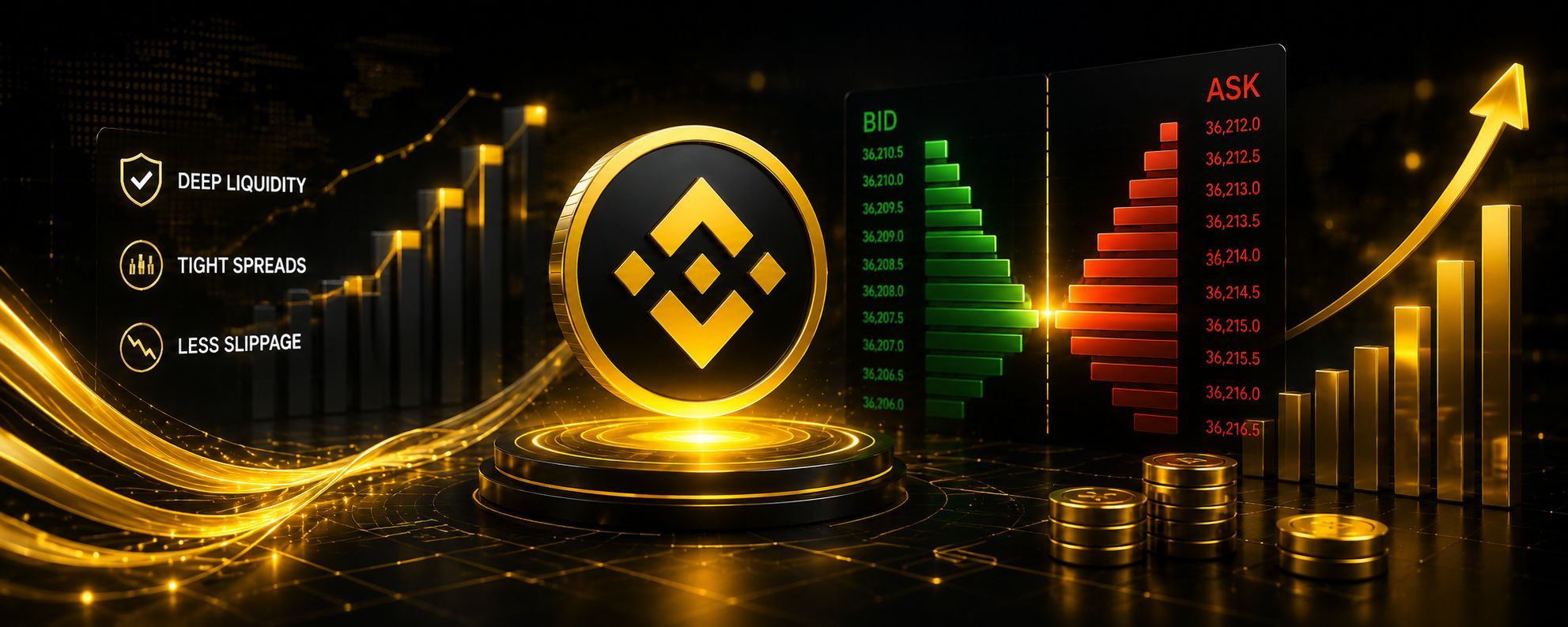
High liquidity generally means users can buy or sell larger amounts of an asset with less impact on market prices.
Data measuring Bitcoin order book depth within ±1% of the market price during H1 2026 showed that Binance had approximately $236 million in liquidity, representing around 44% of the liquidity measured in the dataset.
OKX followed with approximately $112 million, or 20.8%.
Together, the two platforms accounted for close to 65% of measured liquidity.
For traders, especially those managing larger positions, deeper liquidity can help reduce:
Slippage
Price impact
Difficulty entering or exiting positions
Execution risk during volatile market conditions
This means the question users should ask is not only:
“How much are the trading fees?”
But also:
“Does this exchange have enough liquidity when the market becomes highly volatile?”
Proof of Reserves Is Becoming an Important Transparency Standard
Following several major crypto exchange failures in previous years, users have become more focused on a fundamental question:
“Are customer assets actually backed?”
This has made Proof of Reserves, or PoR, an increasingly important transparency tool for cryptocurrency exchanges.
Binance states that user assets held on the platform are backed 1:1, with additional reserves.
Proof of Reserves allows users to access more information about an exchange's asset reserves instead of relying entirely on company statements.
However, Proof of Reserves should not be treated as the only indicator of an exchange's financial health or security.
Users should also consider factors such as:
Liabilities, security, governance, compliance, and risk management.
PoR is therefore best viewed as an important transparency signal, rather than a complete guarantee of platform safety.

Where Are Users Keeping Their Crypto Assets?
Another useful indicator is the amount of user assets held across major cryptocurrency exchanges.
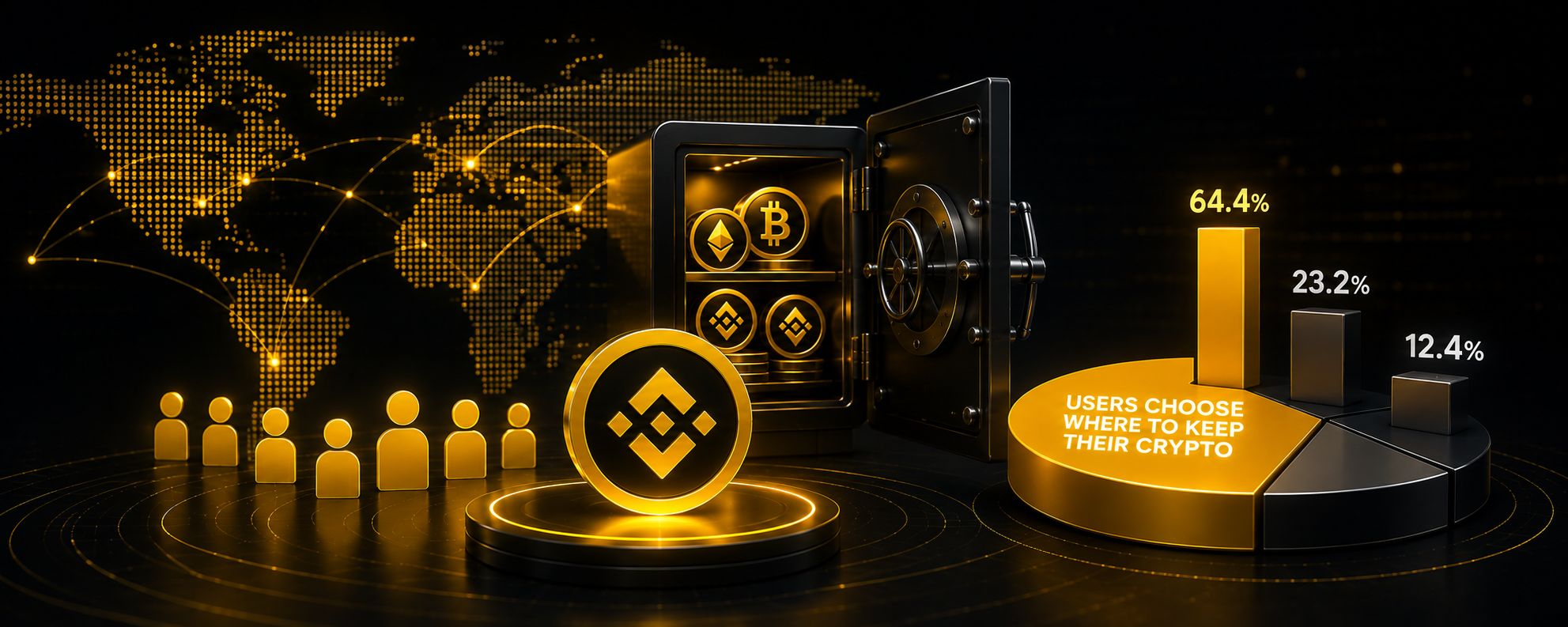
Among 16 exchanges included in one dataset, average daily user assets totaled approximately $233.34 billion.
The top 10 exchanges accounted for around 97.7% of those assets, while the top five represented approximately 87.6%.
Binance held approximately $150.21 billion in average user assets, or around 64.4% of the assets included in the dataset.
These figures do not automatically mean that one exchange is safer than another.
However, they provide insight into user behavior and where market participants are choosing to hold their assets.
In an industry where trust plays a critical role, actual user behavior can be an important indicator to monitor.
Crypto Investors Are Becoming More Selective
The developments seen in 2026 do not necessarily suggest that investors are leaving digital assets.
Instead, capital may be becoming more selective about where it is deployed and stored.
Users are increasingly asking questions such as:
Does the exchange have sufficient liquidity?
Can its reserves be independently verified?
What security and risk-management systems are in place?
Can its infrastructure handle periods of extreme market activity?
What is its track record in governance and compliance?
As the crypto industry matures, competition between exchanges is no longer only about listing more tokens, offering promotions, or lowering trading fees.
Long-term trust and platform resilience are becoming increasingly important.

6 Factors to Consider When Choosing a Crypto Exchange
1. Liquidity
A deep order book can support more efficient execution, particularly during periods of high volatility.
2. Trading Volume
Consistent trading activity can help indicate the level of market participation and usage on a platform.
3. Proof of Reserves
Users should consider whether an exchange provides transparent and verifiable information about customer asset reserves.
4. Security
Security measures, risk-detection systems, account protections, and the platform's history of handling security incidents should all be considered.
5. Compliance and Governance
Strong governance structures and regulatory compliance can be important indicators of long-term platform resilience.
6. Infrastructure
An exchange should be able to support high levels of user activity and trading volume, especially during periods of extreme market volatility.

Trust in Crypto Should Not Be Measured by Claims Alone
Every cryptocurrency exchange can describe itself as secure, transparent, and trustworthy.
But as the industry matures, users have access to more data that can help them evaluate those claims.
From trading volume and market share to order book liquidity, Proof of Reserves, user assets, security, and infrastructure, third-party data can provide a more objective view of how exchanges perform relative to the wider market.
Ultimately, trust is not built only on what an exchange says about itself.
It is built over time through what the data, liquidity, transparency, security systems, and user behavior consistently demonstrate.
Trust isn’t only what an exchange says about itself. It’s what the data shows over time.
#Binance #CryptoExchange #CryptoLiquidity #ProofOfReserves #CryptoMarket

