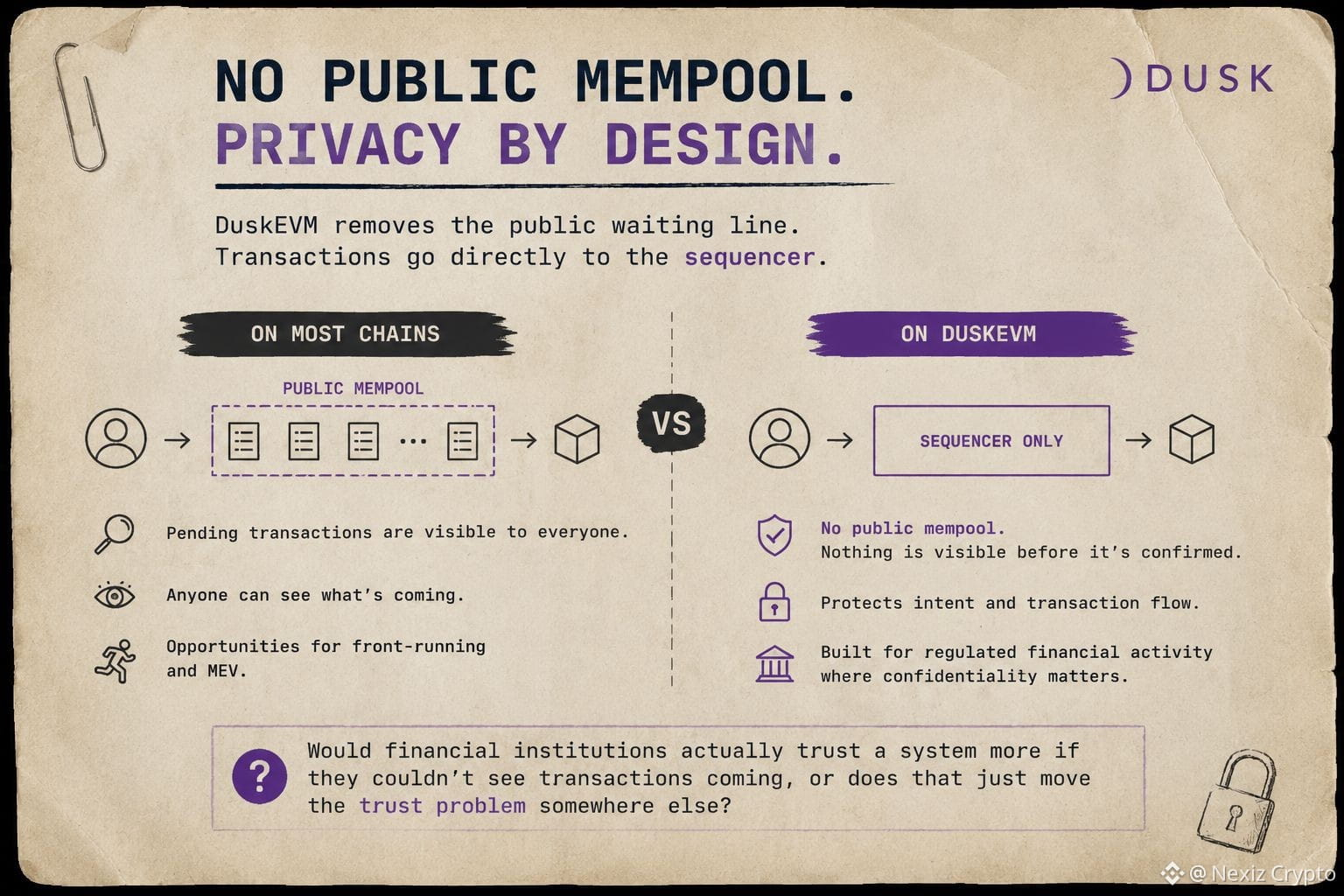
Ich nahm an, dass im Grunde jede Blockchain im Hintergrund auf die gleiche Weise funktioniert. Transaktionen werden eingereicht, sie warten in einer Reihe, und alle können diese Warteschlange sehen, bevor irgendetwas bestätigt wird. Ich habe das nie wirklich hinterfragt. Dann las ich etwas in Dusk' Dokumentation, das mich zum Nachdenken brachte. Bei DuskEVM gibt es diese sichtbare Warteschlange überhaupt nicht. Transaktionen laufen einfach durch, ohne dass öffentlich sichtbar wäre, was als Nächstes passieren wird, bevor es passiert. Genau da hat es Klick gemacht. Auf den meisten Ketten gilt es als normal – sogar als gut – Transparenz zu schaffen, indem man für alle sichtbare ausstehende Transaktionen zulässt. Aber das bedeutet auch, dass jemand, der genau zuschaut, einen kommenden Handel erkennen und zuerst darauf reagieren kann. Für alltägliche Überweisungen spielt das kaum eine Rolle. Bei regulierten Finanzaktivitäten ist das jedoch ein echtes Risiko. Also ist das eigentlich kein technischer Abkürzungsweg. Es sieht eher nach einer bewussten Entscheidung aus: Transparenz gegen Schutz getauscht. Denn Finanzinstitute kümmern sich weniger darum, die Warteschlange zu beobachten, und mehr darum, dass ihre Aktivitäten nicht offengelegt werden, bevor sie endgültig abgewickelt sind. Was ich immer wieder bedenke, ist, wie sich dadurch überhaupt verändert, was „Privatsphäre“ hier bedeutet. Es geht nicht darum, alles zu verbergen. Es geht darum, die Absicht nicht zu veröffentlichen, bevor eine Transaktion tatsächlich real ist. Würden Finanzinstitute einem System tatsächlich mehr vertrauen, wenn sie kommende Transaktionen nicht sehen könnten – oder verlagert das das Vertrauensproblem nur an eine andere Stelle? #dusk $DUSK @Dusk


Veröffentlichen
--Bullisch
Haftungsausschluss: Enthält Meinungen von Drittanbietern. Keine Beratung. Binance AI wird ohne Gewähr bereitgestellt. Siehe AGB.