#dusk $DUSK @Dusk
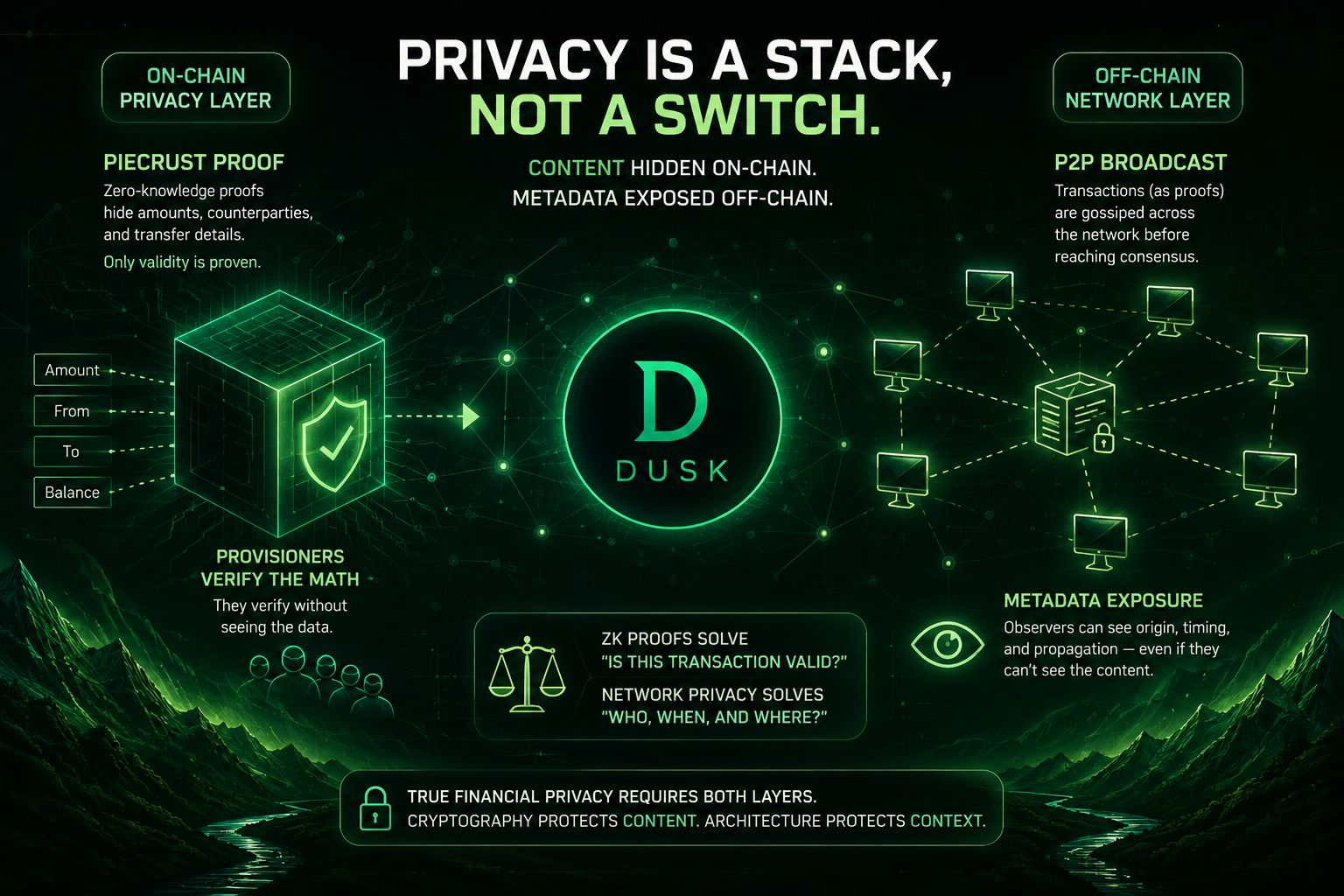
Ich habe mich damit beschäftigt, wie Dusk eine Transaktion wirklich privat hält, und die erste Ebene davon ist genau das, was man erwarten würde: Piecrust erzeugt einen Nachweis, Beträge und Gegenparteien bleiben On-Chain verborgen, und Provisioner verifizieren die Rechnung, ohne die zugrunde liegenden Daten zu sehen. Salden bleiben vertraulich. Niemand sieht, wie sich der Betrag bewegt.
Das ist der Teil, den alle zitieren. Und dort hören die meisten Erklärungen auf.
Was ich nicht bedacht hatte: Der Nachweis teleportiert nicht einfach auf die Chain. Bevor er überhaupt den Konsens erreicht, muss er über das Peer-to-Peer-Netzwerk verbreitet werden — Knoten zu Knoten weitergereicht, bis er in einem Block landet. Und dieser Schritt läuft nicht über PLONK. Er läuft über TCP/IP.
Also kommt hier der Teil, der mich zum Innehalten gebracht hat. Ein Validator, der den Mempool beobachtet, kann nicht lesen, was in deiner Transaktion steht. Aber ein Validator (oder jeder, der genug Knoten betreibt), der die Netzwerkebene beobachtet, kann immer noch sehen, dass eine Transaktion von deinem Peer stammt, ungefähr wann und wie sie sich ausgebreitet hat. Zero-Knowledge versteckt Inhalte. Es versteckt nicht, dass Inhalte existieren, oder wo sie in den Graphen eingetreten sind.
Das ist kein Mangel in der Kryptografie — es ist eine Grenze, die die Kryptografie nie abdecken sollte. ZK-Nachweise beantworten: „Ist diese Transaktion gültig, ohne ihre Inhalte offenzulegen?“ Sie beantworten nicht: „Wer hat diese initiiert und wann?“ Das sind zwei separate Datenschutzprobleme, übereinander gestapelt, gelöst durch zwei völlig unterschiedliche Ebenen — eine kryptografische, eine topologische.
Was sich daraus ergibt, ist die Frage, auf die ich noch keine saubere Antwort habe: Erfordert finanzielle Privatsphäre auf Compliance-Niveau tatsächlich, beide Probleme zu lösen? Wenn das echte Interesse eines Regulators der Transaktionsinhalt ist, deckt ZK das ab. Aber wenn das Interesse — oder der Gegner — sich für Zeitpunkt, Korrelation und Ursprung interessiert, dann ist das ein Netzwerk-Privacy-Problem, kein Problem des Beweissystems, und Dusk’s Architektur behauptet das nicht eindeutig.
@Dusk heute. Aber es ist die Art von Sache, die weniger an Bedeutung gewinnt, nicht mehr, wenn das institutionelle Volumen wächst auf $DUSK #dusk @Dusk heute
Ich habe mich damit beschäftigt, wie Dusk eine Transaktion wirklich privat hält, und die erste Ebene davon ist genau das, was man erwarten würde: Piecrust erzeugt einen Nachweis, Beträge und Gegenparteien bleiben On-Chain verborgen, und Provisioner verifizieren die Rechnung, ohne die zugrunde liegenden Daten zu sehen. Salden bleiben vertraulich. Niemand sieht, wie sich der Betrag bewegt.
Das ist der Teil, den alle zitieren. Und dort hören die meisten Erklärungen auf.
Was ich nicht bedacht hatte: Der Nachweis teleportiert nicht einfach auf die Chain. Bevor er überhaupt den Konsens erreicht, muss er über das Peer-to-Peer-Netzwerk verbreitet werden — Knoten zu Knoten weitergereicht, bis er in einem Block landet. Und dieser Schritt läuft nicht über PLONK. Er läuft über TCP/IP.
Also kommt hier der Teil, der mich zum Innehalten gebracht hat. Ein Validator, der den Mempool beobachtet, kann nicht lesen, was in deiner Transaktion steht. Aber ein Validator (oder jeder, der genug Knoten betreibt), der die Netzwerkebene beobachtet, kann immer noch sehen, dass eine Transaktion von deinem Peer stammt, ungefähr wann und wie sie sich ausgebreitet hat. Zero-Knowledge versteckt Inhalte. Es versteckt nicht, dass Inhalte existieren, oder wo sie in den Graphen eingetreten sind.
Das ist kein Mangel in der Kryptografie — es ist eine Grenze, die die Kryptografie nie abdecken sollte. ZK-Nachweise beantworten: „Ist diese Transaktion gültig, ohne ihre Inhalte offenzulegen?“ Sie beantworten nicht: „Wer hat diese initiiert und wann?“ Das sind zwei separate Datenschutzprobleme, übereinander gestapelt, gelöst durch zwei völlig unterschiedliche Ebenen — eine kryptografische, eine topologische.
Was sich daraus ergibt, ist die Frage, auf die ich noch keine saubere Antwort habe: Erfordert finanzielle Privatsphäre auf Compliance-Niveau tatsächlich, beide Probleme zu lösen? Wenn das echte Interesse eines Regulators der Transaktionsinhalt ist, deckt ZK das ab. Aber wenn das Interesse — oder der Gegner — sich für Zeitpunkt, Korrelation und Ursprung interessiert, dann ist das ein Netzwerk-Privacy-Problem, kein Problem des Beweissystems, und Dusk’s Architektur behauptet das nicht eindeutig.
@Dusk heute. Aber es ist die Art von Sache, die weniger an Bedeutung gewinnt, nicht mehr, wenn das institutionelle Volumen wächst auf $DUSK #dusk @Dusk heute