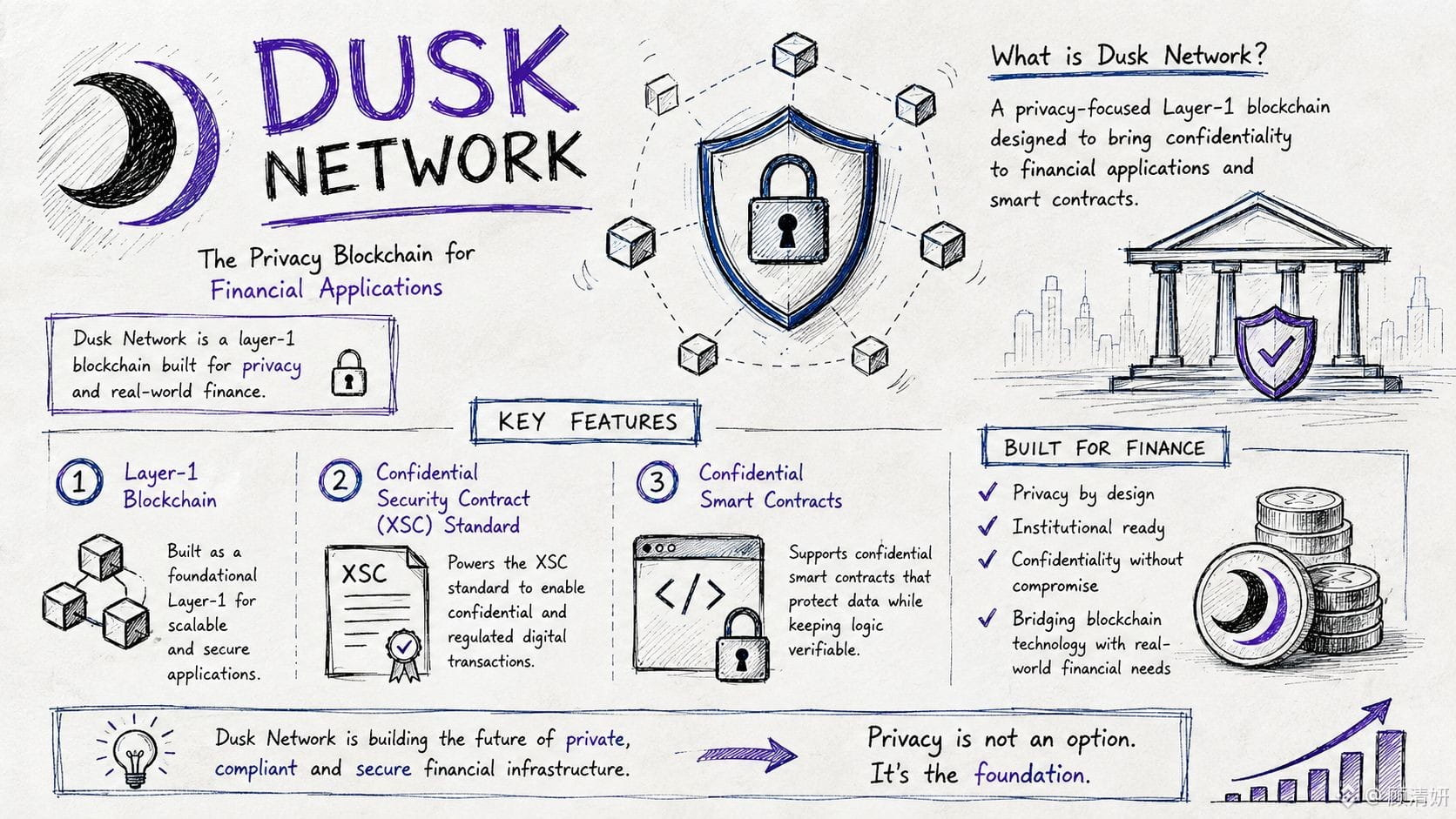
Früher dachte ich, dass Privatsphäre etwas ist, das man nach dem Aufbau einer Blockchain hinzufügt.
Je mehr ich Projekte studiere, die für regulierte Finanzen entwickelt wurden, desto mehr bin ich überzeugt, dass dieser Ansatz nicht funktioniert.
Wenn Vertraulichkeit als zusätzliche Funktion behandelt wird, statt Teil der Architektur zu sein, stehen Institutionen immer noch vor demselben Problem: Sensible finanzielle Aktivitäten landen auf öffentlicher Infrastruktur.
Das ist ein Grund, warum DUSK weiterhin meine Aufmerksamkeit behält.
Je mehr ich über seine Confidential Security Contracts (XSC) lese, desto mehr erkenne ich eine Designphilosophie statt nur eine einzelne Funktion. Das Ziel ist nicht, Transaktionen unsichtbar zu machen. Es geht darum, regulierte Vermögenswerte mit Vertraulichkeit agieren zu lassen und gleichzeitig die Möglichkeit zu bewahren, Compliance-Anforderungen erfüllen zu können.
Ich halte diese Unterscheidung ehrlich gesagt für bedeutsam.
Mir ist aufgefallen, dass viele Diskussionen Blockchains noch immer anhand von Durchsatz oder Transaktionsgebühren vergleichen. Diese Kennzahlen sind wichtig, aber die Einführung durch Institutionen hängt auch von etwas anderem ab: ob das zugrunde liegende Design zu den operativen Erwartungen regulierter Finanzmärkte passt.
Für mich wird DUSK interessant, weil es bei dieser Herausforderung ansetzt, statt sie als nachträglichen Gedanken zu behandeln.
Das ist die Art von Infrastruktur, der ich weiterhin zusehen werde, während tokenisierte Finanzen sich weiterentwickeln.
@Dusk $DUSK #dusk
Je mehr ich Projekte studiere, die für regulierte Finanzen entwickelt wurden, desto mehr bin ich überzeugt, dass dieser Ansatz nicht funktioniert.
Wenn Vertraulichkeit als zusätzliche Funktion behandelt wird, statt Teil der Architektur zu sein, stehen Institutionen immer noch vor demselben Problem: Sensible finanzielle Aktivitäten landen auf öffentlicher Infrastruktur.
Das ist ein Grund, warum DUSK weiterhin meine Aufmerksamkeit behält.
Je mehr ich über seine Confidential Security Contracts (XSC) lese, desto mehr erkenne ich eine Designphilosophie statt nur eine einzelne Funktion. Das Ziel ist nicht, Transaktionen unsichtbar zu machen. Es geht darum, regulierte Vermögenswerte mit Vertraulichkeit agieren zu lassen und gleichzeitig die Möglichkeit zu bewahren, Compliance-Anforderungen erfüllen zu können.
Ich halte diese Unterscheidung ehrlich gesagt für bedeutsam.
Mir ist aufgefallen, dass viele Diskussionen Blockchains noch immer anhand von Durchsatz oder Transaktionsgebühren vergleichen. Diese Kennzahlen sind wichtig, aber die Einführung durch Institutionen hängt auch von etwas anderem ab: ob das zugrunde liegende Design zu den operativen Erwartungen regulierter Finanzmärkte passt.
Für mich wird DUSK interessant, weil es bei dieser Herausforderung ansetzt, statt sie als nachträglichen Gedanken zu behandeln.
Das ist die Art von Infrastruktur, der ich weiterhin zusehen werde, während tokenisierte Finanzen sich weiterentwickeln.
@Dusk $DUSK #dusk