#dusk $DUSK @Dusk
Je intensiver ich Dusk studiere, desto mehr glaube ich, dass „Privatsphäre“ irreführend sein kann, wenn wir sie zu breit anwenden.
Für institutionelles Finanzwesen geht es bei Privatsphäre nicht immer darum, alles zu verbergen. Es geht darum, zu kontrollieren, wer was sehen darf, während sich dennoch nachweisen lässt, dass die Regeln befolgt wurden.
Das hat meine Aufmerksamkeit auf Dusk gelenkt.
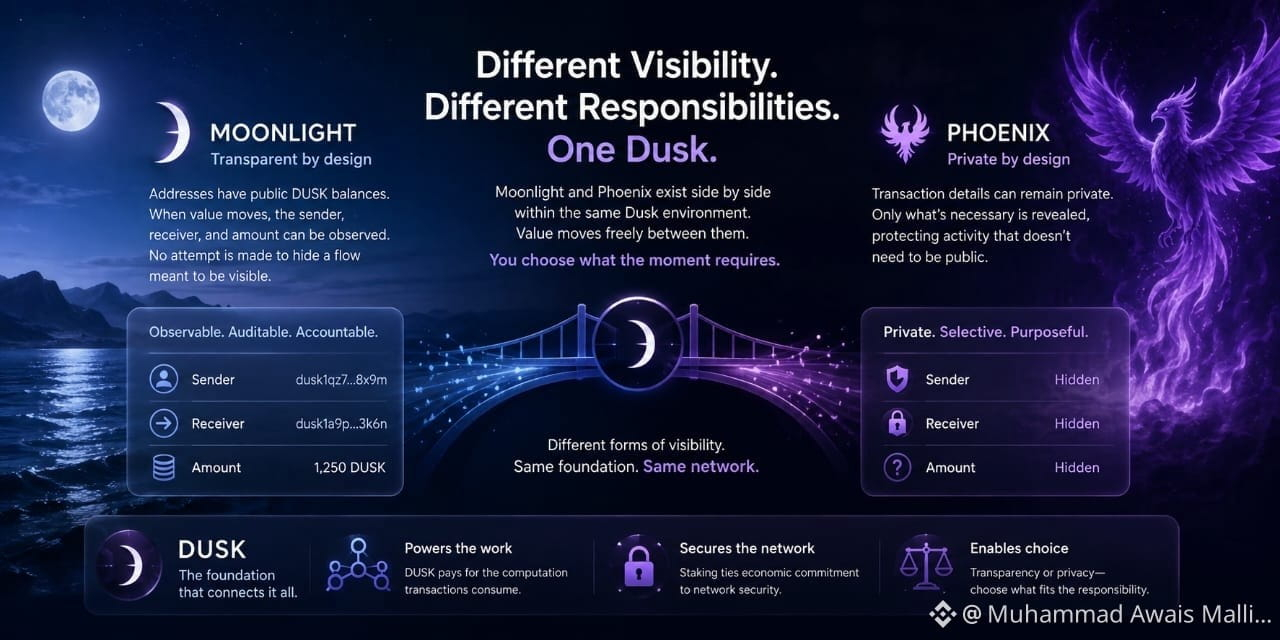
Moonlight unterstützt transparente öffentliche Konten, während Phoenix vertrauliche, verschlüsselte Übertragungen abwickelt. Dann gibt es Citadel, aufgebaut um Identitätszugriff und selektive Offenlegung.
Zusammen weisen sie auf etwas Spannendes hin: Transparenz und Vertraulichkeit müssen keine Gegensätze sein. Sie können unterschiedliche Sichtbarkeitsmodi sein – je nachdem, was eine Transaktion tatsächlich benötigt.
XSC passt auch in dieses Bild. Der Confidential Security Contract Standard ist für vertrauliche Smart Contracts ausgelegt, die sich an Anforderungen an Privatsphäre und Compliance anpassen können.
Für tokenisierte Wertpapiere könnte das wichtig sein. Emittenten müssen möglicherweise kontrollierte Übertragungen und Prüfungen der Anlegereignung ermöglichen, während einzelne Positionen privat bleiben, ohne auf nachprüfbare Abwicklung zu verzichten.
Das ist meine wichtigste Erkenntnis aus der bisherigen Recherche zu Dusk.
Dauerhafte Sichtbarkeit gilt oft als Stärke öffentlicher Blockchains. Wenn das Asset jedoch reguliert ist oder kommerziell sensibel, kann dieselbe Sichtbarkeit zur Haftung werden.
@Dusk fordert Institutionen nicht einfach dazu auf, „Privatsphäre zu vertrauen“. Es versucht, Privatsphäre, Identität und Abwicklung in denselben Rahmen zu bringen.
Könnte selektive Offenlegung ein größerer Treiber für die Einführung von institutionellem Blockchain-Finanzwesen werden als reine Anonymität?
Je intensiver ich Dusk studiere, desto mehr glaube ich, dass „Privatsphäre“ irreführend sein kann, wenn wir sie zu breit anwenden.
Für institutionelles Finanzwesen geht es bei Privatsphäre nicht immer darum, alles zu verbergen. Es geht darum, zu kontrollieren, wer was sehen darf, während sich dennoch nachweisen lässt, dass die Regeln befolgt wurden.
Das hat meine Aufmerksamkeit auf Dusk gelenkt.
Moonlight unterstützt transparente öffentliche Konten, während Phoenix vertrauliche, verschlüsselte Übertragungen abwickelt. Dann gibt es Citadel, aufgebaut um Identitätszugriff und selektive Offenlegung.
Zusammen weisen sie auf etwas Spannendes hin: Transparenz und Vertraulichkeit müssen keine Gegensätze sein. Sie können unterschiedliche Sichtbarkeitsmodi sein – je nachdem, was eine Transaktion tatsächlich benötigt.
XSC passt auch in dieses Bild. Der Confidential Security Contract Standard ist für vertrauliche Smart Contracts ausgelegt, die sich an Anforderungen an Privatsphäre und Compliance anpassen können.
Für tokenisierte Wertpapiere könnte das wichtig sein. Emittenten müssen möglicherweise kontrollierte Übertragungen und Prüfungen der Anlegereignung ermöglichen, während einzelne Positionen privat bleiben, ohne auf nachprüfbare Abwicklung zu verzichten.
Das ist meine wichtigste Erkenntnis aus der bisherigen Recherche zu Dusk.
Dauerhafte Sichtbarkeit gilt oft als Stärke öffentlicher Blockchains. Wenn das Asset jedoch reguliert ist oder kommerziell sensibel, kann dieselbe Sichtbarkeit zur Haftung werden.
@Dusk fordert Institutionen nicht einfach dazu auf, „Privatsphäre zu vertrauen“. Es versucht, Privatsphäre, Identität und Abwicklung in denselben Rahmen zu bringen.
Könnte selektive Offenlegung ein größerer Treiber für die Einführung von institutionellem Blockchain-Finanzwesen werden als reine Anonymität?