Brothers, I found that Dusk has recently been applying to NPEX for a regulatory exemption called DLT-TSS. It sounds very impressive, but the word “exemption” itself already hides a restriction that’s easy to overlook.
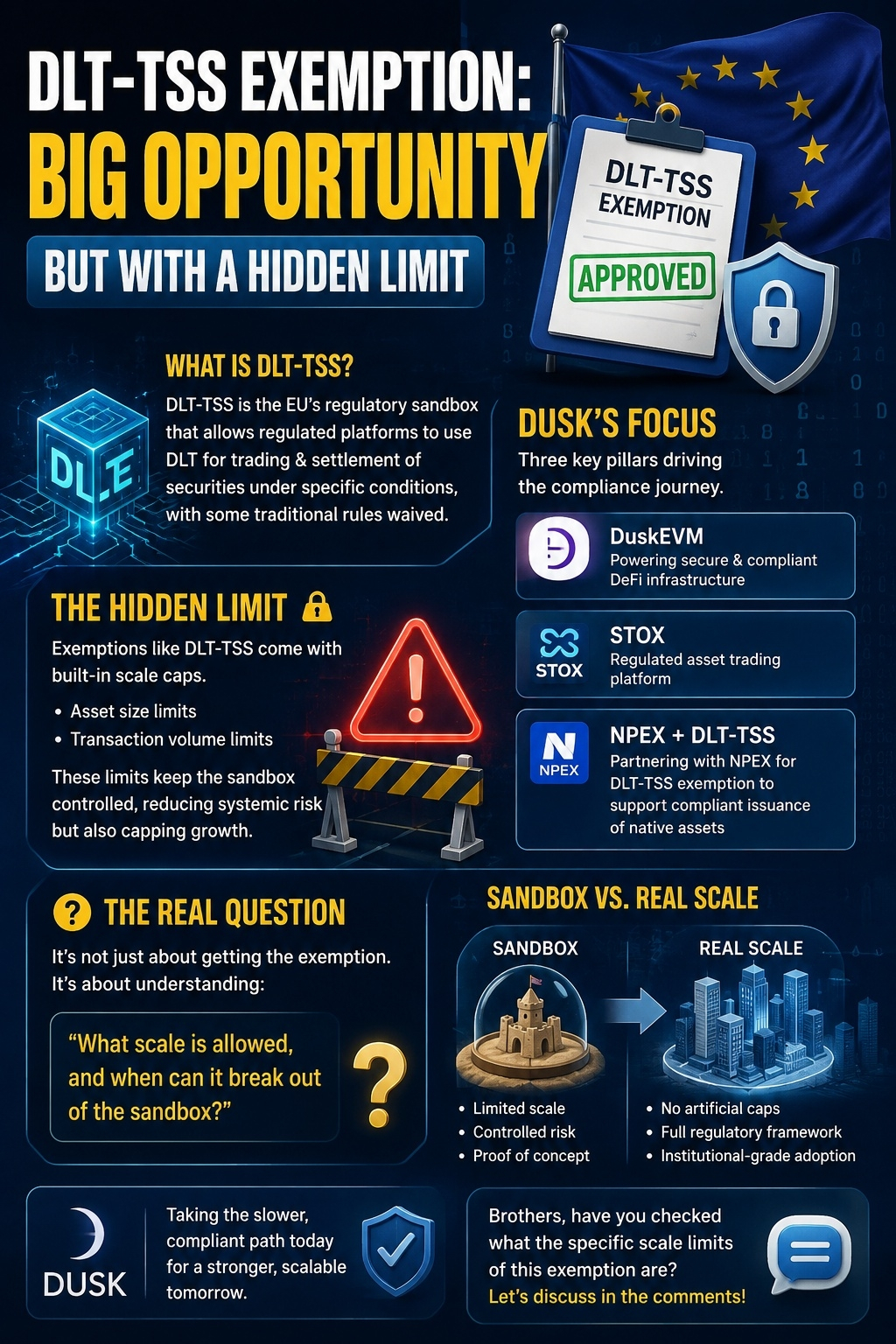
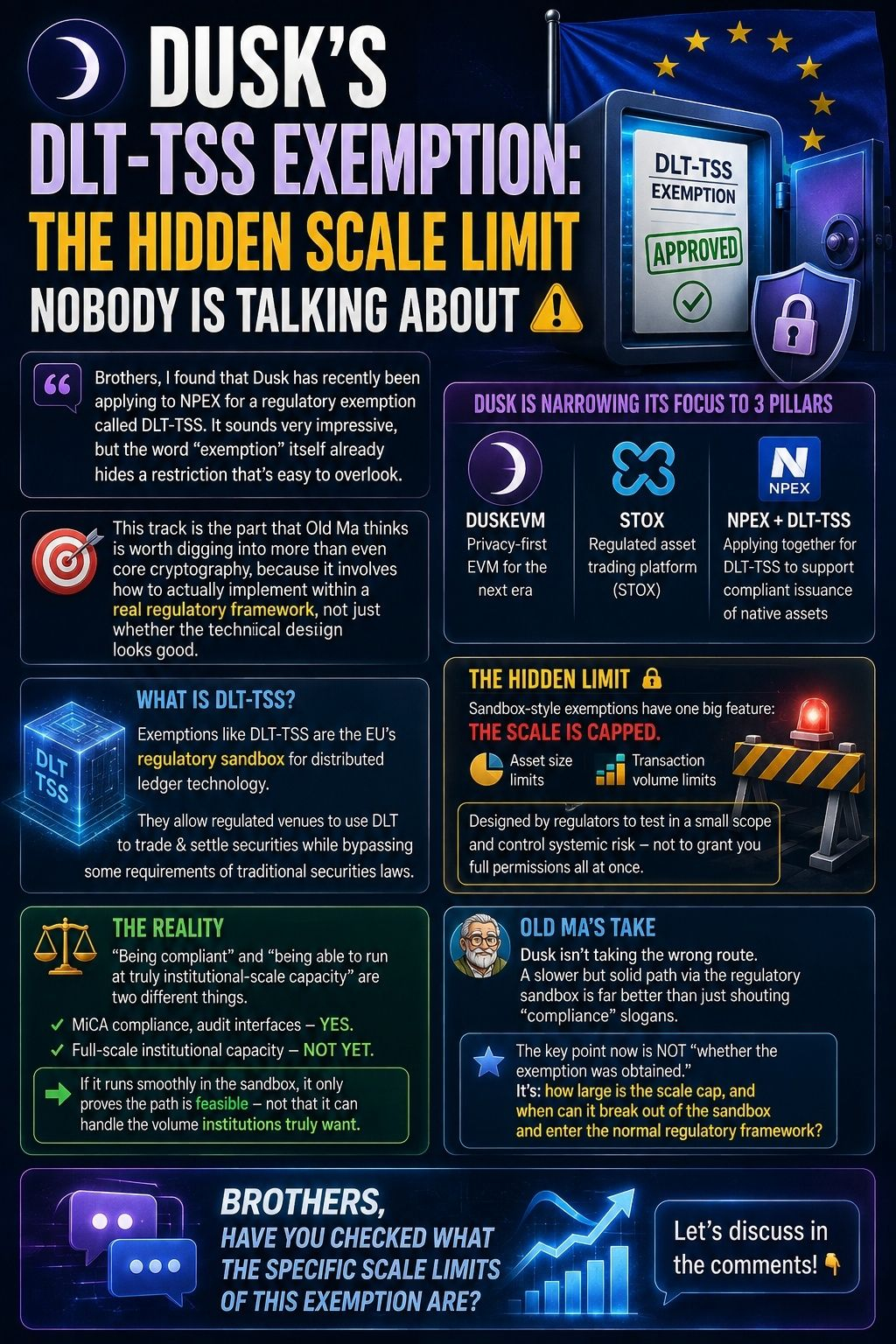
Dusk is now narrowing its focus to three things: DuskEVM, a regulated asset trading platform called STOX, and applying together with the Dutch exchange NPEX for DLT-TSS specifically to support compliant issuance of native assets. This track is the part that Old Ma thinks is worth digging into more than even core cryptography, because it involves how to actually implement within a real regulatory framework, not just whether the technical design looks good.
Exemptions like DLT-TSS, at their core, are the EU’s regulatory sandbox for distributed ledger technology. They allow regulated trading venues, under specific conditions, to use DLT to trade and settle securities while bypassing some requirements of traditional securities laws. It sounds like a big win but sandbox-style regulatory exemptions share a common feature: the scale is inherently capped. Typically, they set asset size limits and transaction volume limits. This is intentionally designed by regulators to test in a small scope first and control systemic risk not to grant you full permissions all at once.
That leads to a question worth pondering. A large part of Dusk’s “compliant institution” narrative currently relies on exemptions like these sandboxes. The technical aspects MiCA compliance, audit interfaces, and so on are indeed being handled. But “being compliant” and “being able to run at truly institutional-scale capacity” are two different things. Even if it runs smoothly at the sandbox stage, as long as it’s still constrained by the caps, it only shows the path is feasible; it doesn’t mean it can support the kind of volume that institutions truly want.
Old Ma doesn’t think Dusk is taking the wrong route on the contrary. Choosing a slower but more solid path via the regulatory sandbox is far better than just shouting “compliance” slogans. The key point in this stage, though, shouldn’t be “whether the exemption was obtained.” It should be: how large a scale cap does this exemption actually grant, and when can it break out of the sandbox and enter the normal regulatory framework?
Brothers, have you checked what the specific
scale limits of this exemption are? Let’s discuss in the comments.
#dusk $DUSK @Dusk #USToPressNationsToPickUSOrChinaAICoalition #SP500TopsRecord7800 #Write2Earn #SP500EarningsBeatExpectations $BR $BTC