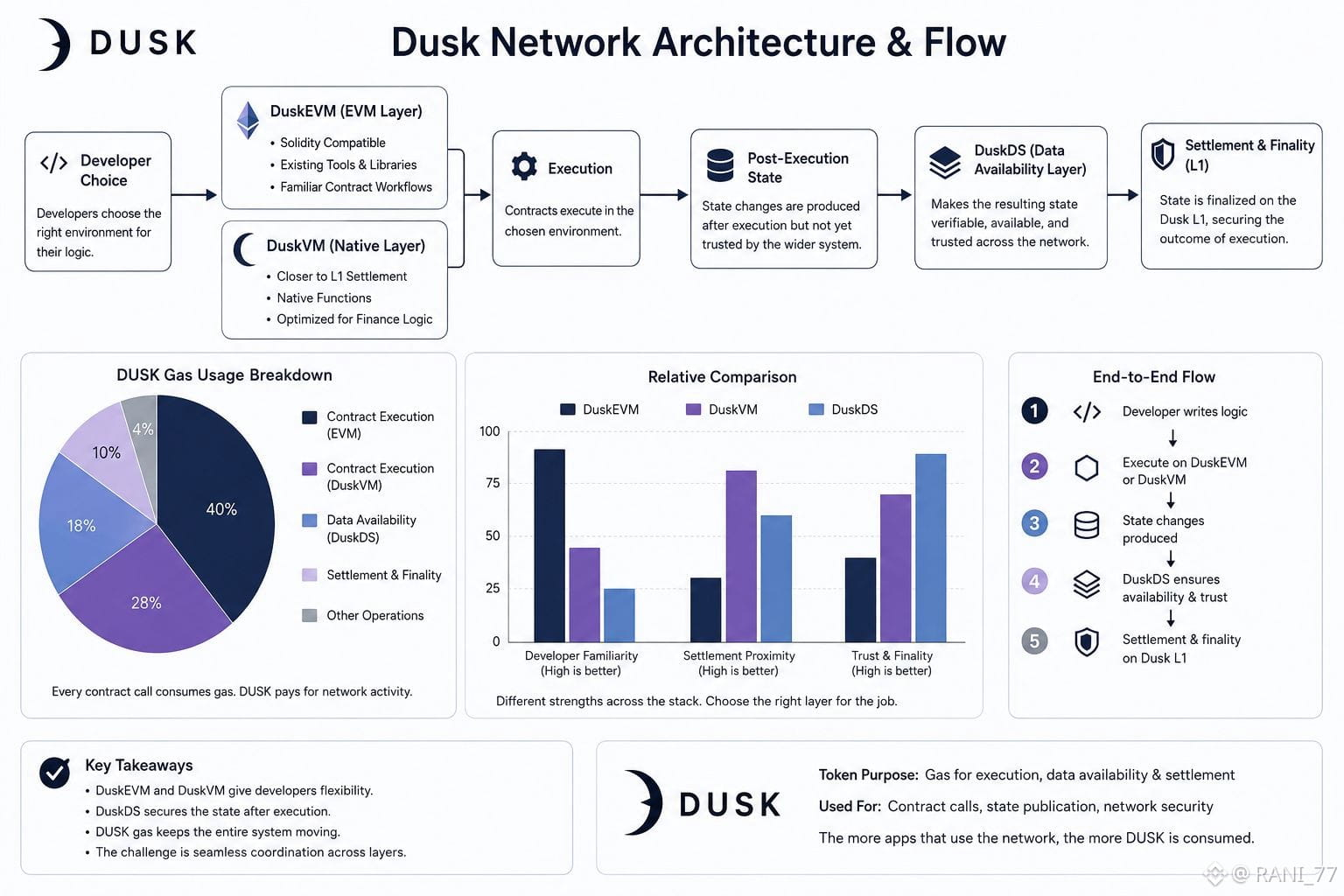
#dusk $DUSK $HEMI $COW @Dusk Ich sah mir einen Vertrags-Flow an, der auf der EVM-Seite einwandfrei funktionierte, bis ein Teil der Logik näher an die Abwicklung rücken musste. Nichts war exakt fehlgeschlagen, aber das Design fühlte sich plötzlich weniger offensichtlich an. Genau dort begann Dusk für mich mehr Sinn zu ergeben. DuskEVM bietet Entwicklern den vertrauten Weg über Solidity, bestehende Tools und normale Vertrags-Workflows, aber nicht jede finanzielle Funktion gehört notwendigerweise dorthin. Einige Logiken passen möglicherweise besser zu DuskVM, näher an die native L1-Umgebung. Die Wahl klingt flexibel, schafft aber auch eine weitere Koordinationsschnittstelle. Zwei Ausführungsumgebungen bedeuten mehr Entscheidungen, mehr Integrationsaufwand und wahrscheinlich mehr Stellen, an denen Annahmen auseinanderdriften können. Ich kam immer wieder auf den Moment nach der Ausführung zurück: Wenn der Vertrag seine Aufgabe erledigt hat, muss der daraus resultierende Zustand zu etwas werden, dem das übergreifende System vertrauen kann. DuskDS spielt dabei eine wichtigere Rolle als in einer sauberen Architektur-Übersicht. DUSK wirkt zudem nicht mehr wie ein abstraktes Utility-Token, sobald wiederholte Vertragsaufrufe Gas verbrauchen; jemand muss diese Aktivität weiter bezahlen. Vielleicht funktioniert die Architektur in kleinem Maßstab gut. Der eigentliche Test wird sein, ob Anwendungen weiter zwischen vertrauter EVM-Logik, nativen Funktionen und Abwicklung wechseln können, ohne dass Entwickler mehr Zeit mit dem Koordinieren des Stacks verbringen als mit dem Aufbau der Finanzlogik darauf.


Veröffentlichen

--
Haftungsausschluss: Enthält Meinungen von Drittanbietern. Keine Beratung. Binance AI wird ohne Gewähr bereitgestellt. Siehe AGB.