#dusk @Dusk $DUSK
Ich dachte früher, das Tokenisieren von Finanzwerten sei vor allem eine technische Herausforderung: ein Token erstellen, ihn auf der Blockchain bereitstellen und dem Markt das Weitere überlassen.
Doch je mehr ich Dusk erkunde, desto mehr erkenne ich, dass die eigentliche Herausforderung erst beginnt, nachdem der Token bereits existiert.
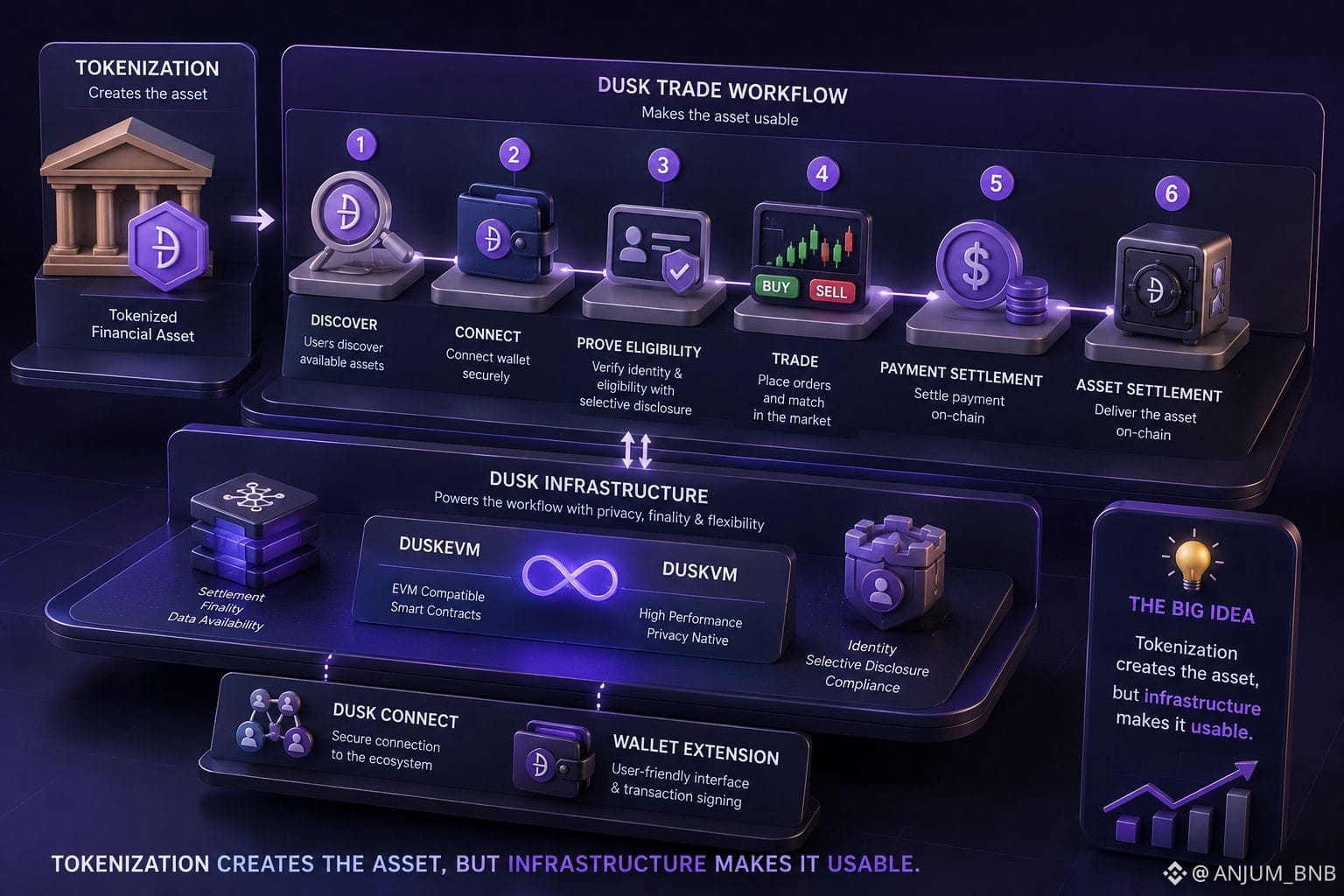
Ein Finanzwert braucht mehr als nur einen Smart Contract. Nutzer müssen Vermögenswerte entdecken, Wallets verbinden, die Berechtigung nachweisen, handeln und sowohl die Zahlung als auch die Abwicklung des Vermögenswerts abschließen. Genau hier wird Dusk Trade interessant: Es bringt diese Schritte in einen praktischen Workflow für tokenisierte Finanzwerte.
Darunter stellt Dusk die Infrastruktur bereit, um diesen Workflow zu unterstützen. DuskDS übernimmt Abwicklung, Endgültigkeit und Datenverfügbarkeit, während DuskEVM und DuskVM flexible Umgebungen für die Entwicklung von Anwendungen und Verträgen bieten. Citadel ergänzt Identität und selektive Offenlegung, mit Dusk Connect und der Wallet-Erweiterung für die Unterstützung der Nutzerinteraktion.
Für mich ist die größte Idee ganz einfach: Tokenisierung schafft den Vermögenswert, aber die Infrastruktur macht ihn nutzbar.
Ich dachte früher, das Tokenisieren von Finanzwerten sei vor allem eine technische Herausforderung: ein Token erstellen, ihn auf der Blockchain bereitstellen und dem Markt das Weitere überlassen.
Doch je mehr ich Dusk erkunde, desto mehr erkenne ich, dass die eigentliche Herausforderung erst beginnt, nachdem der Token bereits existiert.
Ein Finanzwert braucht mehr als nur einen Smart Contract. Nutzer müssen Vermögenswerte entdecken, Wallets verbinden, die Berechtigung nachweisen, handeln und sowohl die Zahlung als auch die Abwicklung des Vermögenswerts abschließen. Genau hier wird Dusk Trade interessant: Es bringt diese Schritte in einen praktischen Workflow für tokenisierte Finanzwerte.
Darunter stellt Dusk die Infrastruktur bereit, um diesen Workflow zu unterstützen. DuskDS übernimmt Abwicklung, Endgültigkeit und Datenverfügbarkeit, während DuskEVM und DuskVM flexible Umgebungen für die Entwicklung von Anwendungen und Verträgen bieten. Citadel ergänzt Identität und selektive Offenlegung, mit Dusk Connect und der Wallet-Erweiterung für die Unterstützung der Nutzerinteraktion.
Für mich ist die größte Idee ganz einfach: Tokenisierung schafft den Vermögenswert, aber die Infrastruktur macht ihn nutzbar.