Je länger ich mir Zedger anschaue, desto mehr denke ich, dass das Interessante daran nicht nur Privatsphäre ist.
Die Wertpapierbesitzverhältnisse sind viel komplexer als das Verbergen eines Kontostands.
Ein Anteil kann übertragbar, stimmberechtigt, dividendenberechtigt, eingeschränkt sein oder bestimmten Genehmigungsregeln unterliegen. Für die Finanzmärkte ist das schwierige Problem also nicht einfach, zu verbergen, wer was besitzt. Es geht darum nachzuweisen, dass eine Eigentumsänderung tatsächlich gültig ist, ohne alles öffentlich offenzulegen.
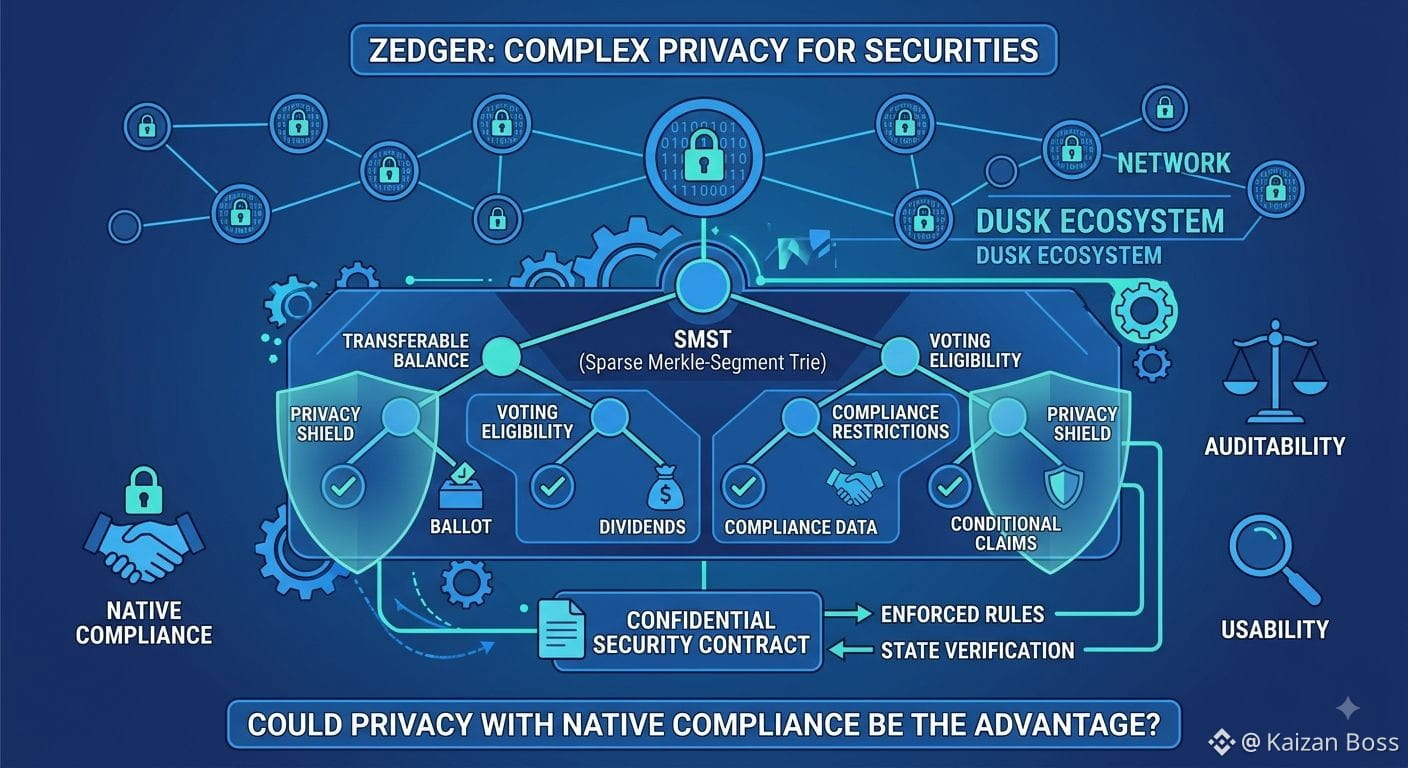
Genau darin sticht Zedger’s Sparse Merkle-Segment Trie, oder SMST, für mich hervor.
SMST kombiniert einen Sparse Merkle Tree mit einem Segment Tree, um den Kontostand festzuschreiben und gleichzeitig verschiedene Kontokategorien innerhalb der Struktur zu halten. Theoretisch ermöglicht das dem Netzwerk, Dinge wie übertragbare, stimmberechtigte, maximale und dividendenbezogene Salden zu unterscheiden, ohne jede Eigentumsdetails in öffentliche Daten zu verwandeln.
Ich finde, das ist ein interessanteres Privatsphärenmodell für Wertpapiere.
Traditionelle Blockchains machen Transparenz oft zum Standard. Aber Institutionen benötigen möglicherweise Verifizierung, ohne Handelspositionen, Zahlungsflüsse oder Aktionärsinformationen für alle offenzulegen.
Dusk geht dieses Problem in eine ähnliche Richtung an: mit einer datenschutzorientierten Layer-1 und dem Confidential Security Contract-Standard. Ziel ist es, dass Finanzanwendungen den Zustand verifizieren können, während sensible Informationen geschützt bleiben.
Trotzdem bin ich vorsichtig.
Mehr Zustandsfelder und mehr Prüfvorschriften bedeuten auch mehr Engineering- und Verifikationskomplexität. Die Architektur kann auf dem Papier elegant wirken und trotzdem schwierig sein, sie sicher und im großen Maßstab umzusetzen.
Der eigentliche Test ist also nicht, ob Zedger Salden verbergen kann.
Es geht darum, ob ein kryptografisches Kontomodell die unübersichtliche Realität des Wertpapierbesitzes abbilden kann, während es gleichzeitig praktisch, auditierbar und dezentral bleibt.
Das ist der Teil, den ich im Blick habe.
Könnte eine konforme Privatsphäre für Finanz-Blockchains irgendwann ein größerer Vorteil werden als reine Anonymität?
#dusk $DUSK @Dusk
Die Wertpapierbesitzverhältnisse sind viel komplexer als das Verbergen eines Kontostands.
Ein Anteil kann übertragbar, stimmberechtigt, dividendenberechtigt, eingeschränkt sein oder bestimmten Genehmigungsregeln unterliegen. Für die Finanzmärkte ist das schwierige Problem also nicht einfach, zu verbergen, wer was besitzt. Es geht darum nachzuweisen, dass eine Eigentumsänderung tatsächlich gültig ist, ohne alles öffentlich offenzulegen.
Genau darin sticht Zedger’s Sparse Merkle-Segment Trie, oder SMST, für mich hervor.
SMST kombiniert einen Sparse Merkle Tree mit einem Segment Tree, um den Kontostand festzuschreiben und gleichzeitig verschiedene Kontokategorien innerhalb der Struktur zu halten. Theoretisch ermöglicht das dem Netzwerk, Dinge wie übertragbare, stimmberechtigte, maximale und dividendenbezogene Salden zu unterscheiden, ohne jede Eigentumsdetails in öffentliche Daten zu verwandeln.
Ich finde, das ist ein interessanteres Privatsphärenmodell für Wertpapiere.
Traditionelle Blockchains machen Transparenz oft zum Standard. Aber Institutionen benötigen möglicherweise Verifizierung, ohne Handelspositionen, Zahlungsflüsse oder Aktionärsinformationen für alle offenzulegen.
Dusk geht dieses Problem in eine ähnliche Richtung an: mit einer datenschutzorientierten Layer-1 und dem Confidential Security Contract-Standard. Ziel ist es, dass Finanzanwendungen den Zustand verifizieren können, während sensible Informationen geschützt bleiben.
Trotzdem bin ich vorsichtig.
Mehr Zustandsfelder und mehr Prüfvorschriften bedeuten auch mehr Engineering- und Verifikationskomplexität. Die Architektur kann auf dem Papier elegant wirken und trotzdem schwierig sein, sie sicher und im großen Maßstab umzusetzen.
Der eigentliche Test ist also nicht, ob Zedger Salden verbergen kann.
Es geht darum, ob ein kryptografisches Kontomodell die unübersichtliche Realität des Wertpapierbesitzes abbilden kann, während es gleichzeitig praktisch, auditierbar und dezentral bleibt.
Das ist der Teil, den ich im Blick habe.
Könnte eine konforme Privatsphäre für Finanz-Blockchains irgendwann ein größerer Vorteil werden als reine Anonymität?
#dusk $DUSK @Dusk