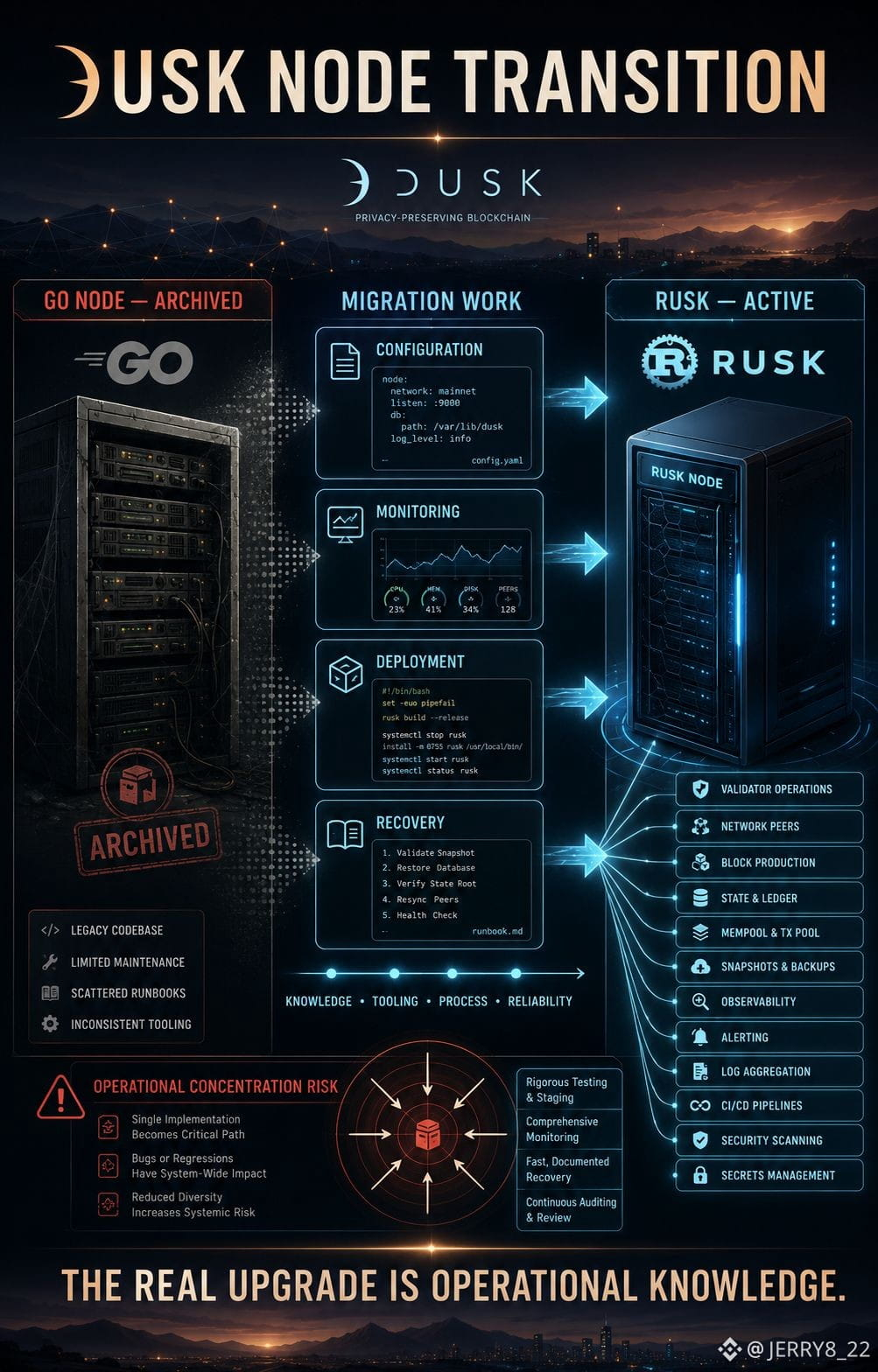
Dusk hat im Juni 2025 sein ursprüngliches Go-Node-Repository archiviert. Nach 5.774 Commits ist dusk-blockchain nun schreibgeschützt, während Rusk zur offiziellen Node-Implementierung des Projekts geworden ist.
Auf den ersten Blick wirkt das wie übliche technische Instandhaltung. Aber das ist es nicht. Dusk hat den Konsens der Netzwerk-Architektur, die Zustandsverwaltung, die Vertrag-Ausführung und die Node-Schnittstellen auf eine aktiv gepflegte Rust-Codebasis verlagert.
In dieser Entscheidung steckt echter Mehrwert. Zwei Implementierungen zu pflegen bindet Entwicklungszeit und schafft das Risiko, dass sie sich an den Rändern unterschiedlich verhalten. Eine Client-Implementierung gibt dem Dusk-Team eine klarere Entwicklungsperspektive.
Doch die Konsolidierung verändert auch das Risikoprofil des Netzwerks. Betreiber, die von Go migrieren, müssen Deployment-Skripte, Monitoring-Dashboards, Konfigurationsannahmen und Wiederherstellungsverfahren aktualisieren. Vier betriebliche Systeme können selbst dann ausfallen, wenn die Node selbst korrekt kompiliert und läuft.
Wie viele Dusk-Operatoren haben diese Migration in einem echten Ausfall getestet? Verlassen sich alte Integrationen auf ein Verhalten, das Rusk nicht nachbildet? Wenn ein Rusk-spezifischer Bug auftritt: Woher kommt dann die redundante Absicherung auf Implementierungsebene?
Alte Software abzulösen ist oft der richtige Schritt. Die schwierigere Aufgabe besteht darin, sicherzustellen, dass das Wissen, das sich darum herum aufgebaut hat, nicht zu verschwinden.
Für Dusk ist das entscheidende Upgrade nicht Go zu Rust. Entscheidend ist, dass nicht dokumentierte Erfahrungen zu gemeinsamem operativem Wissen werden.
#dusk @Dusk $DUSK
Auf den ersten Blick wirkt das wie übliche technische Instandhaltung. Aber das ist es nicht. Dusk hat den Konsens der Netzwerk-Architektur, die Zustandsverwaltung, die Vertrag-Ausführung und die Node-Schnittstellen auf eine aktiv gepflegte Rust-Codebasis verlagert.
In dieser Entscheidung steckt echter Mehrwert. Zwei Implementierungen zu pflegen bindet Entwicklungszeit und schafft das Risiko, dass sie sich an den Rändern unterschiedlich verhalten. Eine Client-Implementierung gibt dem Dusk-Team eine klarere Entwicklungsperspektive.
Doch die Konsolidierung verändert auch das Risikoprofil des Netzwerks. Betreiber, die von Go migrieren, müssen Deployment-Skripte, Monitoring-Dashboards, Konfigurationsannahmen und Wiederherstellungsverfahren aktualisieren. Vier betriebliche Systeme können selbst dann ausfallen, wenn die Node selbst korrekt kompiliert und läuft.
Wie viele Dusk-Operatoren haben diese Migration in einem echten Ausfall getestet? Verlassen sich alte Integrationen auf ein Verhalten, das Rusk nicht nachbildet? Wenn ein Rusk-spezifischer Bug auftritt: Woher kommt dann die redundante Absicherung auf Implementierungsebene?
Alte Software abzulösen ist oft der richtige Schritt. Die schwierigere Aufgabe besteht darin, sicherzustellen, dass das Wissen, das sich darum herum aufgebaut hat, nicht zu verschwinden.
Für Dusk ist das entscheidende Upgrade nicht Go zu Rust. Entscheidend ist, dass nicht dokumentierte Erfahrungen zu gemeinsamem operativem Wissen werden.
#dusk @Dusk $DUSK