#dusk $DUSK @Dusk
Ich ging in Dusk hinein und dachte, dass die Privatsphäre-Geschichte vor allem darum geht, Transaktionsdaten zu verbergen.
Je genauer ich mir die Architektur ansah, desto weniger funktionierte diese Erklärung.
Das Spannende ist nicht einfach, dass Phoenix vertrauliche Transaktionen unterstützen kann. Das Spannende ist, dass Privatsphäre näher am Transaktionsmodell selbst behandelt wird – statt als zusätzliche Schicht über einer transparenten Blockchain.
Das verändert die Fragestellung:
Auf einer herkömmlichen öffentlichen Kette ist Sichtbarkeit die Standardeinstellung und Privatsphäre ist etwas, das man darum herum versucht zu konstruieren. Bei Dusk geht das Design von einer anderen Prämisse aus: Nicht jeder Teilnehmer muss alles sehen.
Aber damit entsteht sofort ein weiteres Problem.
Eine finanzielle Transaktion kann privat sein, ohne von Regeln ausgenommen zu sein. Jemand muss möglicherweise weiterhin nachweisen, dass er berechtigt ist, Compliance-Anforderungen erfüllen oder bestimmte Informationen einer autorisierten Partei offenlegen.
Hier wird Dusk für mich besonders interessant.
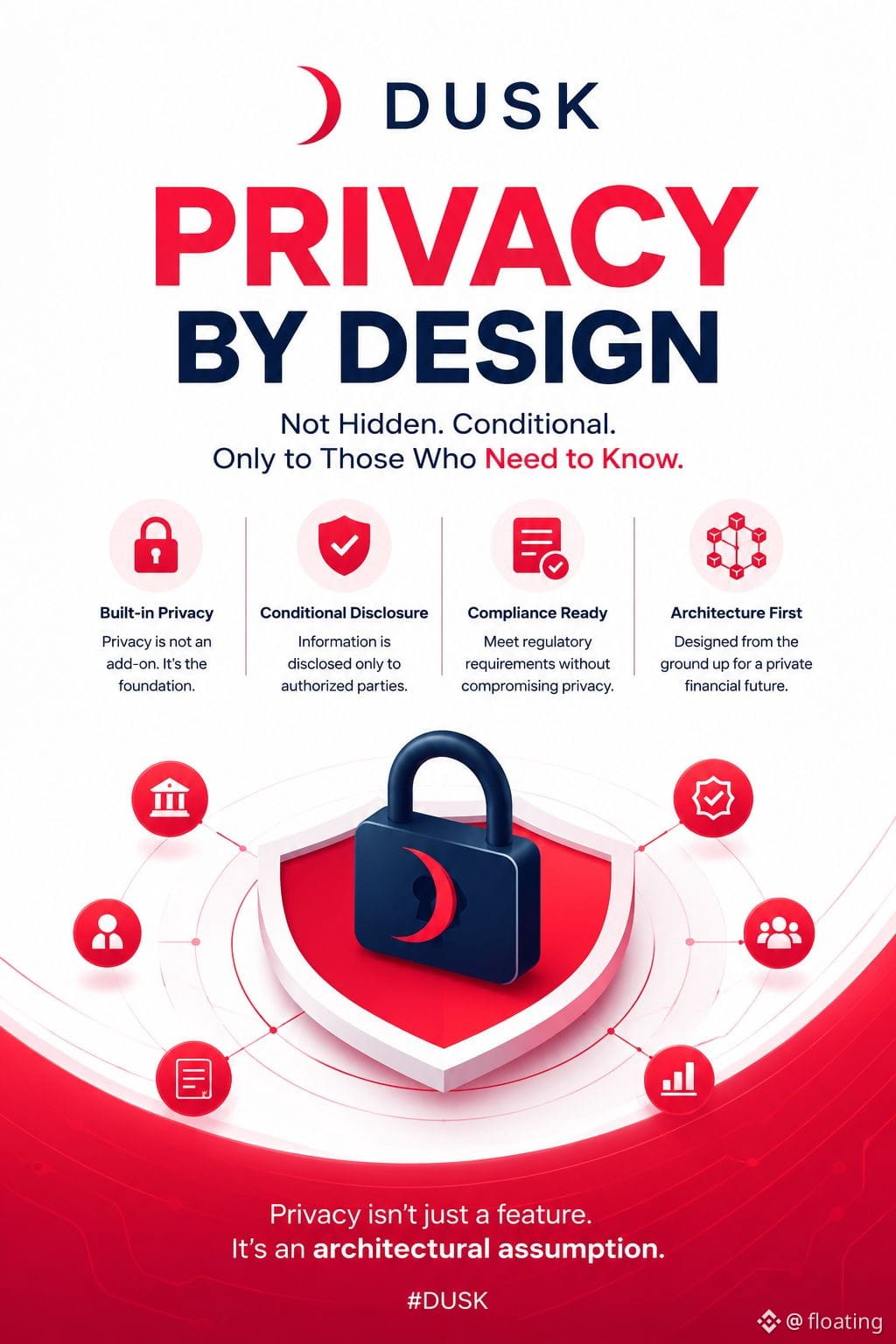
Privatsphäre geht nicht unbedingt darum, Informationen unzugänglich zu machen. Es kann darum gehen, Offenlegung an Bedingungen zu knüpfen.
Der Teil, den ich noch nicht bedacht hatte, ist, wie stark das die Architektur verändert: Statt zu fragen „Wie verstecken wir diese Transaktion?“, muss das System fragen „Wer muss eigentlich wissen, was?“
Ich bin mir noch nicht sicher, wie gut sich dieses Modell mit immer komplexeren Finanzabläufen skalieren lässt.
Aber es hat mich dazu gebracht, @Dusk neu zu überdenken.
Privatsphäre ist hier nicht nur eine Funktion.
Es ist eine architektonische Annahme.
#dusk
Ich ging in Dusk hinein und dachte, dass die Privatsphäre-Geschichte vor allem darum geht, Transaktionsdaten zu verbergen.
Je genauer ich mir die Architektur ansah, desto weniger funktionierte diese Erklärung.
Das Spannende ist nicht einfach, dass Phoenix vertrauliche Transaktionen unterstützen kann. Das Spannende ist, dass Privatsphäre näher am Transaktionsmodell selbst behandelt wird – statt als zusätzliche Schicht über einer transparenten Blockchain.
Das verändert die Fragestellung:
Auf einer herkömmlichen öffentlichen Kette ist Sichtbarkeit die Standardeinstellung und Privatsphäre ist etwas, das man darum herum versucht zu konstruieren. Bei Dusk geht das Design von einer anderen Prämisse aus: Nicht jeder Teilnehmer muss alles sehen.
Aber damit entsteht sofort ein weiteres Problem.
Eine finanzielle Transaktion kann privat sein, ohne von Regeln ausgenommen zu sein. Jemand muss möglicherweise weiterhin nachweisen, dass er berechtigt ist, Compliance-Anforderungen erfüllen oder bestimmte Informationen einer autorisierten Partei offenlegen.
Hier wird Dusk für mich besonders interessant.
Privatsphäre geht nicht unbedingt darum, Informationen unzugänglich zu machen. Es kann darum gehen, Offenlegung an Bedingungen zu knüpfen.
Der Teil, den ich noch nicht bedacht hatte, ist, wie stark das die Architektur verändert: Statt zu fragen „Wie verstecken wir diese Transaktion?“, muss das System fragen „Wer muss eigentlich wissen, was?“
Ich bin mir noch nicht sicher, wie gut sich dieses Modell mit immer komplexeren Finanzabläufen skalieren lässt.
Aber es hat mich dazu gebracht, @Dusk neu zu überdenken.
Privatsphäre ist hier nicht nur eine Funktion.
Es ist eine architektonische Annahme.
#dusk