Der Dämmerung brennt keine schlechten Validatoren. Sie demoted sie nur leise.
Ich habe mir angesehen, wie Dusk mit fehlverhaltenden Validatoren umgeht, und habe die übliche Krypto-Antwort erwartet: das Stake slaschen, verbrennen und ein Exempel statuieren. Doch so läuft es hier nicht.
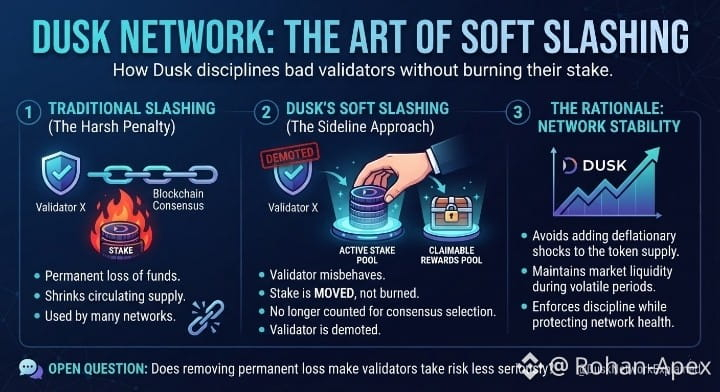
Dusk nutzt, was die eigenen Dokus als „soft slashing“ bezeichnen. Wenn ein Validator etwas falsch macht, wird sein Stake nicht zerstört. Stattdessen wird es in den Pool der einklagbaren Rewards verschoben – es existiert also weiter, wird aber nicht mehr als aktives Stake in dem Auswahlprozess gezählt. Der Validator wird effektiv aus dem Spiel genommen, statt mit einem dauerhaften Verlust bestraft zu werden.
Beim ersten Lesen klang das nach „weich“ im schlechten Sinne. Danach habe ich aber geprüft, wo der Preis gerade tatsächlich steht: DUSK wird bei etwa $0.065 gehandelt, rund 94 % unter seinem Hoch von 2021 bei $1.17. Das zirkulierende Angebot liegt bei knapp 590 Millionen gegenüber einem Cap von 1 Milliarde. In einem Token, der bereits so stark gefallen ist, würde das dauerhafte Verbrennen des Stakes bei jedem Slashing-Ereignis bedeuten, die Token-Versorgung zusammen mit dem Validator zu bestrafen – und damit einen ohnehin dünnen Markt in genau den Momenten zu verkleinern, in denen das Netzwerk Stabilität braucht, statt zusätzliche Volatilität zu erzeugen.
Soft Slashing ist also nicht nur eine Gnadenregel. Es ist eine Art, Disziplin durchzusetzen, ohne deflationäre Schocks in einen Token einzubauen, der dafür im Moment keinen Spielraum hat.
Die offene Frage, die ich nicht vollständig klären kann: Macht das Entfernen der permanenten Strafe Validatoren weniger risikosensibel, weil eine schlechte Nacht ihnen tatsächlich nichts kostet – abgesehen von einer vorübergehenden Degradierung?#dusk $DUSK @Dusk $AAPLB
$VELVET
Ich habe mir angesehen, wie Dusk mit fehlverhaltenden Validatoren umgeht, und habe die übliche Krypto-Antwort erwartet: das Stake slaschen, verbrennen und ein Exempel statuieren. Doch so läuft es hier nicht.
Dusk nutzt, was die eigenen Dokus als „soft slashing“ bezeichnen. Wenn ein Validator etwas falsch macht, wird sein Stake nicht zerstört. Stattdessen wird es in den Pool der einklagbaren Rewards verschoben – es existiert also weiter, wird aber nicht mehr als aktives Stake in dem Auswahlprozess gezählt. Der Validator wird effektiv aus dem Spiel genommen, statt mit einem dauerhaften Verlust bestraft zu werden.
Beim ersten Lesen klang das nach „weich“ im schlechten Sinne. Danach habe ich aber geprüft, wo der Preis gerade tatsächlich steht: DUSK wird bei etwa $0.065 gehandelt, rund 94 % unter seinem Hoch von 2021 bei $1.17. Das zirkulierende Angebot liegt bei knapp 590 Millionen gegenüber einem Cap von 1 Milliarde. In einem Token, der bereits so stark gefallen ist, würde das dauerhafte Verbrennen des Stakes bei jedem Slashing-Ereignis bedeuten, die Token-Versorgung zusammen mit dem Validator zu bestrafen – und damit einen ohnehin dünnen Markt in genau den Momenten zu verkleinern, in denen das Netzwerk Stabilität braucht, statt zusätzliche Volatilität zu erzeugen.
Soft Slashing ist also nicht nur eine Gnadenregel. Es ist eine Art, Disziplin durchzusetzen, ohne deflationäre Schocks in einen Token einzubauen, der dafür im Moment keinen Spielraum hat.
Die offene Frage, die ich nicht vollständig klären kann: Macht das Entfernen der permanenten Strafe Validatoren weniger risikosensibel, weil eine schlechte Nacht ihnen tatsächlich nichts kostet – abgesehen von einer vorübergehenden Degradierung?#dusk $DUSK @Dusk $AAPLB
$VELVET