Ich habe die Seite von Dusk zur NPEX-Partnerschaft durchgelesen, und eine Einzelheit hat meine Aufmerksamkeit erregt: eine Erwähnung einer „DLT-TSS“-Lizenz. Ich war mit diesem Begriff zuvor in einem Blockchain-Kontext noch nicht in Berührung gekommen, daher nahm ich an, dass es sich um eine interne Dusk-Bezeichnung handelt.
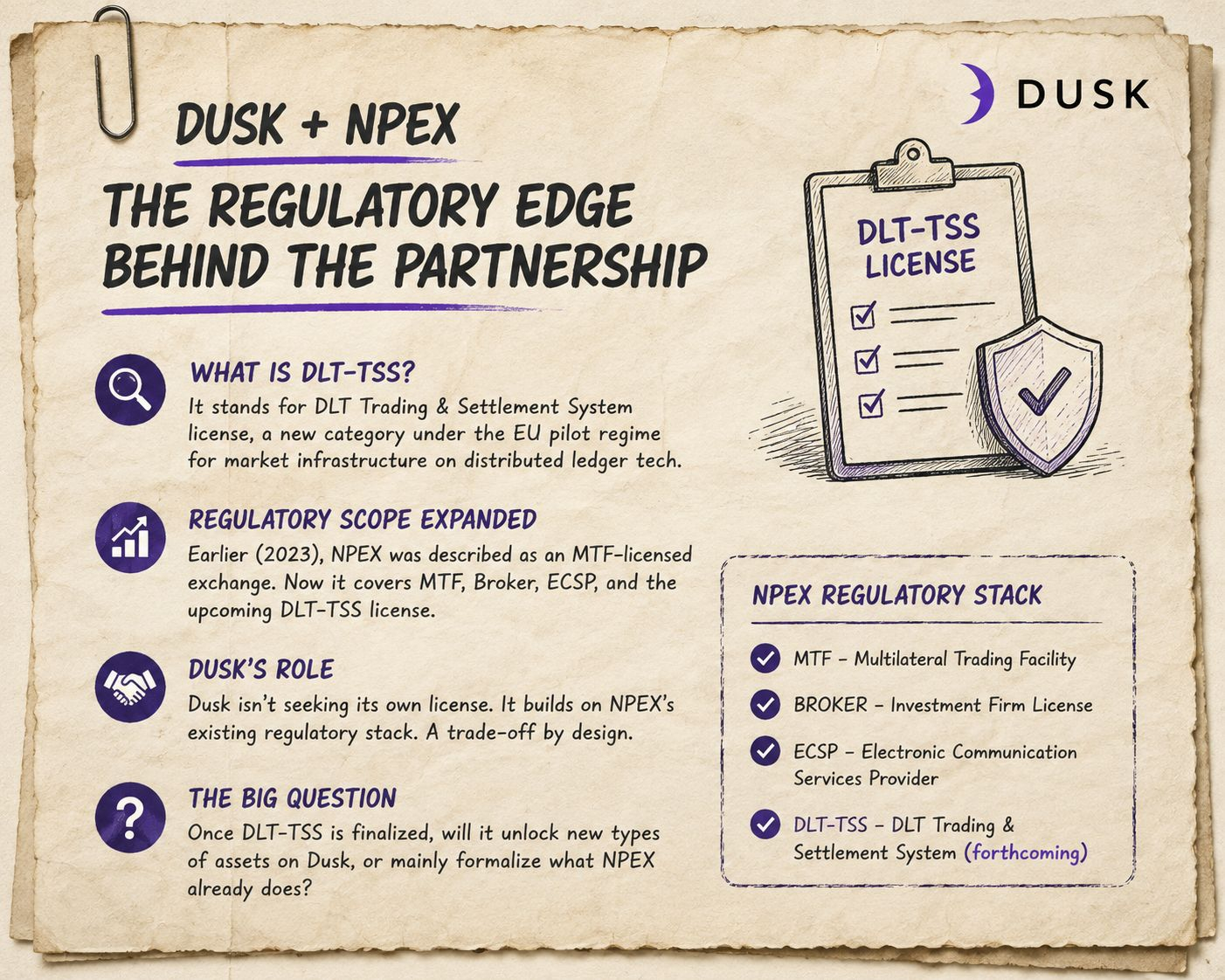
Nachdem ich die offizielle Seite geprüft hatte, stellte sich heraus, dass es sich dabei tatsächlich um eine reale regulatorische Kategorie handelt: eine Lizenz für ein DLT Trading and Settlement System, eine der neueren Bezeichnungen im Rahmen der EU-Pilotregelungen für Marktinfrastruktur, die auf Distributed-Ledger-Technologie basiert.
Was mich überrascht hat, war der Vergleich dieser Seite mit der früheren NPEX-Ankündigung von Dusk. Die ursprüngliche Veröffentlichung aus dem Jahr 2023 beschrieb NPEX lediglich als eine MTF-lizenzierte Börse. Die neuere Seite „Regulatory Edge“ führt einen umfangreicheren Stack auf: MTF, Broker, ECSP und das in Aussicht gestellte DLT-TSS. Das ist eine auffällige Veränderung des Umfangs zwischen zwei offiziellen Materialien aus derselben Quelle – kein Widerspruch, aber ein Hinweis darauf, dass die regulatorische Abdeckung der Partnerschaft im Laufe der Zeit erweitert wurde und nicht von Anfang an feststand.
Die vorsichtige Lesart hier ist: Dusk beansprucht nicht eine eigene Lizenz, sondern übernimmt den bestehenden regulatorischen Status von NPEX über den gesamten Stack hinweg. Das ist ein bewusstes Abwägen: Es verknüpft Dusk’s Compliance-Story mit dem Lizenzfortschritt von NPEX, statt auf einem eigenständigen Rahmen zu beruhen.
Das wirft eine echte Frage auf: Wenn DLT-TSS einmal finalisiert ist, ändert das dann, welche Arten von Vermögenswerten auf Dusk abgewickelt werden können, oder formalisiert es im Wesentlichen nur das, was NPEX bereits tut?
#dusk $DUSK @Dusk
Nachdem ich die offizielle Seite geprüft hatte, stellte sich heraus, dass es sich dabei tatsächlich um eine reale regulatorische Kategorie handelt: eine Lizenz für ein DLT Trading and Settlement System, eine der neueren Bezeichnungen im Rahmen der EU-Pilotregelungen für Marktinfrastruktur, die auf Distributed-Ledger-Technologie basiert.
Was mich überrascht hat, war der Vergleich dieser Seite mit der früheren NPEX-Ankündigung von Dusk. Die ursprüngliche Veröffentlichung aus dem Jahr 2023 beschrieb NPEX lediglich als eine MTF-lizenzierte Börse. Die neuere Seite „Regulatory Edge“ führt einen umfangreicheren Stack auf: MTF, Broker, ECSP und das in Aussicht gestellte DLT-TSS. Das ist eine auffällige Veränderung des Umfangs zwischen zwei offiziellen Materialien aus derselben Quelle – kein Widerspruch, aber ein Hinweis darauf, dass die regulatorische Abdeckung der Partnerschaft im Laufe der Zeit erweitert wurde und nicht von Anfang an feststand.
Die vorsichtige Lesart hier ist: Dusk beansprucht nicht eine eigene Lizenz, sondern übernimmt den bestehenden regulatorischen Status von NPEX über den gesamten Stack hinweg. Das ist ein bewusstes Abwägen: Es verknüpft Dusk’s Compliance-Story mit dem Lizenzfortschritt von NPEX, statt auf einem eigenständigen Rahmen zu beruhen.
Das wirft eine echte Frage auf: Wenn DLT-TSS einmal finalisiert ist, ändert das dann, welche Arten von Vermögenswerten auf Dusk abgewickelt werden können, oder formalisiert es im Wesentlichen nur das, was NPEX bereits tut?
#dusk $DUSK @Dusk