#dusk $DUSK @Dusk
One thing that makes Dusk interesting is that it doesn't force every application to use blockchain infrastructure in exactly the same way.
Dusk separates settlement from execution through its modular architecture.
At the foundation is DuskDS, responsible for consensus, finality and data availability. On top of that, developers can use DuskVM for native Rust/WASM smart contracts or DuskEVM when they want an EVM-compatible environment and familiar Solidity tooling.
Why is that important for regulated finance?
Different financial applications have different requirements. A native asset workflow may need direct access to Dusk's privacy and transaction models, while another application may benefit from existing Ethereum tooling and developer infrastructure.
Dusk is essentially trying to provide both paths without giving up its underlying settlement layer.
And this is where the architecture becomes more interesting than the usual “RWA blockchain” narrative.
The network is designed around requirements such as:
🔹 eligibility and access controls
🔹 selective disclosure of sensitive information
🔹 confidential transactions
🔹 deterministic settlement
🔹 regulated asset issuance and servicing
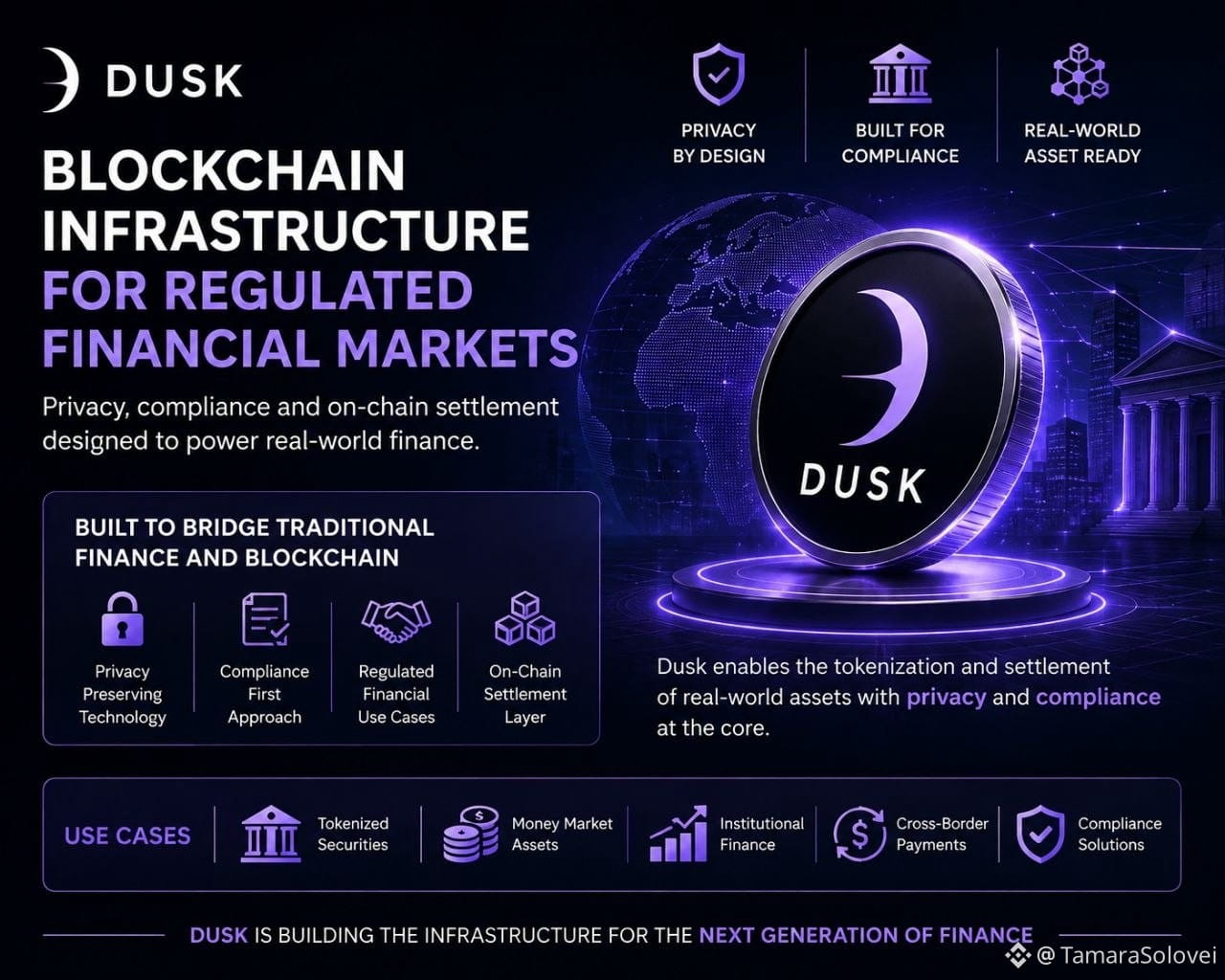
Its documentation specifically describes use cases ranging from tokenized equity and debt to institutional DeFi and delivery-versus-payment settlement.
For me, the key question isn't whether institutions will eventually use blockchain. It's whether the underlying infrastructure is flexible enough to meet the requirements of real financial markets.
That's the part of the Dusk thesis I'm watching.
One thing that makes Dusk interesting is that it doesn't force every application to use blockchain infrastructure in exactly the same way.
Dusk separates settlement from execution through its modular architecture.
At the foundation is DuskDS, responsible for consensus, finality and data availability. On top of that, developers can use DuskVM for native Rust/WASM smart contracts or DuskEVM when they want an EVM-compatible environment and familiar Solidity tooling.
Why is that important for regulated finance?
Different financial applications have different requirements. A native asset workflow may need direct access to Dusk's privacy and transaction models, while another application may benefit from existing Ethereum tooling and developer infrastructure.
Dusk is essentially trying to provide both paths without giving up its underlying settlement layer.
And this is where the architecture becomes more interesting than the usual “RWA blockchain” narrative.
The network is designed around requirements such as:
🔹 eligibility and access controls
🔹 selective disclosure of sensitive information
🔹 confidential transactions
🔹 deterministic settlement
🔹 regulated asset issuance and servicing
Its documentation specifically describes use cases ranging from tokenized equity and debt to institutional DeFi and delivery-versus-payment settlement.
For me, the key question isn't whether institutions will eventually use blockchain. It's whether the underlying infrastructure is flexible enough to meet the requirements of real financial markets.
That's the part of the Dusk thesis I'm watching.