#dusk $DUSK Ich habe mir heute meine kleine Dusk-Position angesehen und dabei gemerkt, dass ich den Teil von Dusk ignoriert habe, den ich wahrscheinlich zuerst hätte betrachten sollen: die VM.
Die meisten Menschen, einschließlich ich selbst anfangs, verbinden Dusk vor allem mit Privatsphäre. Aber je tiefer ich in Piecrust eingedrungen bin, desto mehr begann ich, über eine andere Frage nachzudenken:
Was passiert, wenn der Smart Contract selbst das ist, dem du nicht vertraust?
Das klingt offensichtlich, aber es verändert, wie ich die Chain betrachte.
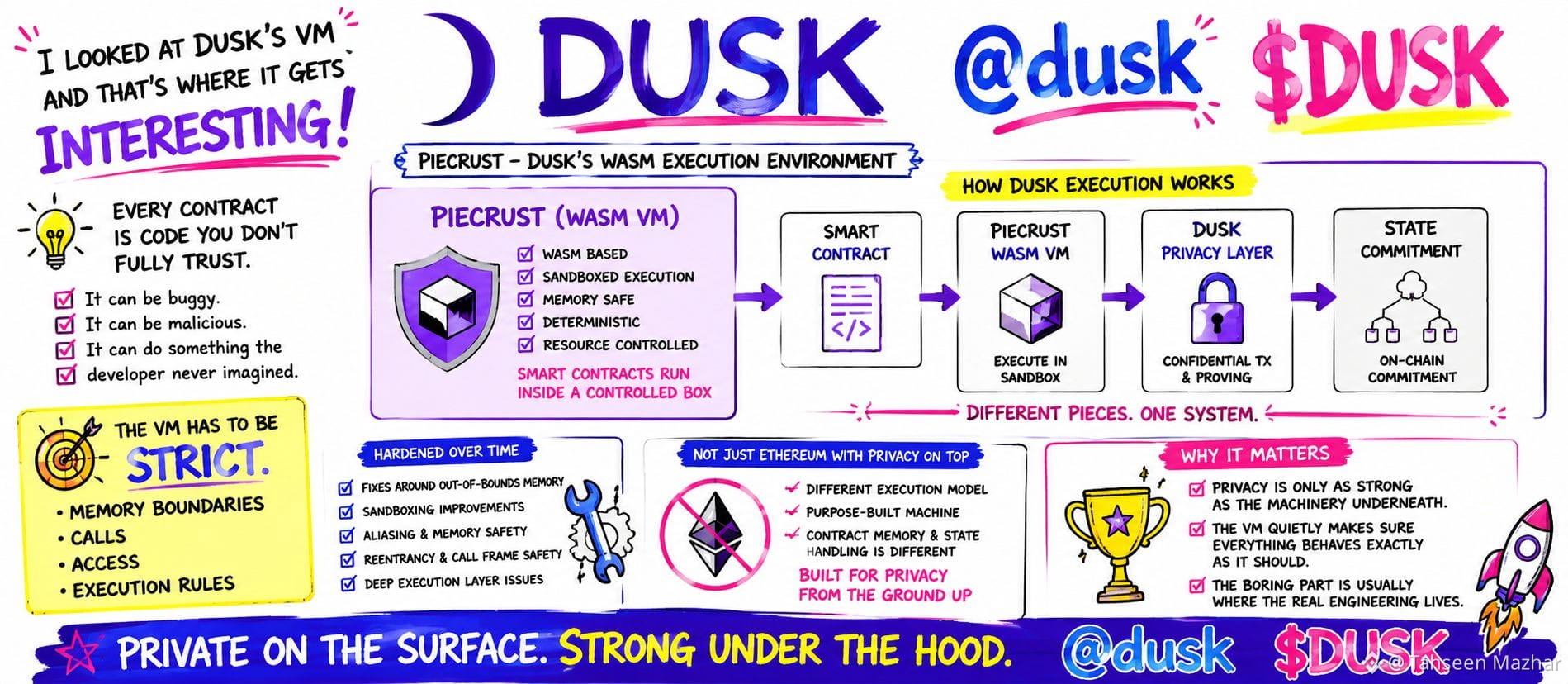
Piecrust ist das WASM-Ausführungsumfeld von Dusk, und der wichtige Teil ist nicht wirklich das Label „WASM“. Entscheidend ist die kontrollierte Umgebung um die Contract-Ausführung herum.
Contracts können fehlerhaft sein. Sie können sich in unerwartete Weise verhalten. Sie können versuchen, auf Dinge zuzugreifen, auf die sie keinen Zugriff haben sollten. Deshalb sind Speichergrenzen, Sandboxing, Aufrufe, Aliasing und Reentrancy für mich nicht mehr nur langweilige Implementierungsdetails. Sie gehören zum Sicherheitsmodell.
Ich habe bemerkt, dass Dusk diese Bereiche im Laufe der Zeit härten musste, darunter auch Fixes bei Out-of-bounds-Memory und anderen Problemen auf der Execution-Layer. Das hat mich tatsächlich mehr interessiert, nicht weniger.
Ich würde lieber sehen, dass ein Projekt sich offen mit hässlichen VM-Problemen auseinandersetzt, statt so zu tun, als sei die Execution-Layer bereits perfekt.
Es gibt außerdem einen Detailpunkt, den ich denke, den man leicht übersieht: Dusk nimmt nicht einfach ein vertrautes EVM-Design und setzt Privatsphäre darum.
Die Ausführungsumgebung, der Contract-State und die Komponenten für Datenschutz/Proofing sind so gestaltet, dass sie zusammenarbeiten. Dadurch ist die VM mehr als nur ein Ort, an dem Contracts laufen. Sie wird Teil der gesamten Vertrauensgrenze.
Meine Position ist nach wie vor klein, und ich stocke nicht einfach nur deshalb auf, weil ich ein interessantes technisches Detail gefunden habe. Ich beobachte, ob die Ingenieursarbeit sich tatsächlich in eine zuverlässige Nutzung übersetzt.
Aber das hat meine Sicht auf $DUSK a ein wenig verändert.
Wenn Privatsphäre die sichtbare Funktion ist, dann ist Piecrust Teil der Maschinerie darunter, die dafür sorgt, dass das Ganze korrekt funktioniert.
Und ehrlich gesagt: Genau in diesen langweiligen Layern schaue ich als Nächstes meistens nach.
@DuskFoundation #dusk $DUSK
@Dusk
Die meisten Menschen, einschließlich ich selbst anfangs, verbinden Dusk vor allem mit Privatsphäre. Aber je tiefer ich in Piecrust eingedrungen bin, desto mehr begann ich, über eine andere Frage nachzudenken:
Was passiert, wenn der Smart Contract selbst das ist, dem du nicht vertraust?
Das klingt offensichtlich, aber es verändert, wie ich die Chain betrachte.
Piecrust ist das WASM-Ausführungsumfeld von Dusk, und der wichtige Teil ist nicht wirklich das Label „WASM“. Entscheidend ist die kontrollierte Umgebung um die Contract-Ausführung herum.
Contracts können fehlerhaft sein. Sie können sich in unerwartete Weise verhalten. Sie können versuchen, auf Dinge zuzugreifen, auf die sie keinen Zugriff haben sollten. Deshalb sind Speichergrenzen, Sandboxing, Aufrufe, Aliasing und Reentrancy für mich nicht mehr nur langweilige Implementierungsdetails. Sie gehören zum Sicherheitsmodell.
Ich habe bemerkt, dass Dusk diese Bereiche im Laufe der Zeit härten musste, darunter auch Fixes bei Out-of-bounds-Memory und anderen Problemen auf der Execution-Layer. Das hat mich tatsächlich mehr interessiert, nicht weniger.
Ich würde lieber sehen, dass ein Projekt sich offen mit hässlichen VM-Problemen auseinandersetzt, statt so zu tun, als sei die Execution-Layer bereits perfekt.
Es gibt außerdem einen Detailpunkt, den ich denke, den man leicht übersieht: Dusk nimmt nicht einfach ein vertrautes EVM-Design und setzt Privatsphäre darum.
Die Ausführungsumgebung, der Contract-State und die Komponenten für Datenschutz/Proofing sind so gestaltet, dass sie zusammenarbeiten. Dadurch ist die VM mehr als nur ein Ort, an dem Contracts laufen. Sie wird Teil der gesamten Vertrauensgrenze.
Meine Position ist nach wie vor klein, und ich stocke nicht einfach nur deshalb auf, weil ich ein interessantes technisches Detail gefunden habe. Ich beobachte, ob die Ingenieursarbeit sich tatsächlich in eine zuverlässige Nutzung übersetzt.
Aber das hat meine Sicht auf $DUSK a ein wenig verändert.
Wenn Privatsphäre die sichtbare Funktion ist, dann ist Piecrust Teil der Maschinerie darunter, die dafür sorgt, dass das Ganze korrekt funktioniert.
Und ehrlich gesagt: Genau in diesen langweiligen Layern schaue ich als Nächstes meistens nach.
@DuskFoundation #dusk $DUSK
@Dusk