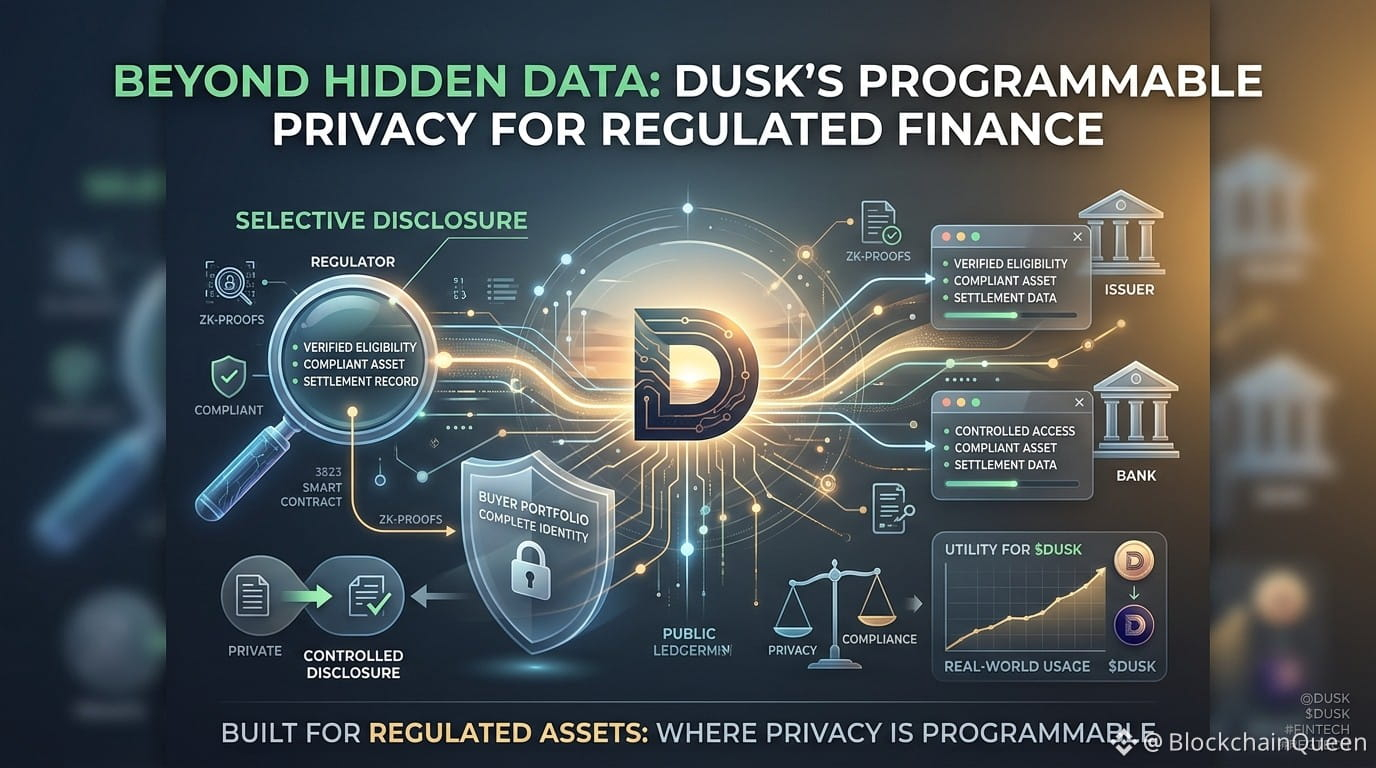
Einer Sache, zu der ich bei @Dusk k immer wieder zurückkehre, ist der Unterschied zwischen Privatsphäre und dem bloßen Verbergen von Informationen.
In Krypto wird Privatsphäre oft als eine Alles-oder-Nichts-Entscheidung dargestellt.
Entweder ist alles auf einem öffentlichen Ledger sichtbar, oder alles verschwindet hinter einem Mechanismus zur Privatsphäre.
Aber regulierte Finanzmärkte funktionieren nicht wirklich so.
Eine Bank, ein Asset Manager, ein Emittent oder eine Regulierungsbehörde muss möglicherweise auf bestimmte Informationen zugreifen können, ohne dafür auf jedes Informationsstück zugreifen zu müssen, das mit einer Transaktion verbunden ist.
Deshalb finde ich Dusk’s Ansatz zur selektiven Privatsphäre so interessant.
Stell dir vor, ein tokenisiertes Wertpapier wandert zwischen zwei Investoren. Der Markt muss möglicherweise überprüfen, dass die Transaktion legitim ist. Ein Emittent muss wissen, ob der Käufer berechtigt ist. Eine Regulierungsbehörde benötigt möglicherweise bestimmte Aufzeichnungen für die Compliance.
Aber muss wirklich jeder Teilnehmer im Netzwerk die vollständige Identität des Käufers, das Portfolio oder die finanzielle Historie sehen?
Wahrscheinlich nicht.
Hier wird das Konzept der selektiven Offenlegung wichtig.
Anstatt Privatsphäre so zu behandeln, dass „niemand irgendetwas sehen kann“, besteht das Ziel eher darin: „Die richtige Partei kann die richtigen Informationen verifizieren.“
Das klingt nach einem kleinen Unterschied, könnte aber extrem wichtig werden, wenn Blockchain-Infrastruktur in großem Maßstab reale Finanzanlagen verwaltet.
Öffentliche Blockchains haben ein unglaubliches Maß an Transparenz geschaffen, aber das traditionelle Finanzwesen hat Jahrzehnte damit verbracht, Systeme aufzubauen, die auf kontrollierten Zugriff auf sensible Informationen ausgelegt sind.
Daher geht bei der Übernahme durch Institutionen nicht zwangsläufig darum, dass Finanzmärkte dieses Prinzip aufgeben müssen.
Vielleicht ist der bessere Ansatz, Blockchain-Infrastruktur zu entwickeln, die es bewahren kann.
Das ist ein Grund, warum @Dusk für mich heraussticht. Seine Architektur wird so gestaltet, dass sie für regulierte Vermögenswerte funktioniert, bei denen Privatsphäre, Identität, Zugriffskontrolle und Abwicklung zusammenarbeiten müssen – statt unabhängig voneinander zu existieren.
Wenn Privatsphäre und Compliance Dusk besser für institutionelle Assets geeignet machen, führt zunehmende Nutzung in der realen Welt irgendwann zu stärkerem Nutzen für $DUSK ?
$DUSK #DUST
In Krypto wird Privatsphäre oft als eine Alles-oder-Nichts-Entscheidung dargestellt.
Entweder ist alles auf einem öffentlichen Ledger sichtbar, oder alles verschwindet hinter einem Mechanismus zur Privatsphäre.
Aber regulierte Finanzmärkte funktionieren nicht wirklich so.
Eine Bank, ein Asset Manager, ein Emittent oder eine Regulierungsbehörde muss möglicherweise auf bestimmte Informationen zugreifen können, ohne dafür auf jedes Informationsstück zugreifen zu müssen, das mit einer Transaktion verbunden ist.
Deshalb finde ich Dusk’s Ansatz zur selektiven Privatsphäre so interessant.
Stell dir vor, ein tokenisiertes Wertpapier wandert zwischen zwei Investoren. Der Markt muss möglicherweise überprüfen, dass die Transaktion legitim ist. Ein Emittent muss wissen, ob der Käufer berechtigt ist. Eine Regulierungsbehörde benötigt möglicherweise bestimmte Aufzeichnungen für die Compliance.
Aber muss wirklich jeder Teilnehmer im Netzwerk die vollständige Identität des Käufers, das Portfolio oder die finanzielle Historie sehen?
Wahrscheinlich nicht.
Hier wird das Konzept der selektiven Offenlegung wichtig.
Anstatt Privatsphäre so zu behandeln, dass „niemand irgendetwas sehen kann“, besteht das Ziel eher darin: „Die richtige Partei kann die richtigen Informationen verifizieren.“
Das klingt nach einem kleinen Unterschied, könnte aber extrem wichtig werden, wenn Blockchain-Infrastruktur in großem Maßstab reale Finanzanlagen verwaltet.
Öffentliche Blockchains haben ein unglaubliches Maß an Transparenz geschaffen, aber das traditionelle Finanzwesen hat Jahrzehnte damit verbracht, Systeme aufzubauen, die auf kontrollierten Zugriff auf sensible Informationen ausgelegt sind.
Daher geht bei der Übernahme durch Institutionen nicht zwangsläufig darum, dass Finanzmärkte dieses Prinzip aufgeben müssen.
Vielleicht ist der bessere Ansatz, Blockchain-Infrastruktur zu entwickeln, die es bewahren kann.
Das ist ein Grund, warum @Dusk für mich heraussticht. Seine Architektur wird so gestaltet, dass sie für regulierte Vermögenswerte funktioniert, bei denen Privatsphäre, Identität, Zugriffskontrolle und Abwicklung zusammenarbeiten müssen – statt unabhängig voneinander zu existieren.
Wenn Privatsphäre und Compliance Dusk besser für institutionelle Assets geeignet machen, führt zunehmende Nutzung in der realen Welt irgendwann zu stärkerem Nutzen für $DUSK ?
$DUSK #DUST