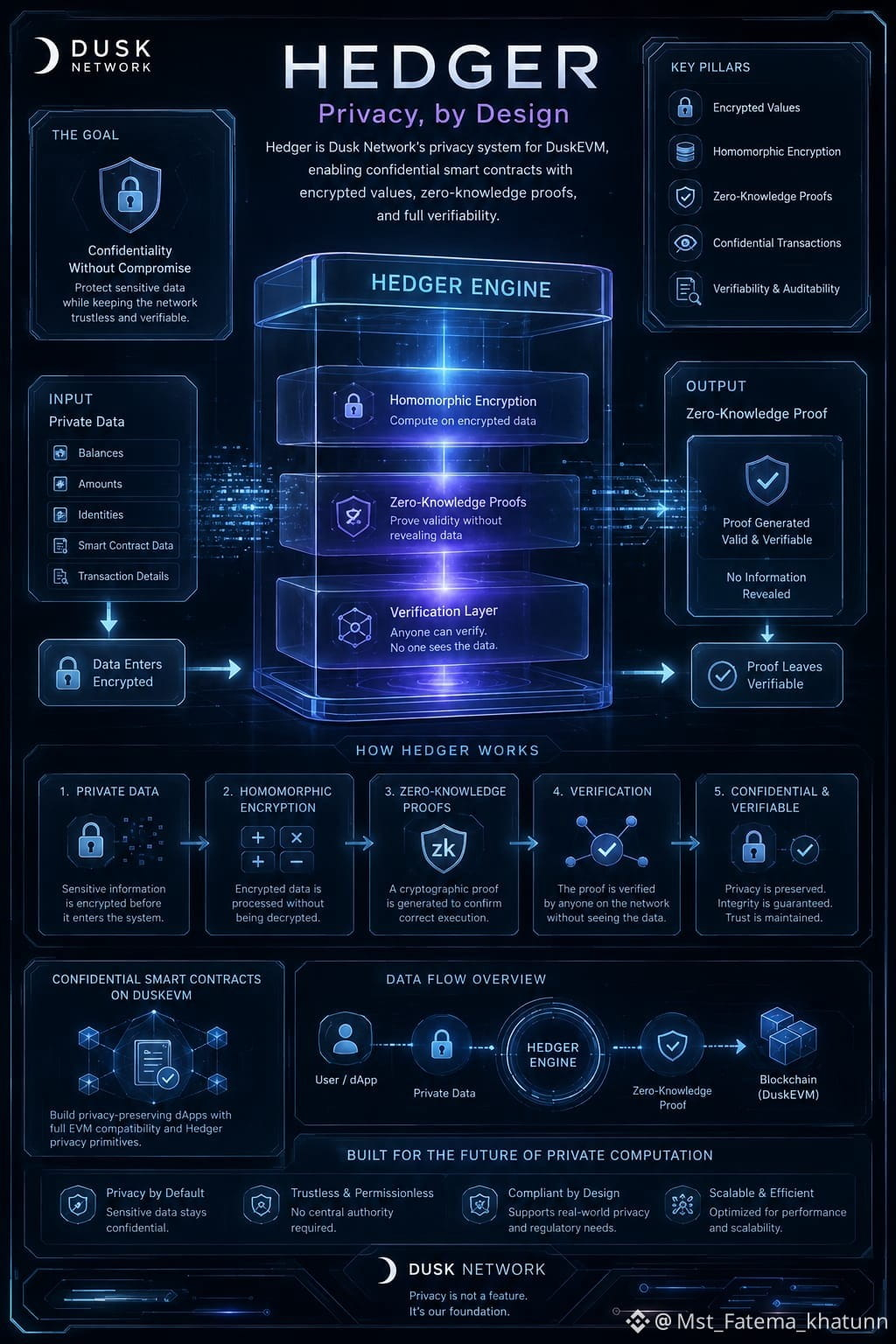
Hedger und Privatsphäre
Privatsphäre bedeutet normalerweise, alles zu verbergen. Dusk's Hedger gestaltet das leise neu.
Speziell für DuskEVM entwickelt, kombiniert es zwei unterschiedliche kryptografische Werkzeuge – ElGamal-basierte homomorphe Verschlüsselung auf elliptischen Kurven, die Berechnungen direkt auf verschlüsselten Werten ausführen lässt, ohne sie offenzulegen, und Zero-Knowledge-Beweise, die bestätigen, dass diese Berechnungen korrekt durchgeführt wurden, ohne die zugrunde liegenden Eingaben preiszugeben. Kurz gesagt: Das Netzwerk kann überprüfen, ob die Mathematik stimmt, ohne jemals die Zahlen zu sehen.
Bemerkenswert ist dabei die Abgrenzung zu Zedger, dem anderen Privatsphäre-System von Dusk, das für UTXO-basierte Schichten gebaut wurde. Hedger wurde speziell für die EVM-Umgebung entwickelt – das bedeutet, dass Entwickler, die mit vertrautem Ethereum-ähnlichem Tooling arbeiten, vertrauliche Kontostände, Besitzverhältnisse und Übertragungen erstellen können, ohne diesen Stack aufzugeben.
Aber das eigentliche Ziel ist nicht nur das Verbergen von Transaktionen. Es geht auch darum, die Nachvollziehbarkeit gleichzeitig zu bewahren. In reguliertem Finanzwesen ziehen Privatsphäre und Verantwortlichkeit gewöhnlich in entgegengesetzte Richtungen – mehr von dem einen bedeutet meist weniger vom anderen. Ob Hedger beides tatsächlich zusammenhalten kann, ist hier der eigentliche Test, nicht die Verschlüsselung selbst.
Außerdem gibt es einen längerfristigen Aspekt, der es wert ist, beobachtet zu werden: die Grundlage für verschleierte Orderbücher, die darauf abzielt, Handelsbeteiligte davor zu schützen, ihre Absichten oder Positionen offenzulegen. Das ist noch ein frühes Stadium – nichts, was bereits live ist.
Wenn Privatsphäre und Nachvollziehbarkeit wirklich in demselben System koexistieren können: Erfüllt das dann tatsächlich die Anforderungen von Regulierern – oder wird es nur zu einem technisch komplexeren Kompromiss?
#dusk $DUSK @Dusk
Privatsphäre bedeutet normalerweise, alles zu verbergen. Dusk's Hedger gestaltet das leise neu.
Speziell für DuskEVM entwickelt, kombiniert es zwei unterschiedliche kryptografische Werkzeuge – ElGamal-basierte homomorphe Verschlüsselung auf elliptischen Kurven, die Berechnungen direkt auf verschlüsselten Werten ausführen lässt, ohne sie offenzulegen, und Zero-Knowledge-Beweise, die bestätigen, dass diese Berechnungen korrekt durchgeführt wurden, ohne die zugrunde liegenden Eingaben preiszugeben. Kurz gesagt: Das Netzwerk kann überprüfen, ob die Mathematik stimmt, ohne jemals die Zahlen zu sehen.
Bemerkenswert ist dabei die Abgrenzung zu Zedger, dem anderen Privatsphäre-System von Dusk, das für UTXO-basierte Schichten gebaut wurde. Hedger wurde speziell für die EVM-Umgebung entwickelt – das bedeutet, dass Entwickler, die mit vertrautem Ethereum-ähnlichem Tooling arbeiten, vertrauliche Kontostände, Besitzverhältnisse und Übertragungen erstellen können, ohne diesen Stack aufzugeben.
Aber das eigentliche Ziel ist nicht nur das Verbergen von Transaktionen. Es geht auch darum, die Nachvollziehbarkeit gleichzeitig zu bewahren. In reguliertem Finanzwesen ziehen Privatsphäre und Verantwortlichkeit gewöhnlich in entgegengesetzte Richtungen – mehr von dem einen bedeutet meist weniger vom anderen. Ob Hedger beides tatsächlich zusammenhalten kann, ist hier der eigentliche Test, nicht die Verschlüsselung selbst.
Außerdem gibt es einen längerfristigen Aspekt, der es wert ist, beobachtet zu werden: die Grundlage für verschleierte Orderbücher, die darauf abzielt, Handelsbeteiligte davor zu schützen, ihre Absichten oder Positionen offenzulegen. Das ist noch ein frühes Stadium – nichts, was bereits live ist.
Wenn Privatsphäre und Nachvollziehbarkeit wirklich in demselben System koexistieren können: Erfüllt das dann tatsächlich die Anforderungen von Regulierern – oder wird es nur zu einem technisch komplexeren Kompromiss?
#dusk $DUSK @Dusk