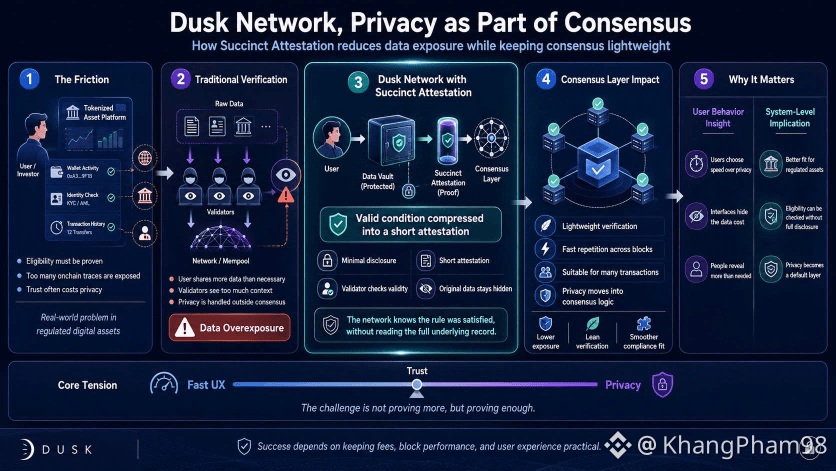
Ich habe einmal eine tokenisierte Plattform zur Ausgabe von Vermögenswerten für kleine Unternehmen ausprobiert. Sie baten mich nachzuweisen, dass ich zu der Gruppe der berechtigten Anleger gehörte, aber bei jedem Verifizierungsschritt blieben mehr On-Chain-Spuren zurück, als nötig gewesen wären. Keine Dramatik, nur das Gefühl, dass ich mit Privatsphäre dafür bezahlen musste, Vertrauen zu kaufen.
Dusk Network nutzt Succinct Attestation, um genau diesen Punkt der Reibung zu adressieren. Eine gültige Bedingung wird in eine kurze Bestätigung komprimiert – ausreichend, damit Validatoren sie innerhalb des Konsenses prüfen können, ohne dass das gesamte Netzwerk die ursprünglichen Daten lesen muss. Das Netzwerk weiß, dass die Tür nach den Regeln geöffnet wurde, ohne die komplette Datei dahinter ansehen zu müssen.
Das Wort „succinct“ ist hier keine technische Zierde. Konsens muss leichtgewichtig, schnell wiederholbar und in der Lage sein, viele Transaktionen im gleichen Block-Rhythmus zu verarbeiten. Daher verankert Dusk Network Privatsphäre in der Logik minimaler Verifikation: 1 Transaktion reicht aus – nicht mehr als nötig.
Aus verhaltensbezogener Perspektive geben Nutzer oft mehr preis als erforderlich, weil sie wollen, dass Transaktionen schnell durchgehen. Der Bildschirm zeigt nur 2 Bestätigungsbuttons, während die Datenkosten hinter der Oberfläche verborgen bleiben. Der Paradox ist: Je stärker regulierte Vermögenswerte eine Eignungsprüfung brauchen, desto grober wird die Verifikation und desto mehr ähnelt Krypto dem alten Überwachungssystem.
Ich sehe Succinct Attestation nicht als Zauberstab. Wenn die Gebühren steigen, die Blöcke langsamer werden oder die Integration sperrig wird, kehren Endnutzer zu vertrauten Abkürzungen zurück. Datenschutztechnologie verliert oft nicht, weil sie falsch ist, sondern weil sie von Menschen mehr Geduld verlangt, als ihre Instinkte zulassen.
Dusk Network stellt eine sehr praktische Frage: Kann Privatsphäre zu einem Standardbestandteil des Konsenses werden – still wie die Signaturverifikation – statt einer Funktion, an die Nutzer jedes Mal denken müssen, wenn sie transaktieren.
@Dusk $DUSK #dusk $AKE $ACE
Dusk Network nutzt Succinct Attestation, um genau diesen Punkt der Reibung zu adressieren. Eine gültige Bedingung wird in eine kurze Bestätigung komprimiert – ausreichend, damit Validatoren sie innerhalb des Konsenses prüfen können, ohne dass das gesamte Netzwerk die ursprünglichen Daten lesen muss. Das Netzwerk weiß, dass die Tür nach den Regeln geöffnet wurde, ohne die komplette Datei dahinter ansehen zu müssen.
Das Wort „succinct“ ist hier keine technische Zierde. Konsens muss leichtgewichtig, schnell wiederholbar und in der Lage sein, viele Transaktionen im gleichen Block-Rhythmus zu verarbeiten. Daher verankert Dusk Network Privatsphäre in der Logik minimaler Verifikation: 1 Transaktion reicht aus – nicht mehr als nötig.
Aus verhaltensbezogener Perspektive geben Nutzer oft mehr preis als erforderlich, weil sie wollen, dass Transaktionen schnell durchgehen. Der Bildschirm zeigt nur 2 Bestätigungsbuttons, während die Datenkosten hinter der Oberfläche verborgen bleiben. Der Paradox ist: Je stärker regulierte Vermögenswerte eine Eignungsprüfung brauchen, desto grober wird die Verifikation und desto mehr ähnelt Krypto dem alten Überwachungssystem.
Ich sehe Succinct Attestation nicht als Zauberstab. Wenn die Gebühren steigen, die Blöcke langsamer werden oder die Integration sperrig wird, kehren Endnutzer zu vertrauten Abkürzungen zurück. Datenschutztechnologie verliert oft nicht, weil sie falsch ist, sondern weil sie von Menschen mehr Geduld verlangt, als ihre Instinkte zulassen.
Dusk Network stellt eine sehr praktische Frage: Kann Privatsphäre zu einem Standardbestandteil des Konsenses werden – still wie die Signaturverifikation – statt einer Funktion, an die Nutzer jedes Mal denken müssen, wenn sie transaktieren.
@Dusk $DUSK #dusk $AKE $ACE