Je mehr ich über Privatsphäre im regulierten Finanzwesen nachdenke, desto mehr glaube ich, dass wir die falsche Frage gestellt haben.
Es geht nicht wirklich darum, ob eine Blockchain öffentlich oder privat sein sollte.
Die bessere Frage lautet: Wer muss eigentlich wissen, was?
Denken wir an ein reguliertes Asset auf der On-Chain.
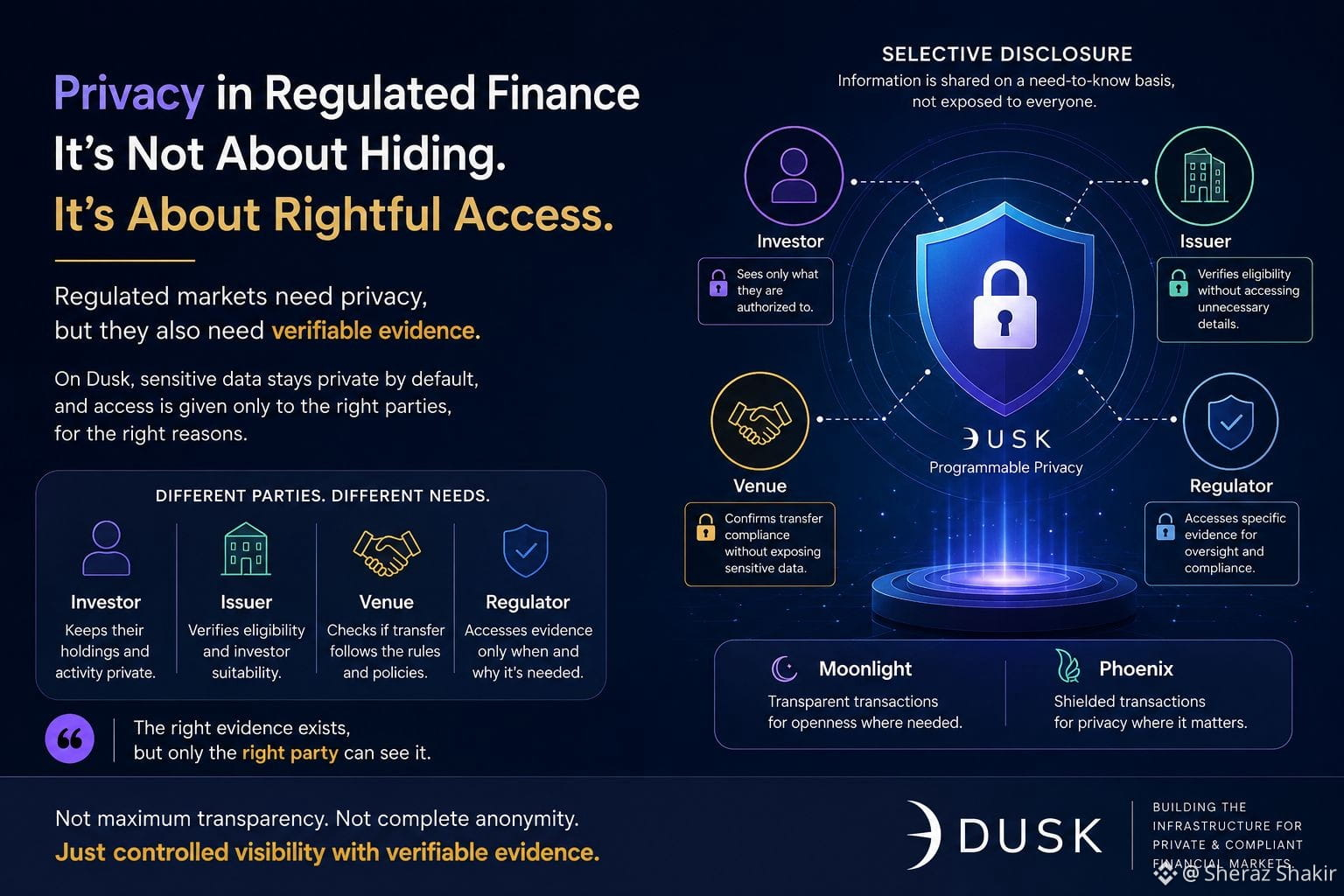
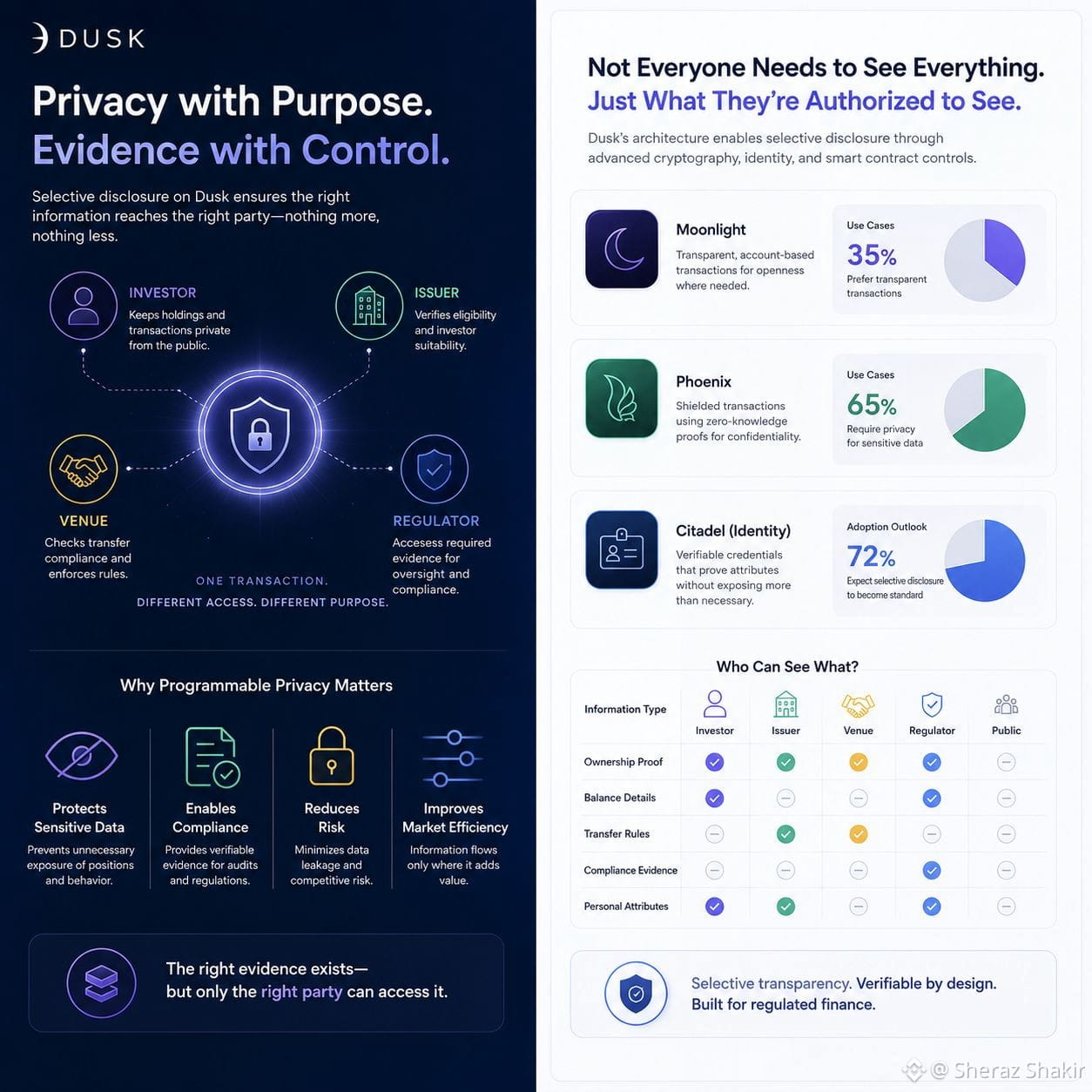
Ein Investor möchte wahrscheinlich nicht, dass der gesamte Markt sein Guthaben und jede von ihm vorgenommene Bewegung beobachtet. Ein Emittent muss möglicherweise überprüfen, dass der Investor berechtigt ist. Eine Handelsplattform muss möglicherweise bestätigen, dass eine Übertragung die Regeln einhält. Und ein Regulator benötigt vielleicht später Belege.
Das sind völlig unterschiedliche Anforderungen.
Dusk scheint diesen Ansatz genau von dieser Perspektive aus zu verfolgen.
Moonlight liefert DuskDS ein transparentes Transaktionsmodell, während Phoenix geschützte Übertragungen bereitstellt, bei denen sensible Transaktionsdetails nicht öffentlich offengelegt werden. Dusk beschreibt außerdem selektive Offenlegung und Identitätsnachweise als Wege, um die notwendigen Belege bereitzustellen, ohne dass alles für alle sichtbar gemacht wird.
Und ganz ehrlich: Diese Unterscheidung ergibt für Finanzen sehr viel Sinn.
Traditionelle Märkte arbeiten bereits mit unterschiedlichen Sichtbarkeitsstufen. Ihr Broker braucht nicht dieselben Informationen wie eine Börse. Ein Wirtschaftsprüfer braucht nicht dieselben Informationen wie ein anderer Investor. Ein Regulator kann Zugriff haben, den die Öffentlichkeit einfach nicht hat.
Also: Warum sollte das Platzieren dieses Marktes auf einer Blockchain plötzlich bedeuten, dass alle dieselbe Sicht bekommen?
Das ist der Teil von Dusk, der mich interessiert.
Privatsphäre geht hier nicht darum, etwas zu verschwinden.
Es geht darum, dass die richtigen Informationen für die richtige Partei verfügbar sind, wenn es einen legitimen Grund gibt, sie einzusehen.
Vielleicht braucht reguliertes On-Chain-Finance genau das:
Nicht maximale Transparenz.
Nicht vollständige Anonymität.
Sondern kontrollierte Sichtbarkeit mit verifizierbaren Belegen.
Und das fühlt sich viel näher an das an, wie echte Finanzmärkte bereits funktionieren.
#dusk $DUSK @Dusk $VELVET $AKE
Es geht nicht wirklich darum, ob eine Blockchain öffentlich oder privat sein sollte.
Die bessere Frage lautet: Wer muss eigentlich wissen, was?
Denken wir an ein reguliertes Asset auf der On-Chain.
Ein Investor möchte wahrscheinlich nicht, dass der gesamte Markt sein Guthaben und jede von ihm vorgenommene Bewegung beobachtet. Ein Emittent muss möglicherweise überprüfen, dass der Investor berechtigt ist. Eine Handelsplattform muss möglicherweise bestätigen, dass eine Übertragung die Regeln einhält. Und ein Regulator benötigt vielleicht später Belege.
Das sind völlig unterschiedliche Anforderungen.
Dusk scheint diesen Ansatz genau von dieser Perspektive aus zu verfolgen.
Moonlight liefert DuskDS ein transparentes Transaktionsmodell, während Phoenix geschützte Übertragungen bereitstellt, bei denen sensible Transaktionsdetails nicht öffentlich offengelegt werden. Dusk beschreibt außerdem selektive Offenlegung und Identitätsnachweise als Wege, um die notwendigen Belege bereitzustellen, ohne dass alles für alle sichtbar gemacht wird.
Und ganz ehrlich: Diese Unterscheidung ergibt für Finanzen sehr viel Sinn.
Traditionelle Märkte arbeiten bereits mit unterschiedlichen Sichtbarkeitsstufen. Ihr Broker braucht nicht dieselben Informationen wie eine Börse. Ein Wirtschaftsprüfer braucht nicht dieselben Informationen wie ein anderer Investor. Ein Regulator kann Zugriff haben, den die Öffentlichkeit einfach nicht hat.
Also: Warum sollte das Platzieren dieses Marktes auf einer Blockchain plötzlich bedeuten, dass alle dieselbe Sicht bekommen?
Das ist der Teil von Dusk, der mich interessiert.
Privatsphäre geht hier nicht darum, etwas zu verschwinden.
Es geht darum, dass die richtigen Informationen für die richtige Partei verfügbar sind, wenn es einen legitimen Grund gibt, sie einzusehen.
Vielleicht braucht reguliertes On-Chain-Finance genau das:
Nicht maximale Transparenz.
Nicht vollständige Anonymität.
Sondern kontrollierte Sichtbarkeit mit verifizierbaren Belegen.
Und das fühlt sich viel näher an das an, wie echte Finanzmärkte bereits funktionieren.
#dusk $DUSK @Dusk $VELVET $AKE