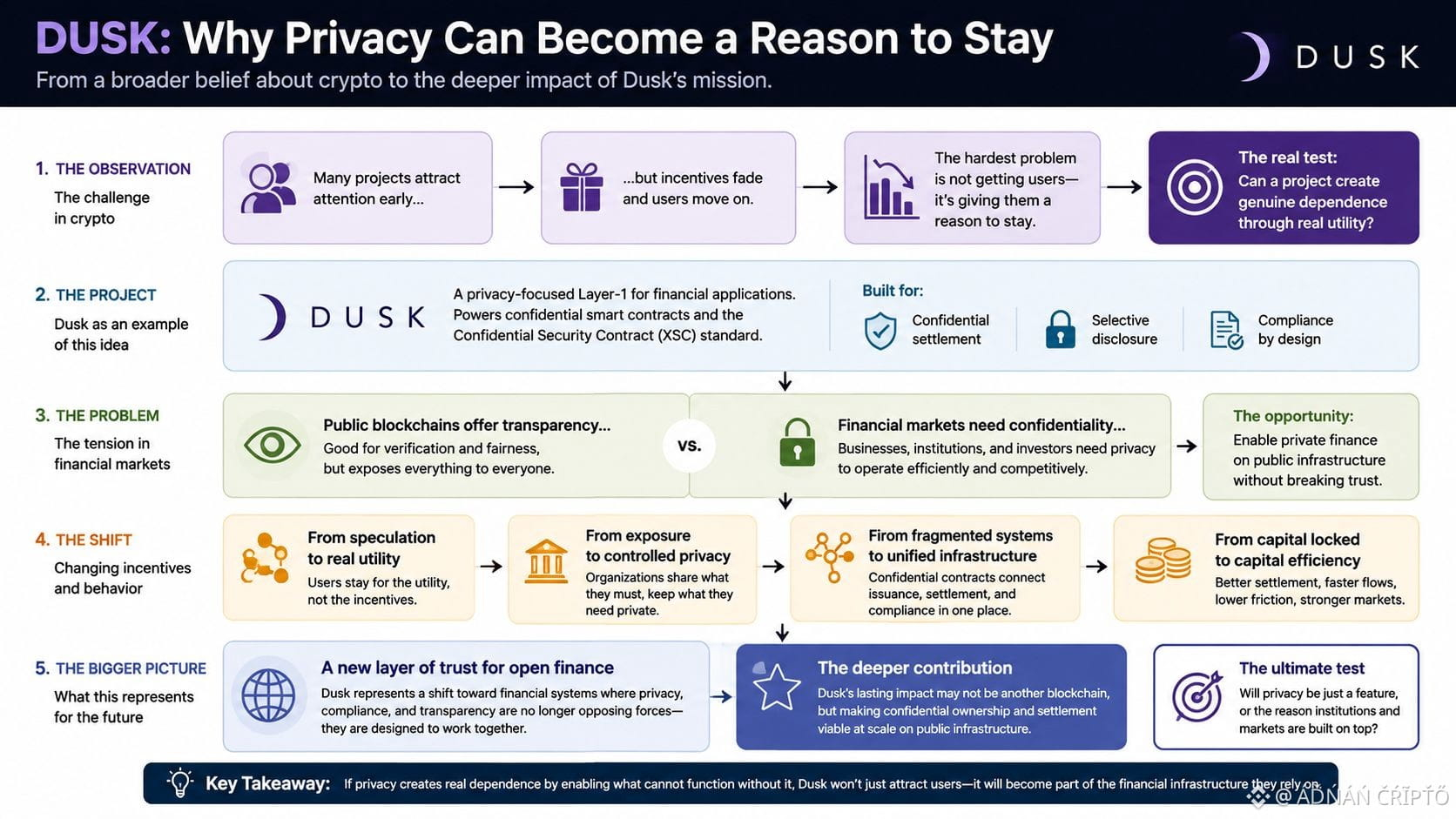
Ich beginne zu denken, dass das schwierigste Problem im Krypto-Bereich nicht darin besteht, Menschen dazu zu bringen, ein neues Netzwerk zu nutzen. Es ist, ihnen einen Grund zu geben, nicht wieder zu gehen, sobald die Anreize verschwinden.
Das macht Dusk für mich interessant.
Dusk baut eine datenschutzorientierte Layer-1 für Finanzanwendungen auf, mit vertraulichen Smart Contracts und dem Standard für seinen Confidential Security Contract (XSC). Auf den ersten Blick klingt das wie eine weitere technische Wette auf Blockchain-Privatsphäre. Aber die tiefere Idee ist wichtiger: Finanzmärkte brauchen Transparenz für Vertrauen, aber sie brauchen auch Vertraulichkeit, um effizient zu funktionieren.
Was daran interessant ist, ist nicht die Privatsphäre an sich. Es ist das, was Privatsphäre ermöglichen kann.
Ein Unternehmen möchte vielleicht Blockchain-Abwicklung, ohne jede Position, jede Transaktion oder kommerziell sensible Details dem gesamten Netzwerk offenzulegen. Wenn Dusk diese Balance praktikabel machen kann, hört Privatsphäre auf, nur ein Feature zu sein, und wird zur Infrastruktur.
Ich habe zahlreiche Krypto-Projekte gesehen, die durch Anreize, Narrative und frühe Spekulation Aufmerksamkeit auf sich ziehen. Die eigentliche Frage ist, was bleibt, wenn diese Dinge verblassen.
Die Projekte, die am längsten überleben, werden in der Regel so nützlich, dass Nutzer keinen Grund mehr brauchen, zu bleiben.
Das wirft für Dusk eine größere Frage auf: Kann Privatsphäre echte Abhängigkeit schaffen, statt nur vorübergehende Neugier?
Wenn ja, könnte sein Beitrag weniger darin bestehen, eine weitere Blockchain zu bauen, und mehr darin, vertraulichen Besitz und Abwicklung auf öffentlicher Infrastruktur tragfähig zu machen.
@Dusk $DUSK #dusk
Das macht Dusk für mich interessant.
Dusk baut eine datenschutzorientierte Layer-1 für Finanzanwendungen auf, mit vertraulichen Smart Contracts und dem Standard für seinen Confidential Security Contract (XSC). Auf den ersten Blick klingt das wie eine weitere technische Wette auf Blockchain-Privatsphäre. Aber die tiefere Idee ist wichtiger: Finanzmärkte brauchen Transparenz für Vertrauen, aber sie brauchen auch Vertraulichkeit, um effizient zu funktionieren.
Was daran interessant ist, ist nicht die Privatsphäre an sich. Es ist das, was Privatsphäre ermöglichen kann.
Ein Unternehmen möchte vielleicht Blockchain-Abwicklung, ohne jede Position, jede Transaktion oder kommerziell sensible Details dem gesamten Netzwerk offenzulegen. Wenn Dusk diese Balance praktikabel machen kann, hört Privatsphäre auf, nur ein Feature zu sein, und wird zur Infrastruktur.
Ich habe zahlreiche Krypto-Projekte gesehen, die durch Anreize, Narrative und frühe Spekulation Aufmerksamkeit auf sich ziehen. Die eigentliche Frage ist, was bleibt, wenn diese Dinge verblassen.
Die Projekte, die am längsten überleben, werden in der Regel so nützlich, dass Nutzer keinen Grund mehr brauchen, zu bleiben.
Das wirft für Dusk eine größere Frage auf: Kann Privatsphäre echte Abhängigkeit schaffen, statt nur vorübergehende Neugier?
Wenn ja, könnte sein Beitrag weniger darin bestehen, eine weitere Blockchain zu bauen, und mehr darin, vertraulichen Besitz und Abwicklung auf öffentlicher Infrastruktur tragfähig zu machen.
@Dusk $DUSK #dusk