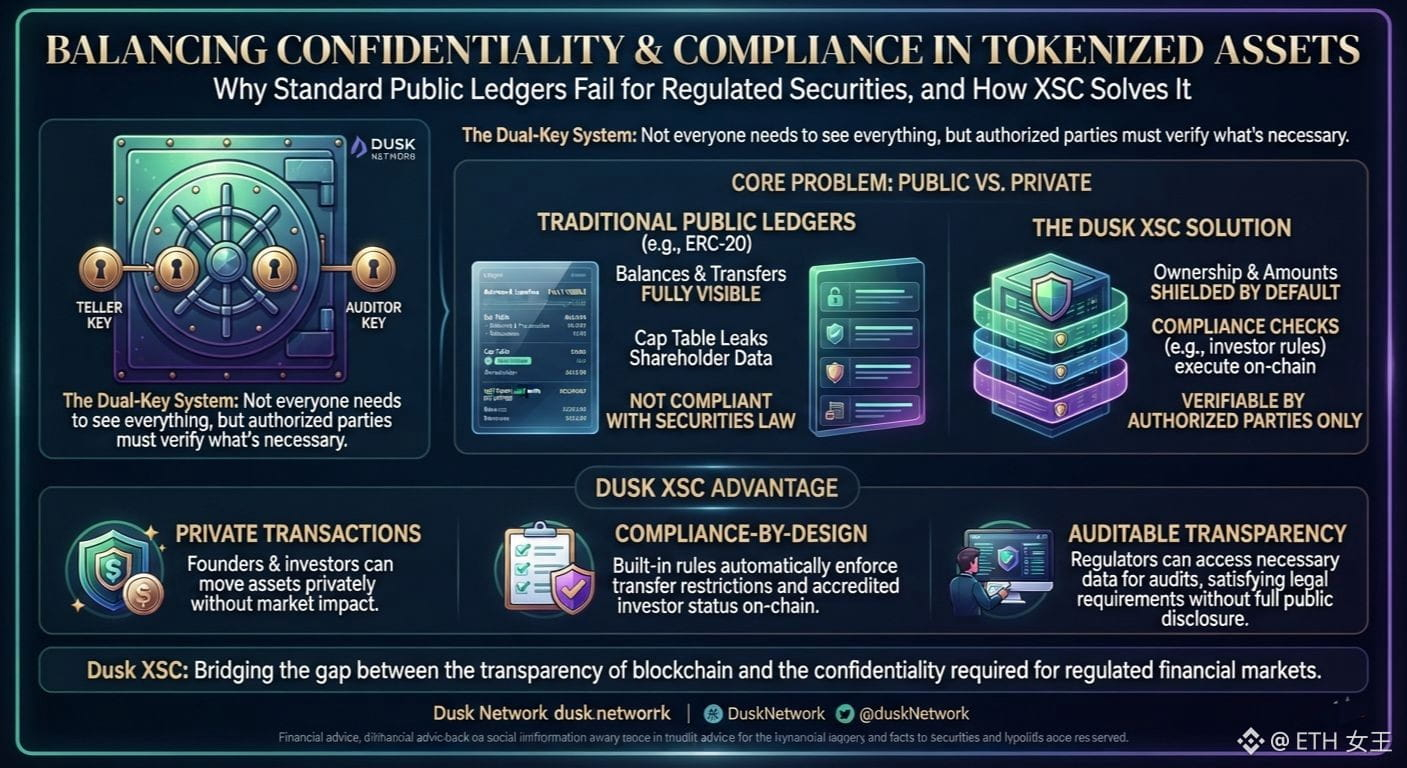
Warum hat ein Bankschließfach zwei verschiedene Schlüssel – einen für den Kassierer und einen für den Prüfer?
Denk darüber nach, wie eine Unternehmens-Cap-Table funktioniert. Die Gründerperson muss Anteile privat übertragen, Mitarbeitende müssen ihre eigene Vesting-Entwicklung sehen, und der Regulator muss bei Bedarf alles prüfen. Eine einzige „öffentliche“ Ledger kann nicht allen drei Anforderungen gleichzeitig gerecht werden – entweder sieht jeder alles, oder niemand.
Standard-Token (wie ERC-20) wurden dafür nicht entwickelt. Sie sind „alles oder nichts“: Guthaben und Überweisungen sind entweder vollständig öffentlich oder der Token funktioniert auf der Kette nicht korrekt.
Dusk löst das mit seinem XSC-Standard – Confidential Security Contracts. Es ist ein Token-Standard, der speziell für regulierte Assets entwickelt wurde: Eigentum und Übertragungsbeträge bleiben standardmäßig abgeschirmt, aber Compliance-Checks (z. B. Regeln für akkreditierte Investoren oder Übertragungsbeschränkungen) laufen dennoch korrekt on-chain, und autorisierte Parteien können weiterhin verifizieren, was sie sehen dürfen.
Warum diesen Ansatz wählen, statt einfach bestehende Token-Standards zu verwenden? Weil die Tokenisierung echter Wertpapiere bedeutet, Wertpapierrecht einzuhalten – und nicht nur Zahlen hin und her zu bewegen. Eine Cap-Table, die die Beteiligung jedes einzelnen Anteilseigners an die Öffentlichkeit leakt, ist nicht compliant – aber auch eine, die alles vor Regulatoren versteckt, nicht. XSC wurde gebaut, um beide Wahrheiten gleichzeitig zu halten.
@Dusk
#dusk $DUSK
#createrpad #BinnanceSquare
Denk darüber nach, wie eine Unternehmens-Cap-Table funktioniert. Die Gründerperson muss Anteile privat übertragen, Mitarbeitende müssen ihre eigene Vesting-Entwicklung sehen, und der Regulator muss bei Bedarf alles prüfen. Eine einzige „öffentliche“ Ledger kann nicht allen drei Anforderungen gleichzeitig gerecht werden – entweder sieht jeder alles, oder niemand.
Standard-Token (wie ERC-20) wurden dafür nicht entwickelt. Sie sind „alles oder nichts“: Guthaben und Überweisungen sind entweder vollständig öffentlich oder der Token funktioniert auf der Kette nicht korrekt.
Dusk löst das mit seinem XSC-Standard – Confidential Security Contracts. Es ist ein Token-Standard, der speziell für regulierte Assets entwickelt wurde: Eigentum und Übertragungsbeträge bleiben standardmäßig abgeschirmt, aber Compliance-Checks (z. B. Regeln für akkreditierte Investoren oder Übertragungsbeschränkungen) laufen dennoch korrekt on-chain, und autorisierte Parteien können weiterhin verifizieren, was sie sehen dürfen.
Warum diesen Ansatz wählen, statt einfach bestehende Token-Standards zu verwenden? Weil die Tokenisierung echter Wertpapiere bedeutet, Wertpapierrecht einzuhalten – und nicht nur Zahlen hin und her zu bewegen. Eine Cap-Table, die die Beteiligung jedes einzelnen Anteilseigners an die Öffentlichkeit leakt, ist nicht compliant – aber auch eine, die alles vor Regulatoren versteckt, nicht. XSC wurde gebaut, um beide Wahrheiten gleichzeitig zu halten.
@Dusk
#dusk $DUSK
#createrpad #BinnanceSquare