Ich habe einige Updates zum Dusk Network gelesen und ein Detail hat meine Aufmerksamkeit erregt: Sie bauen etwas namens Hedger, beschrieben als ein Privacy-Modul für ihre kommende EVM-Schicht.
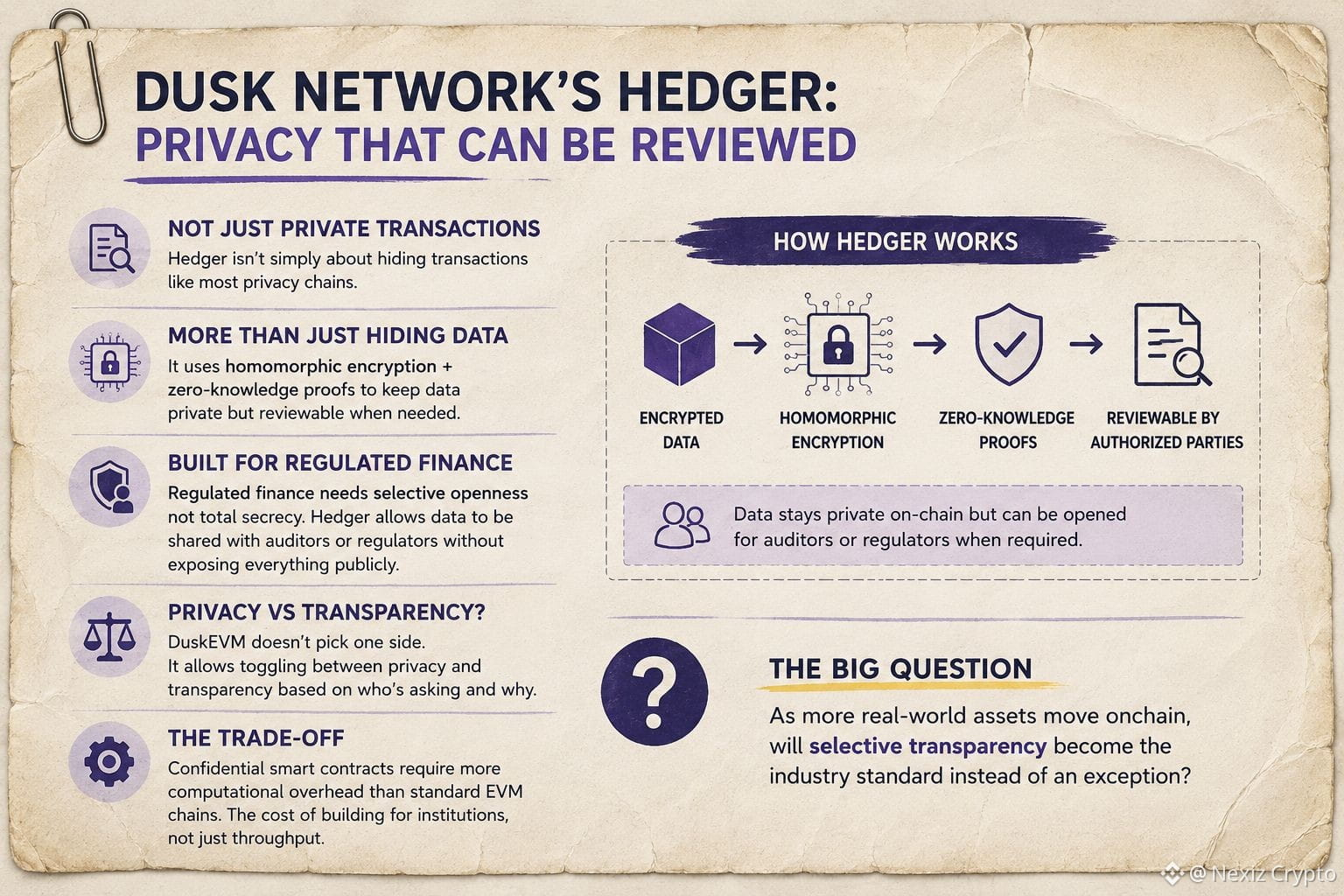
Meine erste Annahme war, dass das einfach nur „private Transaktionen“ meint, wie es bei den meisten Privacy-Chains vermarktet wird. Nach dem Blick in die offiziellen Dokus stellte sich jedoch heraus, dass es genauer ist als das. Hedger nutzt homomorphe Verschlüsselung zusammen mit Zero-Knowledge-Proofs, aber das Ziel besteht nicht nur darin, Daten zu verbergen. Es geht darum, dass diese verborgenen Daten überprüfbar gemacht werden können, wenn es nötig ist. Da klickte es. Reguliertes Finanzwesen braucht nicht zwingend totale Geheimhaltung. Es braucht Privatsphäre, die selektiv für Auditoren oder Regulierungsbehörden geöffnet werden kann, ohne dass alles der öffentlichen Blockchain preisgegeben wird. Was mich überrascht hat, ist, wie das die gesamte Debatte „Privatsphäre vs. Transparenz“ neu rahmt. Anstatt sich für das eine oder das andere zu entscheiden, scheint DuskEVM darauf ausgelegt zu sein, je nach Fragesteller und dem „Warum“ zwischen beiden umzuschalten.
Hier gibt es einen Trade-off, den man erwähnen sollte. Die Unterstützung vertraulicher Solidity-ähnlicher Workflows bedeutet mehr Rechenaufwand als bei einer Standard-EVM-Chain, weil Beweise und verschlüsselte Zustandsprüfungen nicht kostenlos sind. Das dürfte der Preis dafür sein, für Institutionen zu entwerfen statt nur auf maximale Durchsatzleistung zu setzen.
Dennoch wirft das eine echte Frage auf: Wenn immer mehr reale Vermögenswerte onchain gehen, wird „selektive Transparenz“ dann zum eigentlichen Branchenstandard – und nicht nur zu einem Randfall?
#dusk $DUSK @Dusk
Meine erste Annahme war, dass das einfach nur „private Transaktionen“ meint, wie es bei den meisten Privacy-Chains vermarktet wird. Nach dem Blick in die offiziellen Dokus stellte sich jedoch heraus, dass es genauer ist als das. Hedger nutzt homomorphe Verschlüsselung zusammen mit Zero-Knowledge-Proofs, aber das Ziel besteht nicht nur darin, Daten zu verbergen. Es geht darum, dass diese verborgenen Daten überprüfbar gemacht werden können, wenn es nötig ist. Da klickte es. Reguliertes Finanzwesen braucht nicht zwingend totale Geheimhaltung. Es braucht Privatsphäre, die selektiv für Auditoren oder Regulierungsbehörden geöffnet werden kann, ohne dass alles der öffentlichen Blockchain preisgegeben wird. Was mich überrascht hat, ist, wie das die gesamte Debatte „Privatsphäre vs. Transparenz“ neu rahmt. Anstatt sich für das eine oder das andere zu entscheiden, scheint DuskEVM darauf ausgelegt zu sein, je nach Fragesteller und dem „Warum“ zwischen beiden umzuschalten.
Hier gibt es einen Trade-off, den man erwähnen sollte. Die Unterstützung vertraulicher Solidity-ähnlicher Workflows bedeutet mehr Rechenaufwand als bei einer Standard-EVM-Chain, weil Beweise und verschlüsselte Zustandsprüfungen nicht kostenlos sind. Das dürfte der Preis dafür sein, für Institutionen zu entwerfen statt nur auf maximale Durchsatzleistung zu setzen.
Dennoch wirft das eine echte Frage auf: Wenn immer mehr reale Vermögenswerte onchain gehen, wird „selektive Transparenz“ dann zum eigentlichen Branchenstandard – und nicht nur zu einem Randfall?
#dusk $DUSK @Dusk