
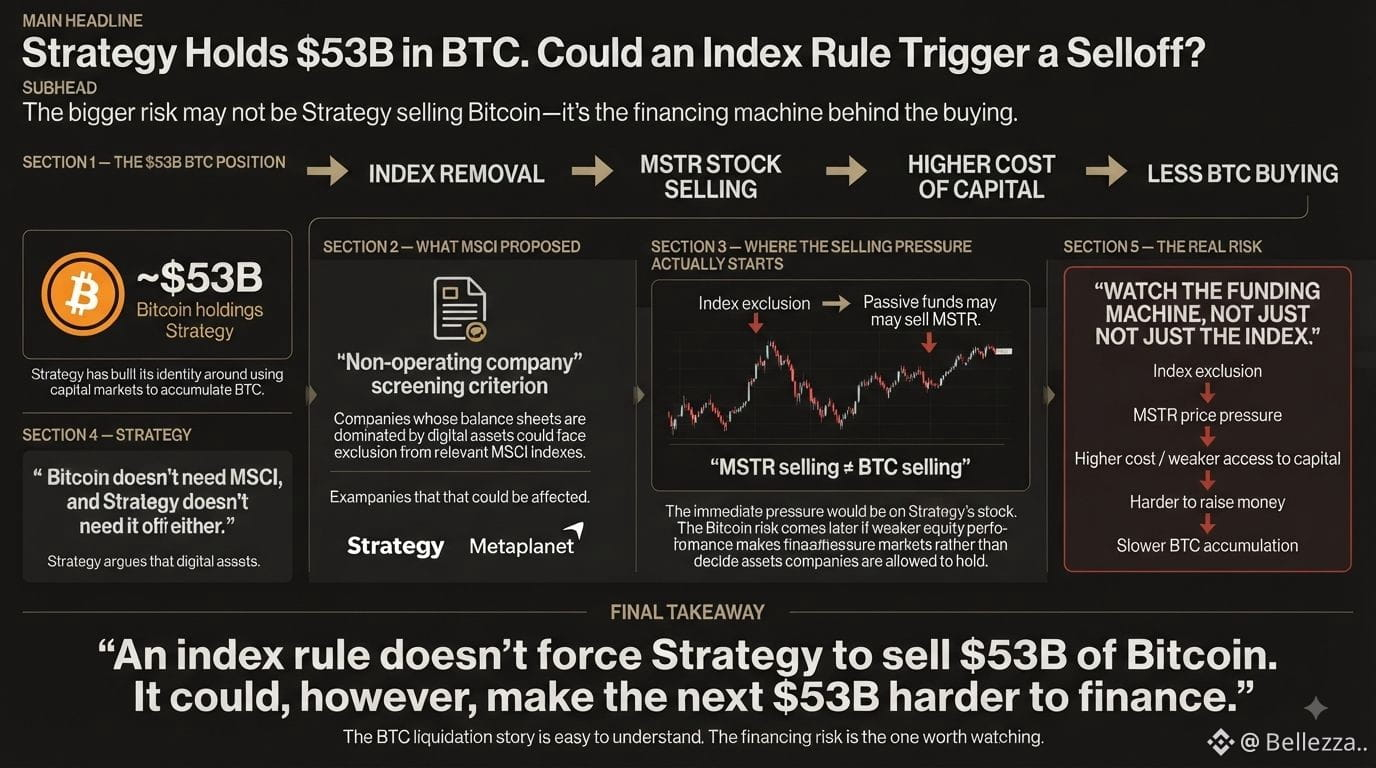
Die Strategie hat ungefähr 53 Milliarden US-Dollar in $BTC, daher ist eine Indexregel, die auf Unternehmen wie sie abzielt, ernst zu nehmen. MSCI hatte vorgeschlagen, einen Filter für nicht operative Unternehmen hinzuzufügen, der Strategy – zusammen mit bitcoinlastigen Unternehmen wie Metaplanet – aus einigen großen Indizes hätte verdrängen können. Die Sorge ist offensichtlich: Wenn passive Fonds gezwungen sind, diese Aktien zu entfernen, könnte es zu einer Verkaufswelle in den Anteilen kommen. Und wenn MSTR eines der größten börsennotierten Vehikel für Bitcoin-Exposure ist, fangen die Leute natürlich an zu fragen, ob das irgendwann zu einem Bitcoin-Problem wird. Aber hier ist eine wichtige Unterscheidung: Wenn ein Indexfonds MSTR verkauft, bedeutet das nicht, dass Strategy auch sein Bitcoin verkaufen muss. Das größere Risiko ist, was passiert, nachdem die Aktie abgezogen wird. Wenn es für MSTR schwieriger oder teurer wird, als Finanzierungsvehikel genutzt zu werden, könnte Strategy's Fähigkeit, weiterhin Kapital aufzunehmen und BTC zu kaufen, einen Dämpfer bekommen. Das ist ein weitaus spannenderes Risiko als die Idee, dass plötzlich 53 Milliarden US-Dollar den Markt treffen. Strategy nimmt den Vorschlag ganz offensichtlich auch nicht stillschweigend hin. Am 14. August lehnte das Unternehmen den Vorstoß vehement ab und argumentierte, dass digitale Vermögenswerte Vermögenswerte seien und Indexanbieter die Märkte messen sollten, statt zu entscheiden, was Unternehmen halten dürfen. Ihre Botschaft war klar und deutlich: „Bitcoin braucht kein MSCI, und Strategy braucht es auch nicht.“ Ich finde tatsächlich, dass die Reaktion uns etwas zeigt. Strategy weiß, dass ihre Beziehung zum Index-Ökosystem eine Rolle spielt, aber sie will ihre gesamte Bitcoin-Strategie auch nicht von der Definition eines Indexanbieters abhängig machen, wie ein echtes operatives Unternehmen auszusehen hat. Bei BTC würde ich das Finanzierungsgeschäft in diesem Zusammenhang viel genauer beobachten als die Schlagzeile über erzwungenes Verkaufen. Wenn die Kapitalmaschine von Strategy intakt bleibt, sehe ich nicht, dass eine Indexänderung automatisch zu einem Bitcoin-Abverkauf wird. #BTC-Preis-Analyse# #Makro-Insights# #Bitcoin-Preisprognose: Was ist Bitcoins nächster Schritt?#


Veröffentlichen
Haftungsausschluss: Enthält Meinungen von Drittanbietern. Keine Beratung. Binance AI wird ohne Gewähr bereitgestellt. Siehe AGB.