#dusk $DUSK @Dusk
Eine kleine Sache, die ich beim Lesen über DUSK bemerkt hatte, blieb mir länger im Kopf als erwartet: Privatsphäre wird viel wichtiger, wenn die beteiligten Vermögenswerte tatsächlich zählen.
Bei normalen Transaktionen kann öffentliche Sichtbarkeit sich harmlos anfühlen. Aber wenn dieselbe Infrastruktur für ernsthafte finanzielle Aktivitäten genutzt wird, beginnt das Offenlegen von Guthaben, Überweisungen und Beziehungen sich weniger wie Transparenz und mehr wie unnötige Preisgabe anzufühlen. Diese Unterscheidung hat meine Sicht auf Blockchain-Privatsphäre verändert.
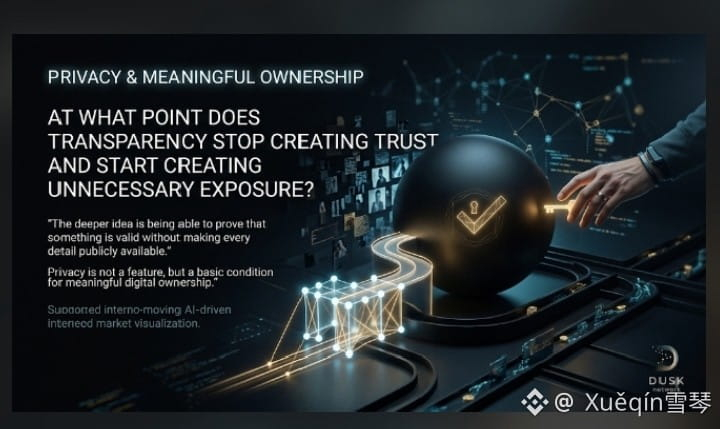
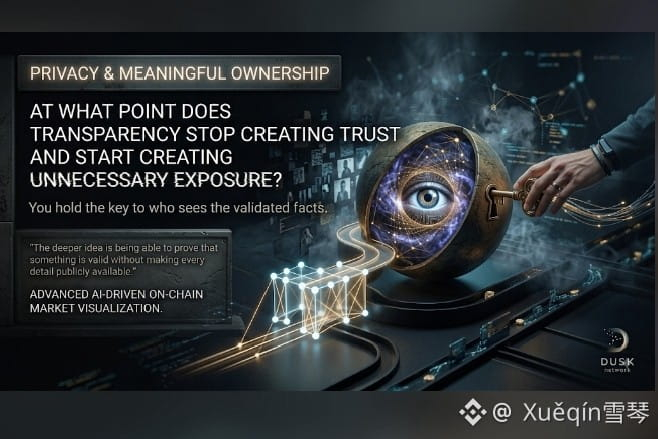
Was ich an Dusk interessant finde, ist, dass Privatsphäre nicht nur als das Verbergen von Informationen behandelt wird. Die tiefere Idee ist, belegen zu können, dass etwas gültig ist, ohne jede einzelne Detailöffentlichkeit preiszugeben. Das fühlt sich näher an dem an, wie reale Finanzsysteme funktionieren sollten.
Außerdem ließ mich das darüber nachdenken, was Dezentralisierung uns eigentlich geben soll. Eigentum ist nicht nur die Kontrolle über einen Vermögenswert zu haben. Es kann auch bedeuten, die Kontrolle darüber zu haben, wer die mit ihm verbundenen Informationen sehen darf.
Je mehr sich finanzielle Aktivitäten auf die Kette verlagern und je mehr KI-Systeme mit Märkten und digitalen Vermögenswerten interagieren, desto schwieriger wird es, diese Frage zu ignorieren. Mehr verfügbare Daten bedeuten nicht automatisch bessere Systeme. Manchmal ist die Möglichkeit, bestimmte Informationen privat zu halten, ein Teil dessen, was die Teilnahme überhaupt erst möglich macht.
Je mehr ich mir Dusk anschaue, desto mehr sehe ich Privatsphäre weniger als eine Funktion und mehr als eine grundlegende Voraussetzung für sinnvolles digitales Eigentum.
Ab wann hört Transparenz auf, Vertrauen zu schaffen, und fängt an, unnötige Preisgabe zu erzeugen?
@Dusk
#dusk
$DUSK
Eine kleine Sache, die ich beim Lesen über DUSK bemerkt hatte, blieb mir länger im Kopf als erwartet: Privatsphäre wird viel wichtiger, wenn die beteiligten Vermögenswerte tatsächlich zählen.
Bei normalen Transaktionen kann öffentliche Sichtbarkeit sich harmlos anfühlen. Aber wenn dieselbe Infrastruktur für ernsthafte finanzielle Aktivitäten genutzt wird, beginnt das Offenlegen von Guthaben, Überweisungen und Beziehungen sich weniger wie Transparenz und mehr wie unnötige Preisgabe anzufühlen. Diese Unterscheidung hat meine Sicht auf Blockchain-Privatsphäre verändert.
Was ich an Dusk interessant finde, ist, dass Privatsphäre nicht nur als das Verbergen von Informationen behandelt wird. Die tiefere Idee ist, belegen zu können, dass etwas gültig ist, ohne jede einzelne Detailöffentlichkeit preiszugeben. Das fühlt sich näher an dem an, wie reale Finanzsysteme funktionieren sollten.
Außerdem ließ mich das darüber nachdenken, was Dezentralisierung uns eigentlich geben soll. Eigentum ist nicht nur die Kontrolle über einen Vermögenswert zu haben. Es kann auch bedeuten, die Kontrolle darüber zu haben, wer die mit ihm verbundenen Informationen sehen darf.
Je mehr sich finanzielle Aktivitäten auf die Kette verlagern und je mehr KI-Systeme mit Märkten und digitalen Vermögenswerten interagieren, desto schwieriger wird es, diese Frage zu ignorieren. Mehr verfügbare Daten bedeuten nicht automatisch bessere Systeme. Manchmal ist die Möglichkeit, bestimmte Informationen privat zu halten, ein Teil dessen, was die Teilnahme überhaupt erst möglich macht.
Je mehr ich mir Dusk anschaue, desto mehr sehe ich Privatsphäre weniger als eine Funktion und mehr als eine grundlegende Voraussetzung für sinnvolles digitales Eigentum.
Ab wann hört Transparenz auf, Vertrauen zu schaffen, und fängt an, unnötige Preisgabe zu erzeugen?
@Dusk
#dusk
$DUSK