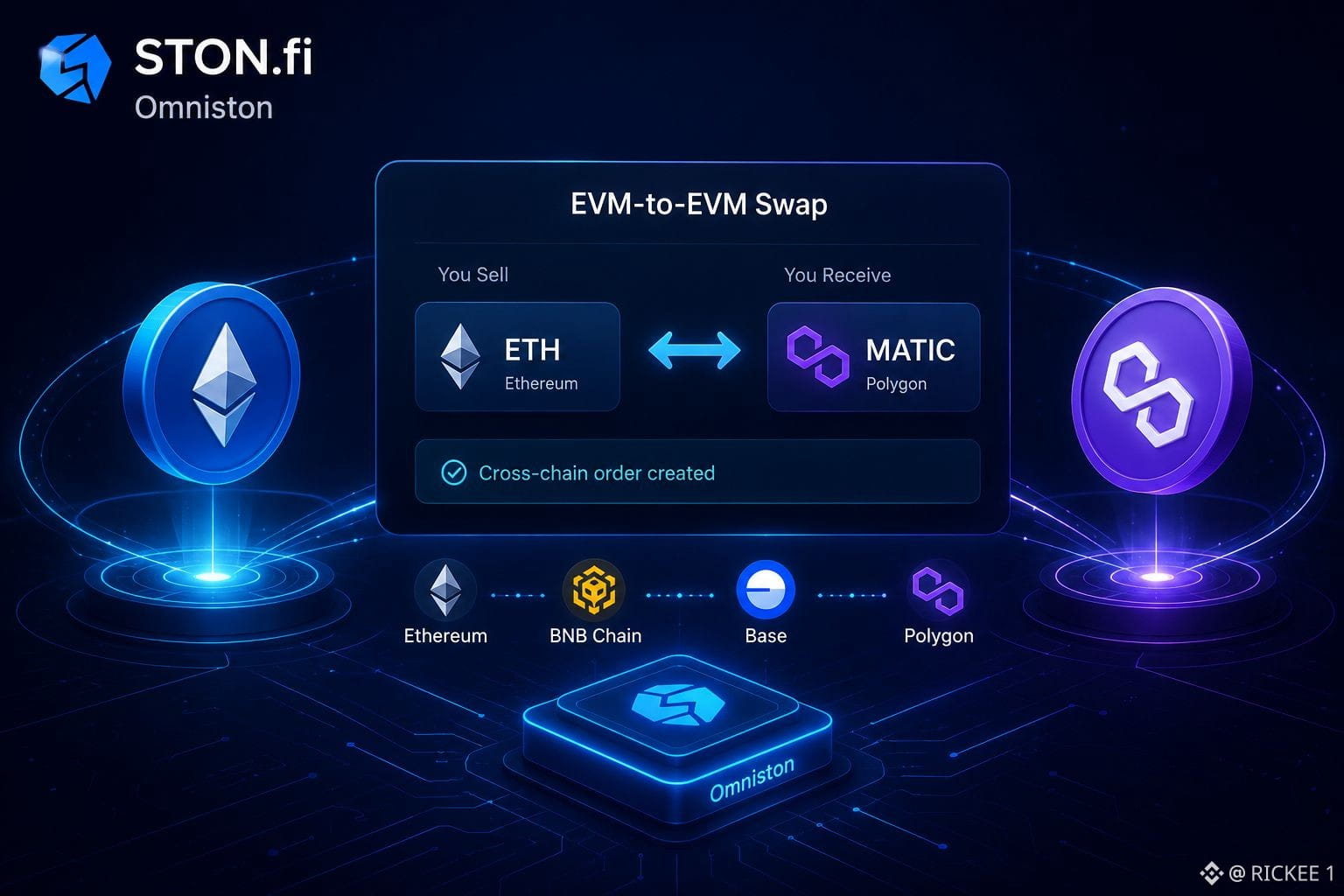
Wie Omniston EVM-zu-EVM-Swaps auf STON.fi abwickelt Omniston behandelt EVM-zu-EVM-Handel als eine Cross-Chain-Order, die über RFQ (Request for Quote), Resolver und gekoppelte HTLCs koordiniert wird. Eine Order über Netzwerke hinweg Anstatt aus separaten Bridge- und DEX-Schritten zu bestehen, konvertiert Omniston die Anfrage in eine einzige Handelsintention. Resolver konkurrieren darum, Quotes und Liquidität bereitzustellen. Phase-1-Netzwerke umfassen Ethereum, BNB Chain, Base und Polygon. TON muss kein Zwischen-Netzwerk sein. RFQ- und Resolver-Liquidität Das RFQ-Modell ermöglicht, dass Resolver konkurrieren, anstatt sich auf einen einzigen Liquiditätspool zu verlassen. Teil-Fills können helfen, größere Orders zu erfüllen, wenn ein Resolver nicht den gesamten Betrag bereitstellen kann. So funktionieren gekoppelte HTLCs Im Quellnetzwerk wird das Asset des Traders in einer HTLC mit Hashlock und Timelock gesperrt. Der Resolver sperrt das Asset unter einer passenden kryptografischen Bedingung. Ein Geheimnis verbindet beide Seiten. Wenn es zur Inanspruchnahme einer Seite offengelegt wird, ermöglicht es die entsprechende Abrechnung auf der anderen Seite. Wenn die Abwicklung fehlschlägt, bieten Timelocks einen Rückzahlungsweg gemäß den Vertragsregeln. Warum sich das von einem normalen DEX unterscheidet Ein standardmäßiger DEX arbeitet auf einer einzigen Blockchain, auf der beide Assets dasselbe Ledger teilen. EVM-zu-EVM-Swaps betreffen unabhängige Netzwerke, daher können sie keine einzelne Transaktion sein. Omniston stellt eine einzige, einheitliche Order bereit, während separate Smart Contracts auf jedem Netzwerk ausgeführt werden. Atomicity entsteht durch koordinierte Regeln, abgestimmte Hashlocks und Timelocks – nicht durch eine einzelne Transaktion oder eine Zwischenroute über TON. Was dennoch wichtig ist Die Quote-Qualität, Gas-Kosten, Liquidität und die Netzwerkbedingungen beeinflussen die Ausführung weiterhin. Das große Ganze Omniston macht Cross-Chain-Handel zu einem Intent-basierten Prozess: Der Nutzer gibt die Börse an, Resolver konkurrieren um die Ausführung, und HTLCs koordinieren die Abrechnung oder Rückerstattungen. RFQ findet wettbewerbsfähige Ausführung, Resolver stellen Liquidität bereit, und gekoppelte HTLCs verbinden die Abwicklung über unabhängige Chains hinweg. Ein einziger Ablauf verbirgt die Cross-Chain-Komplexität. $POL $SOL $TRX


Veröffentlichen

--
Haftungsausschluss: Enthält Meinungen von Drittanbietern. Keine Beratung. Binance AI wird ohne Gewähr bereitgestellt. Siehe AGB.