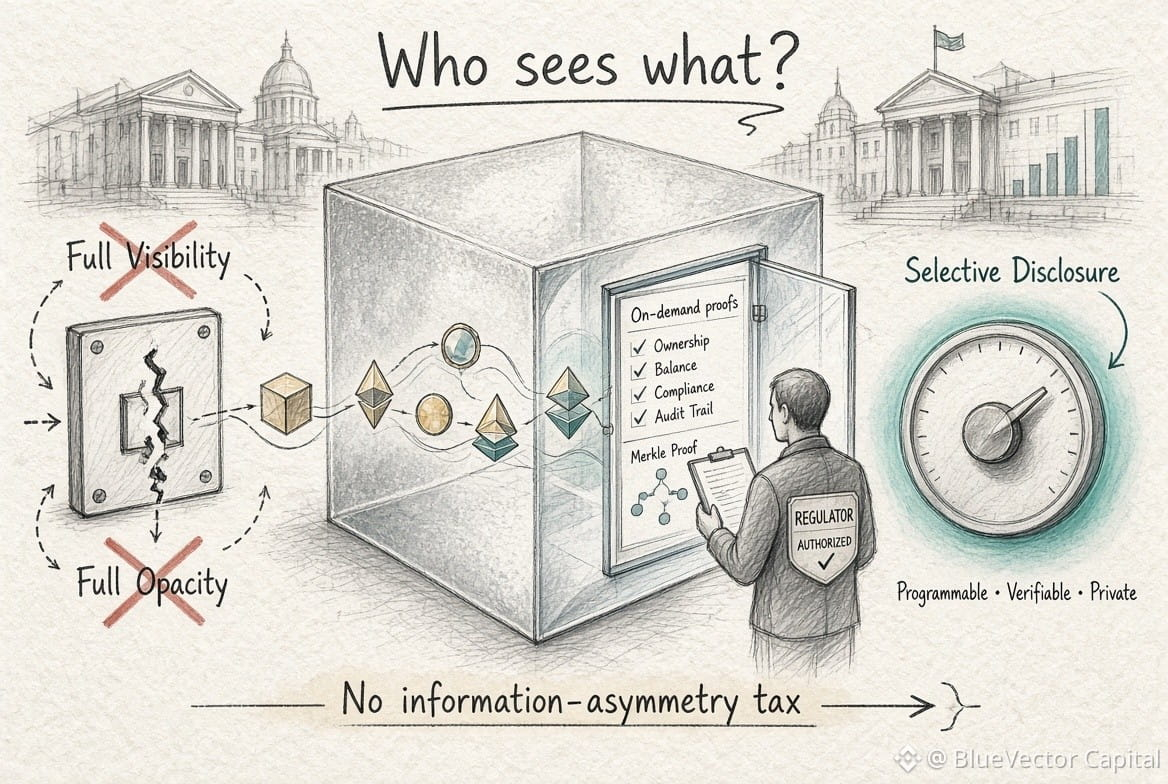
@Dusk Regulierte Kapitalmärkte stehen vor einem Abwicklungsproblem: Transparenz allein kann es nicht lösen. Vollständige On-Chain-Einsicht leakt Positionen und Gegenparteien; vollständige Intransparenz zerstört die Prüfbarkeit, die Aufsichtsbehörden verlangen. Der entscheidende Unterschied ist nicht öffentlich versus privat — sondern wer was sehen kann und unter welchen Bedingungen.
Die meisten Chains erzwingen ein Entweder-oder. Dusk behandelt Privatsphäre als programmierbares Merkmal. Die Transaktionsgültigkeit bleibt deterministisch und on-chain, während sensible Finanzdaten geschützt bleiben — mit selektiver Offenlegung für autorisierte Parteien.
Das verändert die Anreizstruktur. Institutionen zahlen nicht länger eine dauerhafte Informationsasymmetrie-Steuer, die öffentliche Marktinfrastruktur wirtschaftlich unattraktiv macht. Vernünftige Emittenten und Handelsplätze können on-chain abwickeln, ohne Strategie oder Kundendaten offenzulegen.
Die Annahme lautet, dass kryptografische Offenlegung reale aufsichtsrechtliche Workflows erfüllen kann, ohne übermäßige operative Reibung zu erzeugen. Diese Annahme bricht, wenn Aufsichtsbehörden kontinuierliche Sichtbarkeit statt akzeptierter On-Demand-Beweise verlangen — eine Präferenz, die manche Aufsichtsrahmen standardmäßig bevorzugen, nicht eine, zu der sie gezwungen sind.
Bis programmierbare Privatsphäre nativer und reibungsarm ist, wird die meiste regulierte RWA-Volumenmenge bei tokenisierten Hüllen bleiben, statt native Lifecycle-Assets zu sein.
#dusk $DUSK @Dusk
Die meisten Chains erzwingen ein Entweder-oder. Dusk behandelt Privatsphäre als programmierbares Merkmal. Die Transaktionsgültigkeit bleibt deterministisch und on-chain, während sensible Finanzdaten geschützt bleiben — mit selektiver Offenlegung für autorisierte Parteien.
Das verändert die Anreizstruktur. Institutionen zahlen nicht länger eine dauerhafte Informationsasymmetrie-Steuer, die öffentliche Marktinfrastruktur wirtschaftlich unattraktiv macht. Vernünftige Emittenten und Handelsplätze können on-chain abwickeln, ohne Strategie oder Kundendaten offenzulegen.
Die Annahme lautet, dass kryptografische Offenlegung reale aufsichtsrechtliche Workflows erfüllen kann, ohne übermäßige operative Reibung zu erzeugen. Diese Annahme bricht, wenn Aufsichtsbehörden kontinuierliche Sichtbarkeit statt akzeptierter On-Demand-Beweise verlangen — eine Präferenz, die manche Aufsichtsrahmen standardmäßig bevorzugen, nicht eine, zu der sie gezwungen sind.
Bis programmierbare Privatsphäre nativer und reibungsarm ist, wird die meiste regulierte RWA-Volumenmenge bei tokenisierten Hüllen bleiben, statt native Lifecycle-Assets zu sein.
#dusk $DUSK @Dusk