Zwei Dinge können gleichzeitig über die Sicherheitsstory von Dusk wahr sein — und die meisten Berichte erwähnen nur eines davon.
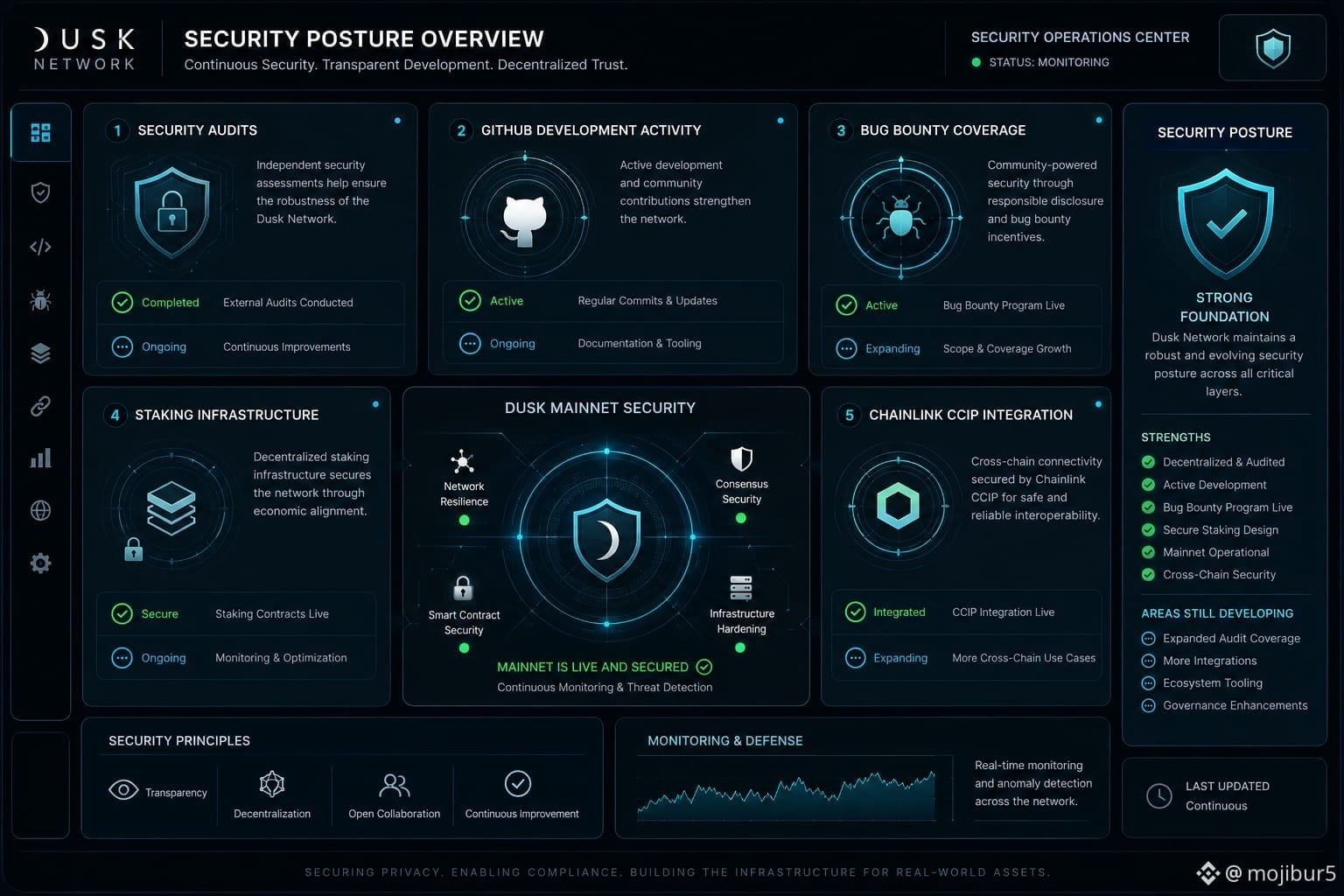
Wahrheit eins: Die Entwicklungshistorie ist tatsächlich dicht. Regelmäßige GitHub-Commits seit Q3 2025, über 200 kombinierte Seiten über ungefähr zehn separate Security-Audits, ein abgeschlossenes Mainnet-Launch sowie eine live geschaltete Chainlink-CCIP-Integration. Das ist keine Vaporware-nahes Gehabe — das ist ein Team, das liefert.
Wahrheit zwei: Audit-Abdeckung und ein gehärtetes Bug-Bounty-Programm sind nicht dieselbe Position, und je nachdem, welchen Security-Scoring-Dienst du prüfst, wird die Lücke dazwischen klar sichtbar — Audits existieren und sind substanziell, während Bounty- und Versicherungs-ähnliche Abdeckungen hinter dem zurückbleiben, was man von einer Kette erwarten würde, die sich selbst explizit gegenüber Verwahrstellen und institutionellen RWA-Emittenten als custodian-tauglich vermarktet. Das ist eine normale Reihenfolge für ein junges Mainnet: Viele L1s gehen live, bevor der komplette Defense-in-Depth-Stack vollständig nachzieht. Aber es ist eine echte Lücke zwischen dem „institutional-grade“-Pitch und dem, was operativ bislang tatsächlich gehärtet wurde.
Auf der Seite der Token-Nützlichkeit läuft Staking bereits — permissionless und mit delegationsbasierten Optionen auf Kontraktbasis, die Reifezeiträume in Stunden statt in Tagen haben. Das ist klein, für den Retail-Zugang gedacht und noch nicht für das Risikokomitee einer Verwahrstelle gebaut. Das passt zum Gesamtbild: Die Retail-orientierten Schienen (Staking, DEX-Liquidität, Spot-Trading) sind jetzt live und funktionieren, während die institutionellen Schienen (regulierte Verwahrung, Versicherungsabdeckung, formalisierte Bounty-Programme) noch hinter diesen aufgebaut werden.
Nichts davon ist für ein Netzwerk, das sein Mainnet im Januar 2025 gelauncht hat, und das seine Roadmap weiterhin umsetzt, automatisch disqualifizierend. Aber für alle, die „MiCA-konform, institutionell hochwertig“ als abgeschlossene Behauptung statt als Richtung der Entwicklung behandeln, ist die tatsächliche Sicherheits-Scorecard eine ernüchternde Lektüre.
Muss ein Security-Stack vollständig ausgereift sein, bevor reguliertes Kapital eintrifft — oder kommt das Kapital zuerst und das Hardening holt unter dem Druck realer Nutzung nach?
#dusk $DUSK @Dusk
Wahrheit eins: Die Entwicklungshistorie ist tatsächlich dicht. Regelmäßige GitHub-Commits seit Q3 2025, über 200 kombinierte Seiten über ungefähr zehn separate Security-Audits, ein abgeschlossenes Mainnet-Launch sowie eine live geschaltete Chainlink-CCIP-Integration. Das ist keine Vaporware-nahes Gehabe — das ist ein Team, das liefert.
Wahrheit zwei: Audit-Abdeckung und ein gehärtetes Bug-Bounty-Programm sind nicht dieselbe Position, und je nachdem, welchen Security-Scoring-Dienst du prüfst, wird die Lücke dazwischen klar sichtbar — Audits existieren und sind substanziell, während Bounty- und Versicherungs-ähnliche Abdeckungen hinter dem zurückbleiben, was man von einer Kette erwarten würde, die sich selbst explizit gegenüber Verwahrstellen und institutionellen RWA-Emittenten als custodian-tauglich vermarktet. Das ist eine normale Reihenfolge für ein junges Mainnet: Viele L1s gehen live, bevor der komplette Defense-in-Depth-Stack vollständig nachzieht. Aber es ist eine echte Lücke zwischen dem „institutional-grade“-Pitch und dem, was operativ bislang tatsächlich gehärtet wurde.
Auf der Seite der Token-Nützlichkeit läuft Staking bereits — permissionless und mit delegationsbasierten Optionen auf Kontraktbasis, die Reifezeiträume in Stunden statt in Tagen haben. Das ist klein, für den Retail-Zugang gedacht und noch nicht für das Risikokomitee einer Verwahrstelle gebaut. Das passt zum Gesamtbild: Die Retail-orientierten Schienen (Staking, DEX-Liquidität, Spot-Trading) sind jetzt live und funktionieren, während die institutionellen Schienen (regulierte Verwahrung, Versicherungsabdeckung, formalisierte Bounty-Programme) noch hinter diesen aufgebaut werden.
Nichts davon ist für ein Netzwerk, das sein Mainnet im Januar 2025 gelauncht hat, und das seine Roadmap weiterhin umsetzt, automatisch disqualifizierend. Aber für alle, die „MiCA-konform, institutionell hochwertig“ als abgeschlossene Behauptung statt als Richtung der Entwicklung behandeln, ist die tatsächliche Sicherheits-Scorecard eine ernüchternde Lektüre.
Muss ein Security-Stack vollständig ausgereift sein, bevor reguliertes Kapital eintrifft — oder kommt das Kapital zuerst und das Hardening holt unter dem Druck realer Nutzung nach?
#dusk $DUSK @Dusk