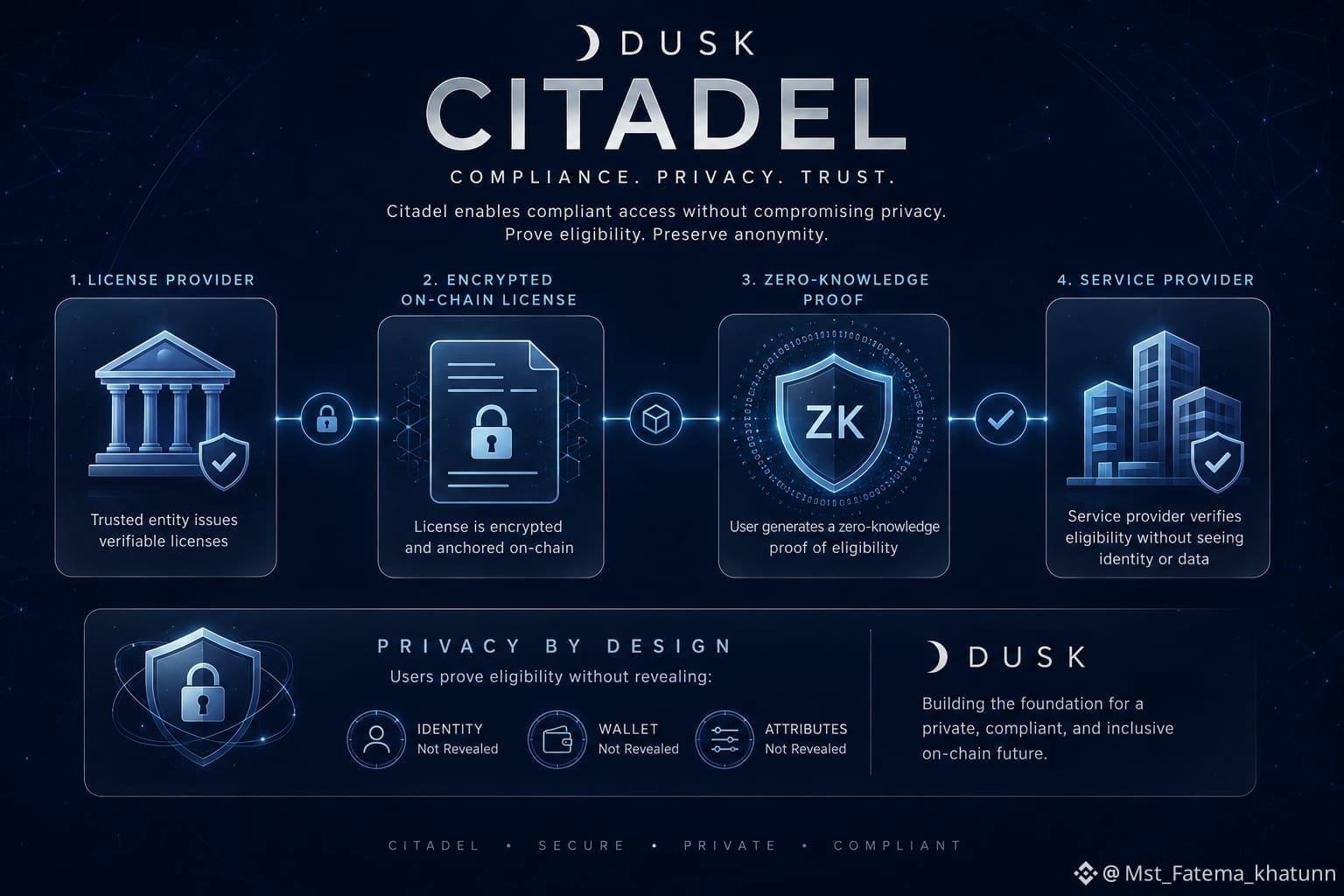
Ich habe mir etwas Zeit genommen, wirklich durchzugehen, wie der Lizenz-Flow von Citadel die Compliance auflöst, ohne dabei eine Identität zu leaken, und dass das zugrundeliegende Mechanismusmodell interessanter ist als das Einzeilerchen „privacy-preserving KYC“.
Ein License Provider – denk an eine regulierte Onboarding-Einheit – prüft einen Nutzer außerhalb der Kette auf die übliche Art, signiert dann eine Bestätigung (Attestation) über bestimmte Attribute und registriert eine verschlüsselte Lizenz on-chain. Der Nutzer lädt keine Dokumente mehr für jeden Service, den er nutzen möchte, erneut hoch. Stattdessen, wenn ein Service Provider einen Nachweis der Berechtigung benötigt, erzeugt der Nutzer einen Zero-Knowledge-Beweis darüber, dass er eine gültige, vom Provider signierte Lizenz besitzt – ohne dabei die Wallet, die zugrunde liegenden Attribute oder welche konkrete Lizenz den Beweis erzeugt hat, offenzulegen. Der Service Provider verifiziert den Beweis und protokolliert eine Session, keine Identität.
Was hier tatsächlich dezentralisiert wird, ist nicht die Compliance-Entscheidung – sondern das Offenlegungsereignis. Die Vertrauensfrage verschwindet nicht; sie verlagert sich. Der Service Provider entscheidet weiterhin, welchen License Providern er vertraut und welche Attribute seine Regeln erfüllen. Citadel ersetzt kein regulatorisches Urteilsvermögen, sondern entfernt die Anforderung, dass dieses Urteilsvermögen jedes Mal auf rohen personenbezogenen Daten ausgeübt werden muss.
Der Punkt, der hervorzuheben ist: Das ist ein Modell wiederholter Verifikation, kein einmaliges Badge. Sessions laufen ab, werden widerrufen oder müssen bei sich ändernden Berechtigungsbedingungen aktualisiert werden. Für eine Security-Token-Plattform ist dieser wiederkehrende Nachweis, dass man weiterhin qualifiziert ist, vermutlich näher am eigentlichen Produkt als die darüberliegende Privacy-Schicht – ein regulierter Veranstaltungsort muss nicht nur einmal wissen, dass du berechtigt warst, sondern kontinuierlich sicherstellen, dass sich nichts Wesentliches geändert hat.
Die ehrliche Einordnung lautet also: Citadel verlagert den einen zentralen Vertrauenspunkt von „jedem Gegenüber, das deine Daten sieht“ zu „einer kleinen Anzahl von License Providern, deren Signatur alle akzeptieren“. Ist das eine kleinere Angriffsfläche – oder einfach eine stärker konzentrierte?
#dusk $DUSK @Dusk
Ein License Provider – denk an eine regulierte Onboarding-Einheit – prüft einen Nutzer außerhalb der Kette auf die übliche Art, signiert dann eine Bestätigung (Attestation) über bestimmte Attribute und registriert eine verschlüsselte Lizenz on-chain. Der Nutzer lädt keine Dokumente mehr für jeden Service, den er nutzen möchte, erneut hoch. Stattdessen, wenn ein Service Provider einen Nachweis der Berechtigung benötigt, erzeugt der Nutzer einen Zero-Knowledge-Beweis darüber, dass er eine gültige, vom Provider signierte Lizenz besitzt – ohne dabei die Wallet, die zugrunde liegenden Attribute oder welche konkrete Lizenz den Beweis erzeugt hat, offenzulegen. Der Service Provider verifiziert den Beweis und protokolliert eine Session, keine Identität.
Was hier tatsächlich dezentralisiert wird, ist nicht die Compliance-Entscheidung – sondern das Offenlegungsereignis. Die Vertrauensfrage verschwindet nicht; sie verlagert sich. Der Service Provider entscheidet weiterhin, welchen License Providern er vertraut und welche Attribute seine Regeln erfüllen. Citadel ersetzt kein regulatorisches Urteilsvermögen, sondern entfernt die Anforderung, dass dieses Urteilsvermögen jedes Mal auf rohen personenbezogenen Daten ausgeübt werden muss.
Der Punkt, der hervorzuheben ist: Das ist ein Modell wiederholter Verifikation, kein einmaliges Badge. Sessions laufen ab, werden widerrufen oder müssen bei sich ändernden Berechtigungsbedingungen aktualisiert werden. Für eine Security-Token-Plattform ist dieser wiederkehrende Nachweis, dass man weiterhin qualifiziert ist, vermutlich näher am eigentlichen Produkt als die darüberliegende Privacy-Schicht – ein regulierter Veranstaltungsort muss nicht nur einmal wissen, dass du berechtigt warst, sondern kontinuierlich sicherstellen, dass sich nichts Wesentliches geändert hat.
Die ehrliche Einordnung lautet also: Citadel verlagert den einen zentralen Vertrauenspunkt von „jedem Gegenüber, das deine Daten sieht“ zu „einer kleinen Anzahl von License Providern, deren Signatur alle akzeptieren“. Ist das eine kleinere Angriffsfläche – oder einfach eine stärker konzentrierte?
#dusk $DUSK @Dusk