#dusk $DUSK Das ist das Thema von Dusk's Privacy-Pitch, über das ich immer wieder nachdenke
Ich habe ein Muster bei Projekten entdeckt, die sich als Privacy-Chains vermarkten. Der Slogan verspricht Vertraulichkeit, aber jenseits der Marketingseite ist diese Vertraulichkeit oft eine Einstellung, die man aufruft, statt ein Standard.
Mit Dusk ist das etwas, womit ich mich in letzter Zeit beschäftige.
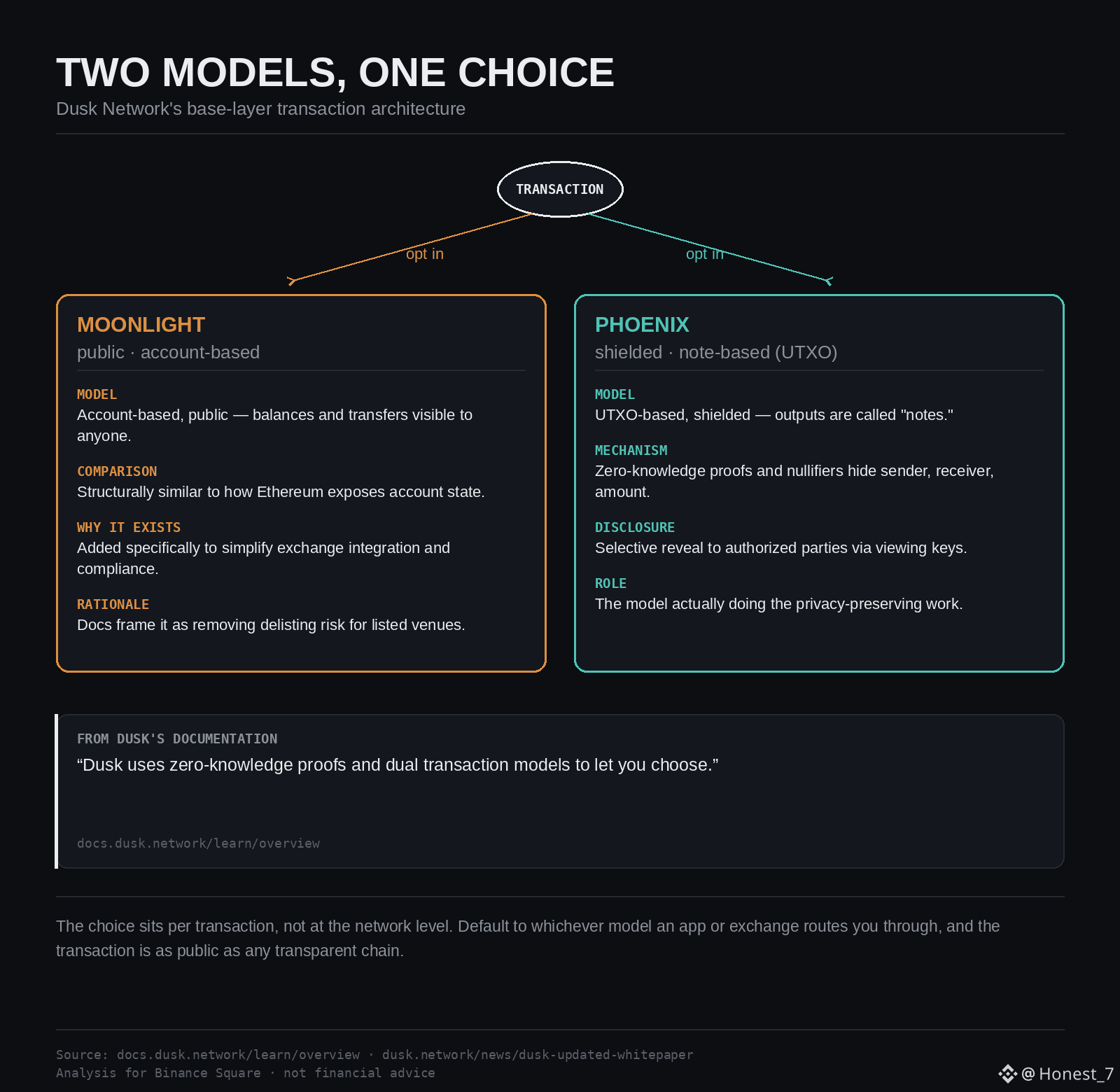
Die Basisschicht läuft mit zwei Transaktionsmodellen. Moonlight ist öffentlich und konto-basiert, ähnlich wie Ethereum es mit Kontoständen offenlegt. Phoenix ist das abgeschirmte, note-basierte Modell, das die eigentliche Zero-Knowledge-Arbeit übernimmt. Dusk's eigene Doku beschreibt die Beziehung als ein System, das mit „zwei Transaktionsmodellen, damit du auswählen kannst“ gebaut wurde…
Ich komme immer wieder auf dieses Wort zurück. Auswahl ist ein vertretbares Designprinzip, aber es verlagert auch die Verantwortung auf den Nutzer statt auf das Protokoll. Privatsphäre wird so zu einer Entscheidung, die Transaktion für Transaktion getroffen wird – und die man auch falsch treffen kann, wenn man standardmäßig das Modell nutzt, durch das eine App oder Börse einen routet.
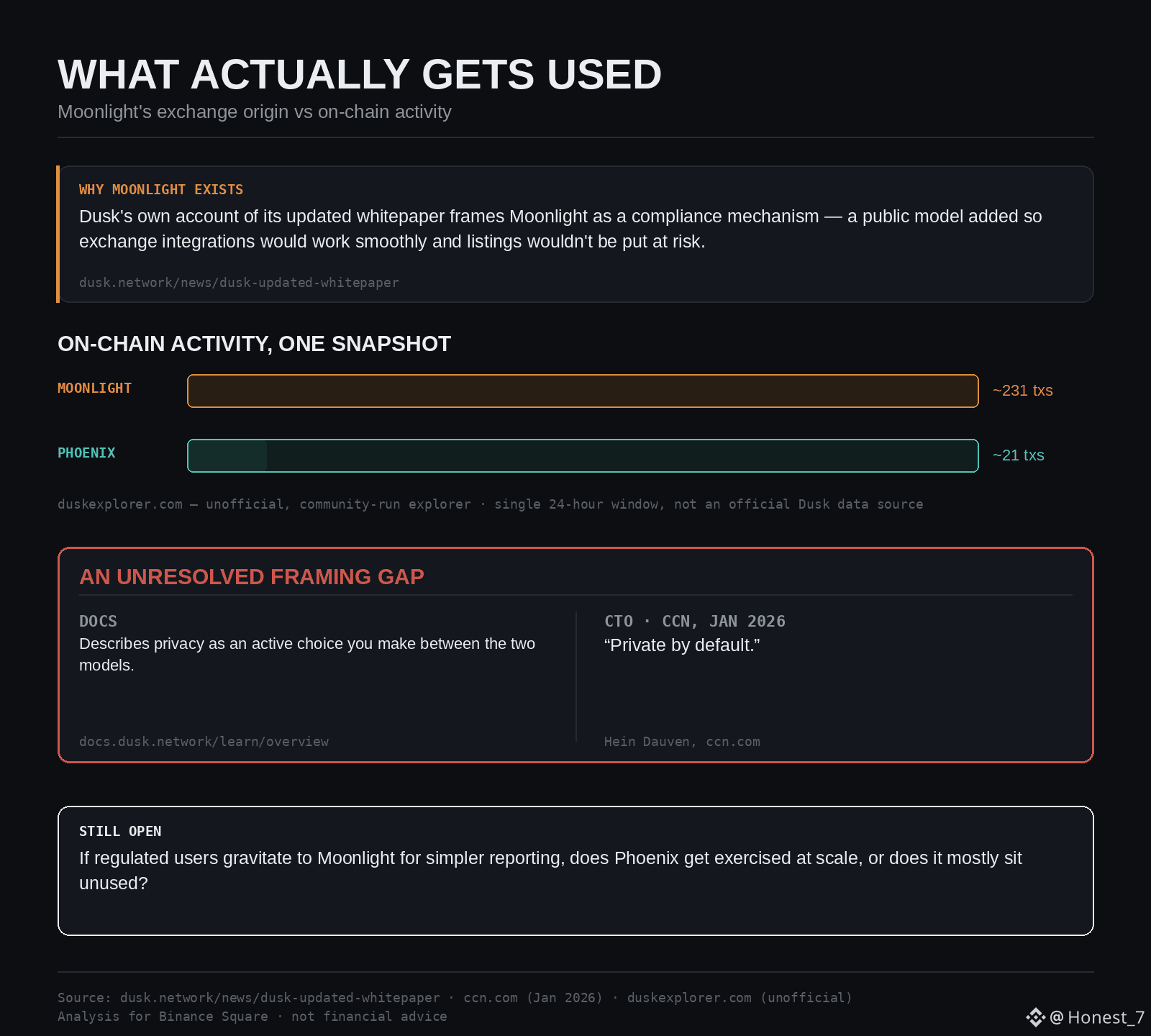
Auch der Ursprung von Moonlight ist bedeutsam. Dusk's Darstellung in seinem aktualisierten Whitepaper sagt, dass das Modell hinzugefügt wurde, weil die Integration in Börsen unter einem öffentlichen Format einfacher wäre – und dass dadurch jedes Risiko entfällt, von einer Börse gestrichen zu werden.
Ein inoffizieller Explorer, den ich geprüft habe, zeigte transparente Moonlight-Aktivität, die an einem aktuellen Tag etwa zehnmal so hoch war wie die abgeschirmte Phoenix-Aktivität. Ein einzelner Snapshot ist kein Beweis, aber er passt zu dem, was die Anreize vorhersagen würden.
Es gibt außerdem einen Knick, den ich nicht auflösen kann. Dusk's CTO sagte früher in diesem Jahr, dass Übertragungen „standardmäßig privat“ seien – eine Formulierung, die nicht ganz dazu passt, wie die Doku die Wahl der Basisschicht rahmt. Ich habe keine Stelle gefunden, an der diese zwei Darstellungen miteinander versöhnt werden.
@Dusk hat eindeutig echte Kryptografie in Phoenix eingebaut. Was ich immer wieder gedanklich durchspiele, ist, ob dieses Privatsphärenmodell im großen Maßstab auch wirklich genutzt wird, sobald Moonlight die einfachere Berichterstattung anbietet, oder ob es am Ende überwiegend im Regal stehen bleibt.
Ich habe ein Muster bei Projekten entdeckt, die sich als Privacy-Chains vermarkten. Der Slogan verspricht Vertraulichkeit, aber jenseits der Marketingseite ist diese Vertraulichkeit oft eine Einstellung, die man aufruft, statt ein Standard.
Mit Dusk ist das etwas, womit ich mich in letzter Zeit beschäftige.
Die Basisschicht läuft mit zwei Transaktionsmodellen. Moonlight ist öffentlich und konto-basiert, ähnlich wie Ethereum es mit Kontoständen offenlegt. Phoenix ist das abgeschirmte, note-basierte Modell, das die eigentliche Zero-Knowledge-Arbeit übernimmt. Dusk's eigene Doku beschreibt die Beziehung als ein System, das mit „zwei Transaktionsmodellen, damit du auswählen kannst“ gebaut wurde…
Ich komme immer wieder auf dieses Wort zurück. Auswahl ist ein vertretbares Designprinzip, aber es verlagert auch die Verantwortung auf den Nutzer statt auf das Protokoll. Privatsphäre wird so zu einer Entscheidung, die Transaktion für Transaktion getroffen wird – und die man auch falsch treffen kann, wenn man standardmäßig das Modell nutzt, durch das eine App oder Börse einen routet.
Auch der Ursprung von Moonlight ist bedeutsam. Dusk's Darstellung in seinem aktualisierten Whitepaper sagt, dass das Modell hinzugefügt wurde, weil die Integration in Börsen unter einem öffentlichen Format einfacher wäre – und dass dadurch jedes Risiko entfällt, von einer Börse gestrichen zu werden.
Ein inoffizieller Explorer, den ich geprüft habe, zeigte transparente Moonlight-Aktivität, die an einem aktuellen Tag etwa zehnmal so hoch war wie die abgeschirmte Phoenix-Aktivität. Ein einzelner Snapshot ist kein Beweis, aber er passt zu dem, was die Anreize vorhersagen würden.
Es gibt außerdem einen Knick, den ich nicht auflösen kann. Dusk's CTO sagte früher in diesem Jahr, dass Übertragungen „standardmäßig privat“ seien – eine Formulierung, die nicht ganz dazu passt, wie die Doku die Wahl der Basisschicht rahmt. Ich habe keine Stelle gefunden, an der diese zwei Darstellungen miteinander versöhnt werden.
@Dusk hat eindeutig echte Kryptografie in Phoenix eingebaut. Was ich immer wieder gedanklich durchspiele, ist, ob dieses Privatsphärenmodell im großen Maßstab auch wirklich genutzt wird, sobald Moonlight die einfachere Berichterstattung anbietet, oder ob es am Ende überwiegend im Regal stehen bleibt.