Dusk’ echte Herausforderung: Wo Privatsphäre auf Kontrolle trifft
Ich bin tiefer in @Dusk-Transaktionsmodelle eingestiegen, und ich denke, der spannende Teil ist nicht einfach Privatsphäre — sondern das, was passiert, wenn Privatsphäre, Abwicklung und Sichtbarkeit von Smart Contracts koexistieren müssen.
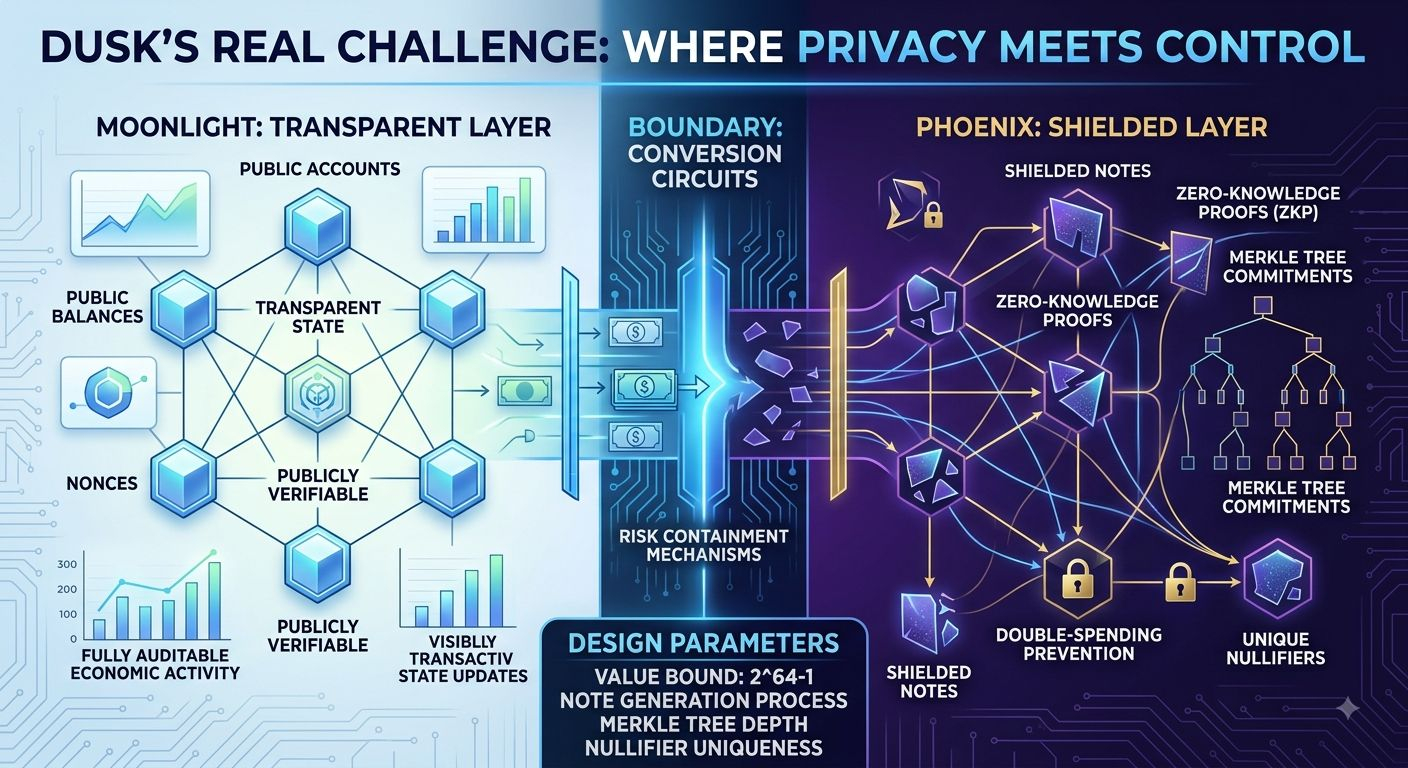
Ich sehe Moonlight als die transparente Kontoschicht, in der Guthaben und Nonces weiterhin öffentlich verifizierbar bleiben. Phoenix verfolgt den gegenteiligen Ansatz: Der Wert bewegt sich durch abgeschirmte Notizen, Merkle-Tree-Commitments, Zero-Knowledge-Beweise und Nullifier, die doppeltes Ausgeben verhindern, ohne die zugrunde liegende Notiz offenzulegen.
Diese Architektur ist mächtig.
Aber ich komme immer wieder zu derselben Frage: Was passiert an der Grenze?
Ich möchte verstehen, wie stark die Konvertierungs-Zircuits Phoenix von Moonlight isolieren, falls jemals etwas Fehlgebildetes einen Übergangspunkt erreicht. Enthält das Schaltungsdesign das Risiko vollständig, oder könnte ein Edge-Case-Fehlschlag Auswirkungen für Nullifier, transparente Guthaben oder den Vertragsstatus erzeugen?
Und dann gibt es die größere Frage der Dezentralisierung.
Wenn mehr wirtschaftliche Aktivität in Phoenix migriert, behält die transparente Schicht dann noch eine sinnvolle Governance- und Koordinationsmacht?
Ich beobachte die Designparameter außerdem sehr genau: die Wertgrenze 2^64−1, die Notizgenerierung, die Merkle-Tree-Tiefe und die Eindeutigkeit der Nullifier.
Für mich ist genau hier Dusk wirklich interessant: nicht nur Privatsphäre aufzubauen, sondern zu beweisen, dass Privatsphäre skalieren kann, ohne die Grundlagen darunter zu schwächen.@Dusk #dusk $DUSK @Dusk
Ich bin tiefer in @Dusk-Transaktionsmodelle eingestiegen, und ich denke, der spannende Teil ist nicht einfach Privatsphäre — sondern das, was passiert, wenn Privatsphäre, Abwicklung und Sichtbarkeit von Smart Contracts koexistieren müssen.
Ich sehe Moonlight als die transparente Kontoschicht, in der Guthaben und Nonces weiterhin öffentlich verifizierbar bleiben. Phoenix verfolgt den gegenteiligen Ansatz: Der Wert bewegt sich durch abgeschirmte Notizen, Merkle-Tree-Commitments, Zero-Knowledge-Beweise und Nullifier, die doppeltes Ausgeben verhindern, ohne die zugrunde liegende Notiz offenzulegen.
Diese Architektur ist mächtig.
Aber ich komme immer wieder zu derselben Frage: Was passiert an der Grenze?
Ich möchte verstehen, wie stark die Konvertierungs-Zircuits Phoenix von Moonlight isolieren, falls jemals etwas Fehlgebildetes einen Übergangspunkt erreicht. Enthält das Schaltungsdesign das Risiko vollständig, oder könnte ein Edge-Case-Fehlschlag Auswirkungen für Nullifier, transparente Guthaben oder den Vertragsstatus erzeugen?
Und dann gibt es die größere Frage der Dezentralisierung.
Wenn mehr wirtschaftliche Aktivität in Phoenix migriert, behält die transparente Schicht dann noch eine sinnvolle Governance- und Koordinationsmacht?
Ich beobachte die Designparameter außerdem sehr genau: die Wertgrenze 2^64−1, die Notizgenerierung, die Merkle-Tree-Tiefe und die Eindeutigkeit der Nullifier.
Für mich ist genau hier Dusk wirklich interessant: nicht nur Privatsphäre aufzubauen, sondern zu beweisen, dass Privatsphäre skalieren kann, ohne die Grundlagen darunter zu schwächen.@Dusk #dusk $DUSK @Dusk