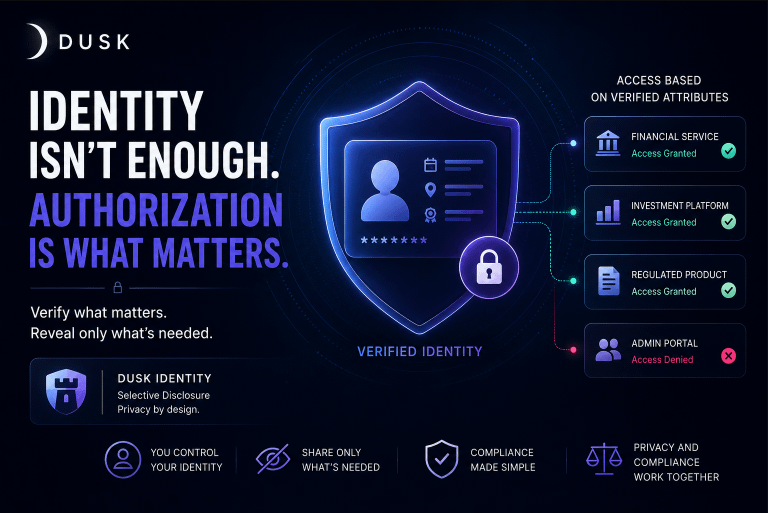
Früher dachte ich, dass Zugriffssteuerung vor allem darin besteht, zu beweisen, wer man ist.
Aber in regulierten digitalen Systemen reicht das möglicherweise nicht aus.
Die wichtigere Frage lautet: Was ermöglicht Ihnen Ihre verifizierte Identität?
Dusk’s Identitätsansatz macht diese Unterscheidung nützlich. Über seine digitale Identitätsarchitektur und das Modell der selektiven Offenlegung können relevante Identitätsattribute verifiziert werden, ohne die gesamte Identität eines Nutzers als etwas zu behandeln, das stets offengelegt werden muss.
Das schafft eine stärkere Grundlage für eine identitätsbasierte Zugriffskontrolle.
Stellen Sie sich eine Finanzplattform vor, bei der der Zugriff auf einen bestimmten Service davon abhängt, bestimmte Anforderungen zu erfüllen. Anstatt wiederholt einen vollständigen Identitätseintrag offenzulegen, kann sich das System auf verifizierte Attribute stützen, die belegen, ob diese Anforderungen erfüllt sind.
Was ich interessant finde, ist, dass Identität mehr wird als nur ein Login-Zugangsdaten.
Sie kann Teil der Autorisierungslogik selbst werden.
Für mich ist das der Punkt, an dem Datenschutz und Compliance anfange, miteinander zu arbeiten – statt gegeneinander.
Das Ziel ist nicht nur, den Nutzer zu identifizieren.
Es geht darum zu verifizieren, worauf sie zugreifen dürfen, und dabei nur das offenzulegen, was der Prozess tatsächlich benötigt.
@Dusk #dusk $DUSK
Aber in regulierten digitalen Systemen reicht das möglicherweise nicht aus.
Die wichtigere Frage lautet: Was ermöglicht Ihnen Ihre verifizierte Identität?
Dusk’s Identitätsansatz macht diese Unterscheidung nützlich. Über seine digitale Identitätsarchitektur und das Modell der selektiven Offenlegung können relevante Identitätsattribute verifiziert werden, ohne die gesamte Identität eines Nutzers als etwas zu behandeln, das stets offengelegt werden muss.
Das schafft eine stärkere Grundlage für eine identitätsbasierte Zugriffskontrolle.
Stellen Sie sich eine Finanzplattform vor, bei der der Zugriff auf einen bestimmten Service davon abhängt, bestimmte Anforderungen zu erfüllen. Anstatt wiederholt einen vollständigen Identitätseintrag offenzulegen, kann sich das System auf verifizierte Attribute stützen, die belegen, ob diese Anforderungen erfüllt sind.
Was ich interessant finde, ist, dass Identität mehr wird als nur ein Login-Zugangsdaten.
Sie kann Teil der Autorisierungslogik selbst werden.
Für mich ist das der Punkt, an dem Datenschutz und Compliance anfange, miteinander zu arbeiten – statt gegeneinander.
Das Ziel ist nicht nur, den Nutzer zu identifizieren.
Es geht darum zu verifizieren, worauf sie zugreifen dürfen, und dabei nur das offenzulegen, was der Prozess tatsächlich benötigt.
@Dusk #dusk $DUSK