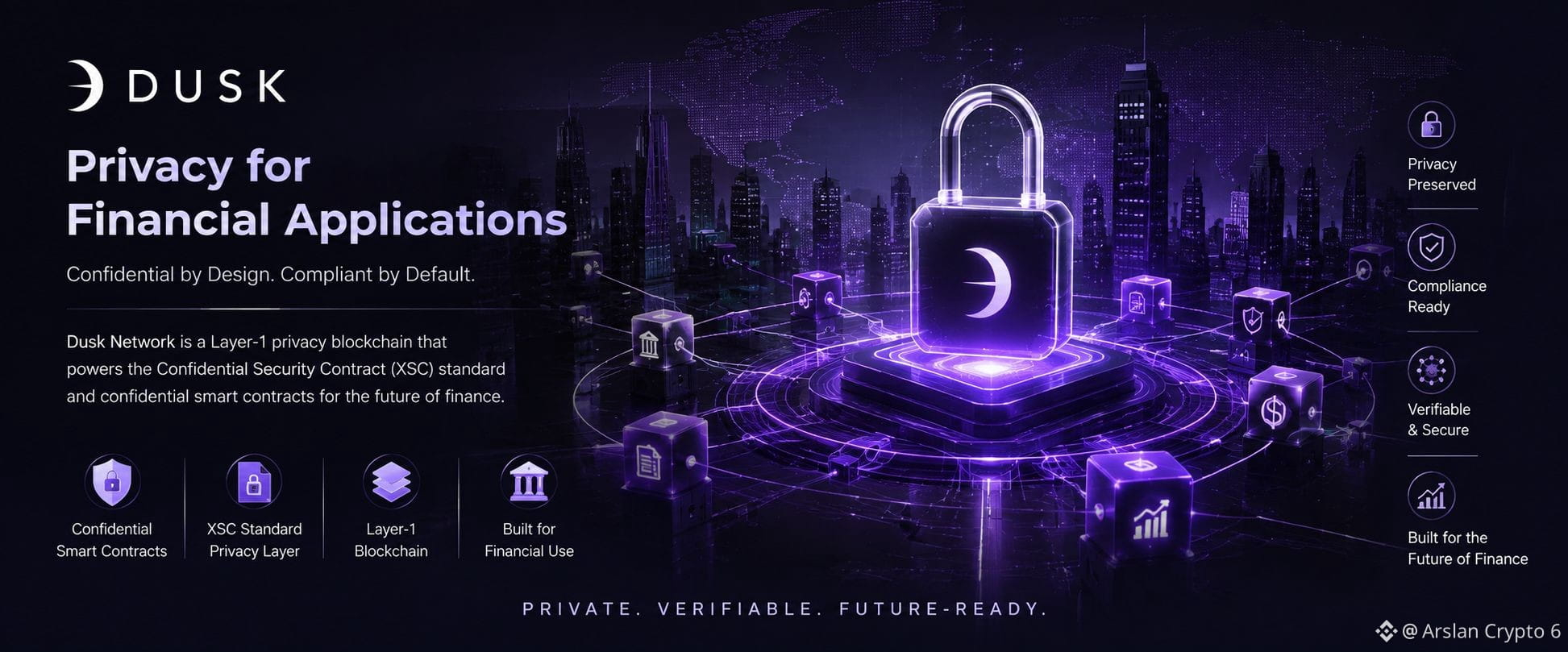
Menschen schauen oft auf datenschutzorientierte Blockchains und fragen, wie viel Privatsphäre sie bieten können. Ich glaube, das lenkt vom größeren Problem ab. Die eigentliche Frage ist, ob Finanzmärkte auf der Kette betrieben werden können, ohne jede sensible Einzelheit in der Öffentlichkeit sichtbar zu machen.
Hier wird Dusk Network interessant. Seine Ausrichtung geht nicht nur darum, Informationen zu verbergen. Es geht darum, eine Infrastruktur zu schaffen, in der finanzielle Aktivitäten nachvollziehbar bleiben, während sensible Daten eine stärker kontrollierte Behandlung erfahren. Mit seiner Layer-1-Architektur, vertraulichen Smart Contracts und dem XSC-Standard verschiebt sich der Fokus von Privatsphäre als zusätzlicher Funktion hin zu Privatsphäre als Teil der Transaktionsumgebung.
Dieser Wandel könnte verändern, wo der Wert verortet ist. Anstatt dass Anwendungen separate Datenschichten rund um eine öffentliche Infrastruktur aufbauen, kann das Basissystem selbst Teil der Vertrauens- und Compliance-Schicht werden. Das ist entscheidend für Finanzanwendungen, bei denen Offenlegung, Berechtigungen und Verifikation genauso wichtig sein können wie Geschwindigkeit.
Doch das funktioniert nur, wenn das System Vertrauen verdient. Finanzanwender brauchen klare Regeln, eine verlässliche Ausführung und die Gewissheit, dass Vertraulichkeit die Verantwortlichkeit nicht schwächt.
Mein Eindruck ist, dass die nächste Phase der Blockchain-Übernahme nicht nur durch Transparenz definiert wird. Die stärkeren Netzwerke werden diejenigen sein, die wissen, wann Informationen öffentlich sein sollten, wann sie vertraulich bleiben müssen und wie beides miteinander koexistieren kann.
@Dusk $DUSK #dusk
Hier wird Dusk Network interessant. Seine Ausrichtung geht nicht nur darum, Informationen zu verbergen. Es geht darum, eine Infrastruktur zu schaffen, in der finanzielle Aktivitäten nachvollziehbar bleiben, während sensible Daten eine stärker kontrollierte Behandlung erfahren. Mit seiner Layer-1-Architektur, vertraulichen Smart Contracts und dem XSC-Standard verschiebt sich der Fokus von Privatsphäre als zusätzlicher Funktion hin zu Privatsphäre als Teil der Transaktionsumgebung.
Dieser Wandel könnte verändern, wo der Wert verortet ist. Anstatt dass Anwendungen separate Datenschichten rund um eine öffentliche Infrastruktur aufbauen, kann das Basissystem selbst Teil der Vertrauens- und Compliance-Schicht werden. Das ist entscheidend für Finanzanwendungen, bei denen Offenlegung, Berechtigungen und Verifikation genauso wichtig sein können wie Geschwindigkeit.
Doch das funktioniert nur, wenn das System Vertrauen verdient. Finanzanwender brauchen klare Regeln, eine verlässliche Ausführung und die Gewissheit, dass Vertraulichkeit die Verantwortlichkeit nicht schwächt.
Mein Eindruck ist, dass die nächste Phase der Blockchain-Übernahme nicht nur durch Transparenz definiert wird. Die stärkeren Netzwerke werden diejenigen sein, die wissen, wann Informationen öffentlich sein sollten, wann sie vertraulich bleiben müssen und wie beides miteinander koexistieren kann.
@Dusk $DUSK #dusk