#bstockscis Nachdem ich die automatische Dividenden-Wiederanlage über den Multiplier-Smart-Contract herausgefunden hatte, waren tokenisierte Aktien fest in meinen Alltag integriert. Wenn die Kids mit ihren eigenen Dingen beschäftigt sind und ich 15 Minuten Ruhe habe, ist die Möglichkeit, eine Position im US-Tech-Sektor nach 23:00 Uhr oder samstags aufzustocken, ein echter Lebensretter.
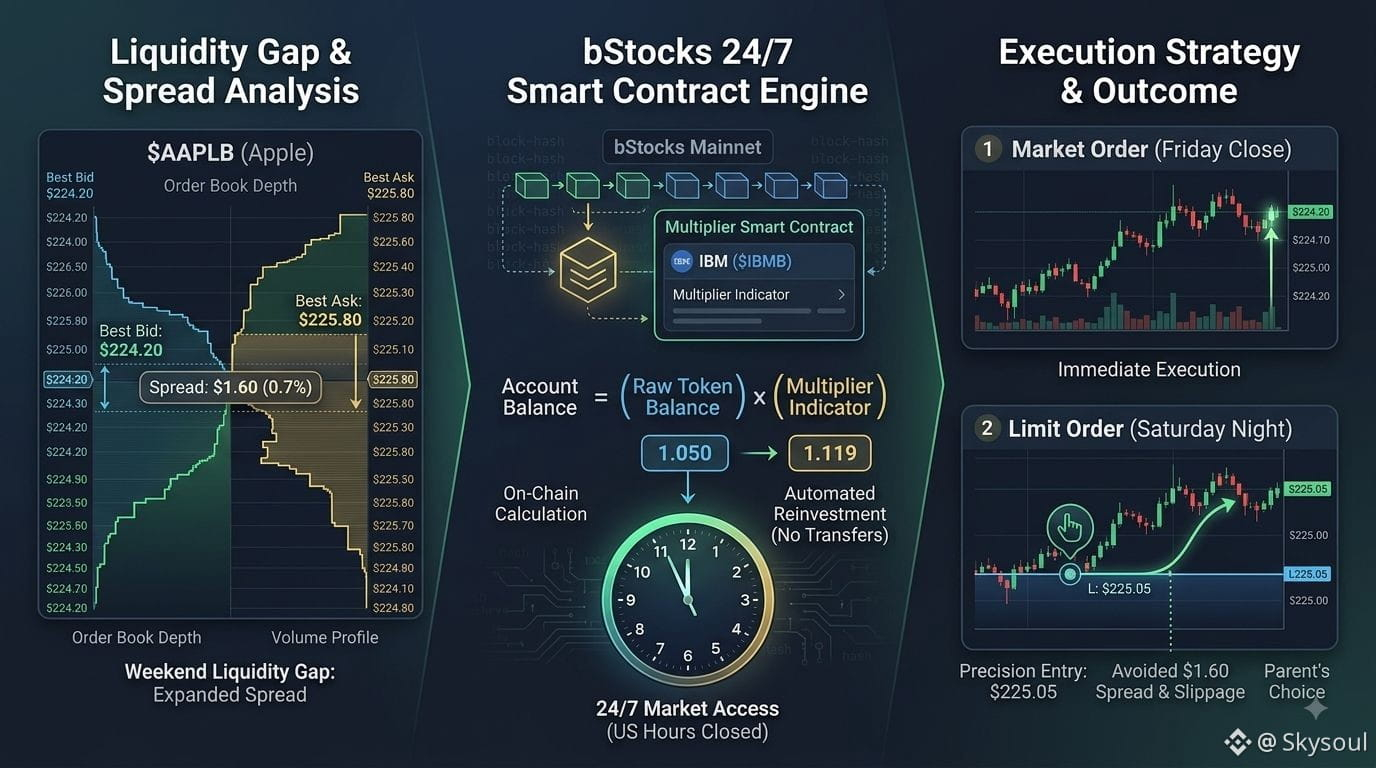
Allerdings hat 24/7-Trading einen Haken, an den anfangs nur wenige denken. Das sind Spread-Dynamiken außerhalb der Hauptsitzung. Neulich habe ich beschlossen, eine zusätzliche Aktie von Apple $AAPLB zu kaufen. Am Samstagabend pendelte der Marktpreis um etwa 225,00 $. Aus Gewohnheit heraus wollte ich fast einen Kauf zum Marktpreis, also eine Market Order, auslösen. Aber ich habe gerade rechtzeitig ins Orderbuch geschaut – der beste Ask-Preis lag bei 225,80 $, während der beste Bid-Preis bei 224,20 $ lag. Das bedeutete, dass der Spread satte 1,60 $ betrug, also fast 0,7 % 😳
Da traditionelle Börsen am Wochenende geschlossen sind, fixiert der Oracle den letzten Schlusskurs. Allerdings ist die interne bStocks-On-Chain-Liquidität in diesen Stunden natürlich niedriger. Beim Kauf zum Marktpreis würde man sofort 0,7 % über dem Marktpreis einkaufen. Ich habe drei goldene Regeln für mich entwickelt, die mir eine beachtliche Menge Budget gespart haben:
Vergiss Market Orders an Wochenenden. Für $AAPLB habe ich einfach eine Limit Order bei 225,05 $ gesetzt. Innerhalb einer halben Stunde hat der Smart Contract meine Order reibungslos ausgeführt – ohne Slippage oder Überzahlung.
Behalte den Pricing-Oracle im Blick. Bevor du eine Position eröffnest, ist es entscheidend sicherzustellen, dass der Oracle-Preisfeed korrekt aktualisiert wird und zur aktuellen Marktphase passt.
Nutze den 24/7-Vorteil bei News außerhalb der Handelszeiten. Der Hauptnutzen der Tokenisierung ist die Möglichkeit, direkt nach der Veröffentlichung des Quartalsberichts eines Unternehmens in den USA (Post-Market) reagieren zu können. Anstatt zu warten, bis am nächsten Tag die Haupthandelssitzung startet, in der der Kurs bereits mit einem großen Gap eröffnet!
Für mich ist bStocks maximale Flexibilität. Entscheidend ist, die zugrunde liegenden Mechaniken zu verstehen und Limit Orders so zu nutzen, dass der Markt für dich arbeitet – nicht umgekehrt 😉 #BStockCIS $AAPLB @BinanceCIS
Allerdings hat 24/7-Trading einen Haken, an den anfangs nur wenige denken. Das sind Spread-Dynamiken außerhalb der Hauptsitzung. Neulich habe ich beschlossen, eine zusätzliche Aktie von Apple $AAPLB zu kaufen. Am Samstagabend pendelte der Marktpreis um etwa 225,00 $. Aus Gewohnheit heraus wollte ich fast einen Kauf zum Marktpreis, also eine Market Order, auslösen. Aber ich habe gerade rechtzeitig ins Orderbuch geschaut – der beste Ask-Preis lag bei 225,80 $, während der beste Bid-Preis bei 224,20 $ lag. Das bedeutete, dass der Spread satte 1,60 $ betrug, also fast 0,7 % 😳
Da traditionelle Börsen am Wochenende geschlossen sind, fixiert der Oracle den letzten Schlusskurs. Allerdings ist die interne bStocks-On-Chain-Liquidität in diesen Stunden natürlich niedriger. Beim Kauf zum Marktpreis würde man sofort 0,7 % über dem Marktpreis einkaufen. Ich habe drei goldene Regeln für mich entwickelt, die mir eine beachtliche Menge Budget gespart haben:
Vergiss Market Orders an Wochenenden. Für $AAPLB habe ich einfach eine Limit Order bei 225,05 $ gesetzt. Innerhalb einer halben Stunde hat der Smart Contract meine Order reibungslos ausgeführt – ohne Slippage oder Überzahlung.
Behalte den Pricing-Oracle im Blick. Bevor du eine Position eröffnest, ist es entscheidend sicherzustellen, dass der Oracle-Preisfeed korrekt aktualisiert wird und zur aktuellen Marktphase passt.
Nutze den 24/7-Vorteil bei News außerhalb der Handelszeiten. Der Hauptnutzen der Tokenisierung ist die Möglichkeit, direkt nach der Veröffentlichung des Quartalsberichts eines Unternehmens in den USA (Post-Market) reagieren zu können. Anstatt zu warten, bis am nächsten Tag die Haupthandelssitzung startet, in der der Kurs bereits mit einem großen Gap eröffnet!
Für mich ist bStocks maximale Flexibilität. Entscheidend ist, die zugrunde liegenden Mechaniken zu verstehen und Limit Orders so zu nutzen, dass der Markt für dich arbeitet – nicht umgekehrt 😉 #BStockCIS $AAPLB @BinanceCIS