

Main Takeaways
At Goals House Davos, Binance hosted a lunch discussion on how blockchain can expand financial inclusion through practical, scalable use cases.
The conversation focused on three areas where blockchain is already showing measurable value: remittances and cross-border payments, SME trade and working capital, and programmable aid and targeted disbursements.
Participants also discussed what responsible scaling requires, including consumer protection, clear governance, and effective AML, counter-terrorist financing, and sanctions compliance.
Against a backdrop of economic uncertainty, intensifying geopolitical tensions, and accelerating climate disruption, leaders from government, business, and civil society gathered in Davos. As a convening platform alongside major global moments, Goal House brings together leaders and experts to turn dialogue into partnerships and actionable next steps.
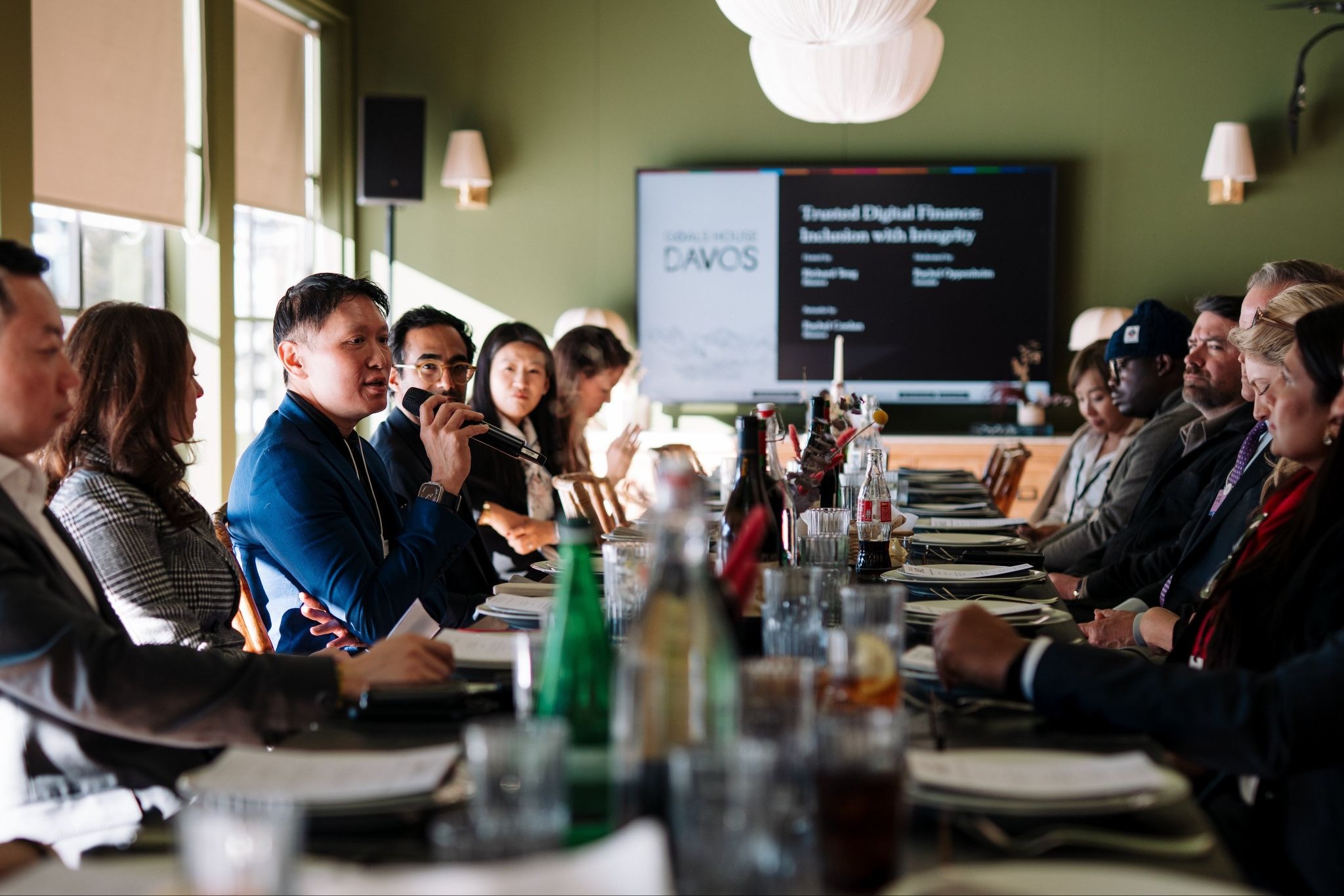
“What I love about Goal House is not about having the solution to the problem upfront, it’s about bringing the community together to discuss what could be somewhat potential” – Rachel Conlan, Binance, CMO
At Goals House Davos 2026, Binance hosted a lunch roundtable discussion titled Trusted Digital Finance: Inclusion with Integrity. With Binance represented by Co-CEO Richard Teng and CMO Rachel Conlan, and joined by our CFO, General Counsel, and Head of VIP and Institutional, the discussion brought global leaders together across finance and technology to explore how blockchain can expand financial access through real-world use cases responsibly.
Why Financial Inclusion Still Demands New Infrastructure
According to the World Bank, more than 1.4 billion adults worldwide remain unbanked, with the majority living in developing economies. For many people, the barrier is access: high transaction costs, limited physical banking infrastructure, and identification requirements that can be difficult to meet. These constraints disproportionately affect women, rural populations, and low-income communities, reinforcing inequality and limiting economic mobility.
The discussion started from a premise that if blockchain is going to power real inclusion, it needs to reduce friction for real users, under real constraints, in ways that institutions and policymakers can evaluate and oversee.
Three Use Cases Where Blockchain Is Already Creating Measurable Value
Rather than debating blockchain in the abstract, the conversation focused on three high-need areas where blockchain-based systems can offer clearer improvements in cost, speed, transparency, and accountability.
The first was remittances and cross-border payments. For many households, cross-border flows are lifelines. When settlement is slow or fees are high, families feel it directly. Participants discussed how blockchain rails can lower settlement times and improve transparency around fees and routing, and why integration with local payment systems is essential for last-mile usability.
The second was SME trade and working capital in emerging markets. Small and medium-sized businesses often face financing gaps and administrative friction that limit growth, even when demand is strong. The discussion explored how tokenized settlement and on-chain financing rails can reduce frictions, expand access to credit, and make working capital more available to businesses that are underserved by traditional channels.
The third was programmable aid and targeted disbursements. Humanitarian and climate-related funding often faces a difficult tradeoff between speed and accountability. Participants discussed how auditable on-chain flows can support faster delivery and clearer reporting on where funds go, while still requiring careful design to protect recipients and ensure appropriate oversight.
Aside from Technology, Inclusion Depends on Trust
A consistent theme was that inclusion only scales when systems are trusted. That means safeguards and standards, not just product functionality. The lunch addressed the role of consumer protection, governance, accountability, and effective AML, counter-terrorist financing, and sanctions compliance. Participants also discussed reserve transparency and risk management standards where stablecoins are part of the model, and the importance of interoperability with local payment rails and emerging digital public infrastructure.
Final Thoughts
This lunch at Goals House Davos took place alongside the World Economic Forum, where leaders across government, business, and civil society discussed five interconnected global challenges: Growth, Geopolitics, Technology, People, and Planet. In this setting, Trusted Digital Finance: Inclusion with Integrity reflected a pragmatic shift in the industry conversation. The most important questions are becoming less about whether blockchain can be useful and more about how to deploy it responsibly, at scale, for the people who need it most.
For Binance, this work spans education, partnerships, and technology deployment that helps digital finance become more accessible without lowering the bar on compliance, user protection, and accountability. As digital finance evolves, we believe the path to broader inclusion will be shaped by infrastructure that is transparent, interoperable, and designed to earn trust in the markets it serves.
Further Reading
Binance Drives Responsible Growth Through Compliance and Law Enforcement Partnerships
Binance at the Historic UN Convention Against Cybercrime in Hanoi
Crackdown on Kidflix: How Binance Assisted Law Enforcement in Taking Down a Child Exploitation Platform