Wird die Reibung wirklich entfernt – oder verändert sich nur, wo sie sitzt?
Ich habe mir bStocks aus einem etwas anderen Blickwinkel angesehen.
Der offensichtliche Vorteil ist, dass ich kein herkömmliches Brokerage-Konto eröffnen muss, nur um eine tokenisierte Aktienexponierung zu erhalten.
Aber das hat mich zum Nachdenken gebracht:
Ist die Reibung tatsächlich verschwunden – oder hat sich lediglich der Ablauf geändert?
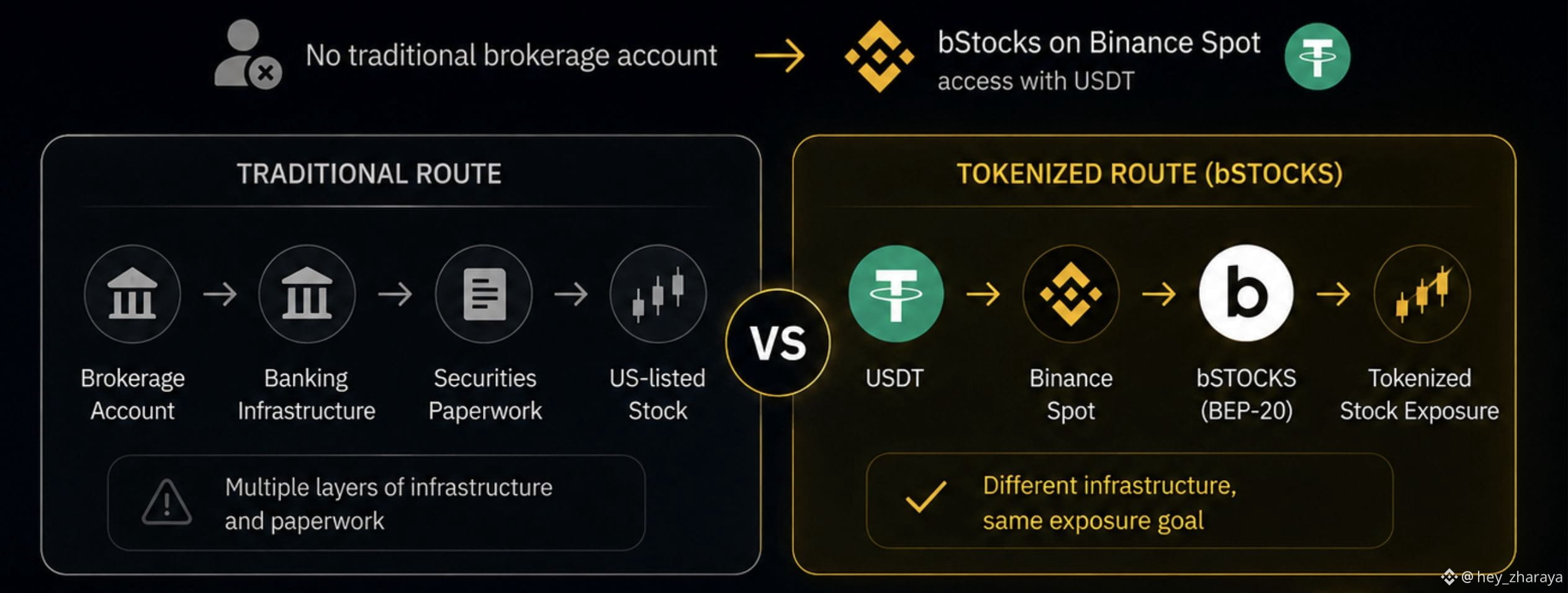
Bei einem traditionellen Setup kann der Zugang zu einer US-basierten Aktie ein Brokerage-Konto, Bankinfrastruktur und papierbezogene Formalitäten im Zusammenhang mit Wertpapieren erfordern.
Bei bStocks ist der Weg anders: In den offiziellen Unterlagen wird der Zugang über Binance Spot beschrieben, und zwar mit USDT, ohne ein traditionelles Brokerage-Konto sowie ohne die gleiche lokale Banking- und US-Wertpapierstruktur.
Und ich glaube, das ist der spannendere Teil.
Ich betrachte das nicht so:
traditionelle Aktien = kompliziert
bStocks = einfach
Sondern eher so:
Traditioneller Weg → ein Set an Infrastruktur
tokenisierter Weg → ein anderes Set an Infrastruktur
Die Vermögensexponierung ist weiterhin der Punkt.
Was sich ändert, ist der Pfad, über den ich darauf zugreife.
Darum denke ich, dass die spannende Frage rund um Tokenisierung nicht immer lautet:
„Wodurch wird es ersetzt?“
Manchmal lautet sie eher:
„Welche Teile des bestehenden Workflows verändert es?“
Für mich ist das eine viel nützlichere Art, über bStocks nachzudenken.
#bstockscis @BinanceCIS
Ich habe mir bStocks aus einem etwas anderen Blickwinkel angesehen.
Der offensichtliche Vorteil ist, dass ich kein herkömmliches Brokerage-Konto eröffnen muss, nur um eine tokenisierte Aktienexponierung zu erhalten.
Aber das hat mich zum Nachdenken gebracht:
Ist die Reibung tatsächlich verschwunden – oder hat sich lediglich der Ablauf geändert?
Bei einem traditionellen Setup kann der Zugang zu einer US-basierten Aktie ein Brokerage-Konto, Bankinfrastruktur und papierbezogene Formalitäten im Zusammenhang mit Wertpapieren erfordern.
Bei bStocks ist der Weg anders: In den offiziellen Unterlagen wird der Zugang über Binance Spot beschrieben, und zwar mit USDT, ohne ein traditionelles Brokerage-Konto sowie ohne die gleiche lokale Banking- und US-Wertpapierstruktur.
Und ich glaube, das ist der spannendere Teil.
Ich betrachte das nicht so:
traditionelle Aktien = kompliziert
bStocks = einfach
Sondern eher so:
Traditioneller Weg → ein Set an Infrastruktur
tokenisierter Weg → ein anderes Set an Infrastruktur
Die Vermögensexponierung ist weiterhin der Punkt.
Was sich ändert, ist der Pfad, über den ich darauf zugreife.
Darum denke ich, dass die spannende Frage rund um Tokenisierung nicht immer lautet:
„Wodurch wird es ersetzt?“
Manchmal lautet sie eher:
„Welche Teile des bestehenden Workflows verändert es?“
Für mich ist das eine viel nützlichere Art, über bStocks nachzudenken.
#bstockscis @BinanceCIS